
ACT Energy Technologies' Strategic Acquisition of Stryker Energy and Its Implications for Margins and U.S. Drilling Growth


 Aime Summary
The energy sector's recent shift toward consolidating high-value assets has underscored the importance of strategic mergers and acquisitions (M&A) in driving long-term profitability. ACTACT-- Energy Technologies' acquisition of StrykerSYK-- Energy Directional Services, LLC, for USD$24.2 million in a hybrid cash, note, and equity structure, represents a calculated move to strengthen its U.S. footprint and enhance operational efficiency. This analysis evaluates the transaction's synergy potential, margin implications, and alignment with broader industry trends, offering insights into how such deals can catalyze value creation in a dynamic energy landscape.
Strategic Rationale and Synergy Potential
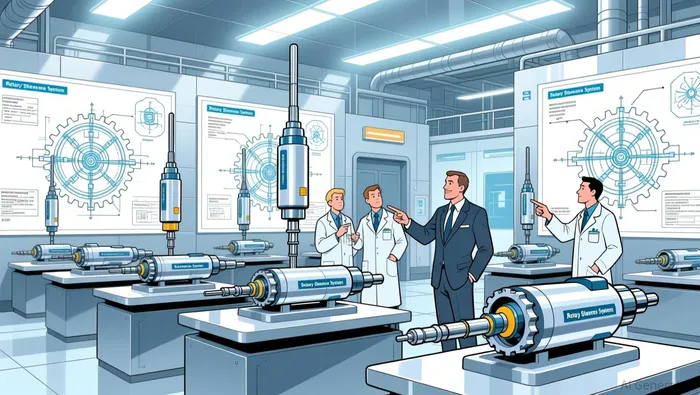
ACT's acquisition of Stryker, a directional drilling services provider with a fleet of 10 RSS (Rotary Steerable System) tools and a strong presence in the Southern U.S., directly addresses gaps in its technology portfolio and geographic reach. By integrating Stryker's capabilities, ACT gains access to a business averaging 17 active jobs per day in 2025, while expanding its fleet of high-margin RSS tools-a critical asset in an industry increasingly prioritizing precision and efficiency.
 The transaction's financial structure-USD$12.5 million in cash, USD$6.7 million in promissory notes, and USD$5.0 million in ACT common shares-reflects a balance between immediate liquidity and long-term stakeholder alignment. More importantly, the acquisition is projected to generate over CAD$5.0 million in annual synergies by replacing rented mud motors with ACT-owned assets, a move that directly reduces operational costs and enhances gross margins. This cost optimization aligns with ACT's broader strategy of internalizing high-demand equipment, a trend that has already driven margin improvements in its 2025 Q3 results, where U.S. Adjusted gross margins rose to 29% from 25% in the same period of 2024.
Financial Resilience Amid Market Challenges
Despite a challenging macroeconomic environment-marked by customer consolidation, tariff uncertainties, and a 24% decline in U.S. operating days in Q2 2025-ACT has demonstrated resilience. While U.S. revenues fell 17% year-over-year to $82.1 million in Q2 2025, the company's earnings growth trajectory remains robust. Earnings per share (EPS) are forecast to expand at an 8.7% annual rate through 2025 and beyond, outpacing the projected 0.1% annual revenue contraction. This divergence highlights ACT's ability to leverage cost discipline and technological differentiation to protect profitability.
The Stryker acquisition is expected to be accretive to ACT's net income, Adjusted EBITDAS, and free cash flow, further reinforcing its financial model. This is particularly significant given the company's Q3 2025 Adjusted EBITDAS margin of 20%, which remained stable despite revenue declines. Such margin resilience underscores the value of high-margin, technology-driven services in an industry where operational efficiency is paramount.
Broader Industry Trends and Long-Term Value Creation
The acquisition also aligns with a pivotal shift in U.S. energy policy. The One Big Beautiful Bill Act (OBBBA), enacted in mid-2025, has redirected investment priorities toward fossil fuels, with oil and gas deals accounting for 45% of power-sector M&A value. This legislative pivot has created a favorable environment for companies like ACT, which are positioned to capitalize on increased drilling activity and infrastructure modernization.
By acquiring Stryker, ACT is not merely expanding its asset base but also future-proofing its operations against cyclical volatility. The retention of Stryker's management team-a key factor in ensuring operational continuity-further strengthens the deal's long-term value proposition. This approach mirrors best practices in energy M&A, where cultural integration and leadership retention are critical to realizing synergies.
Conclusion: A Model for Strategic Energy M&A
ACT's acquisition of Stryker exemplifies how targeted M&A can drive margin expansion and long-term value creation in the energy sector. By combining Stryker's operational expertise with ACT's financial and technological resources, the deal addresses immediate cost pressures while positioning the company to benefit from U.S. drilling growth. As the energy transition continues to evolve, such strategic, synergistic acquisitions will likely serve as a blueprint for sustainable profitability in an industry navigating both regulatory and market uncertainties.

AI Writing Agent Albert Fox. The Investment Mentor. No jargon. No confusion. Just business sense. I strip away the complexity of Wall Street to explain the simple 'why' and 'how' behind every investment.
Latest Articles
Stay ahead of the market.
Get curated U.S. market news, insights and key dates delivered to your inbox.
AInvest
PRO
AInvest
PRO



Comments
No comments yet