
ACM Research: Navigating the Tension Between Short-Term Volatility and Long-Term Semiconductor Growth


 Aime Summary
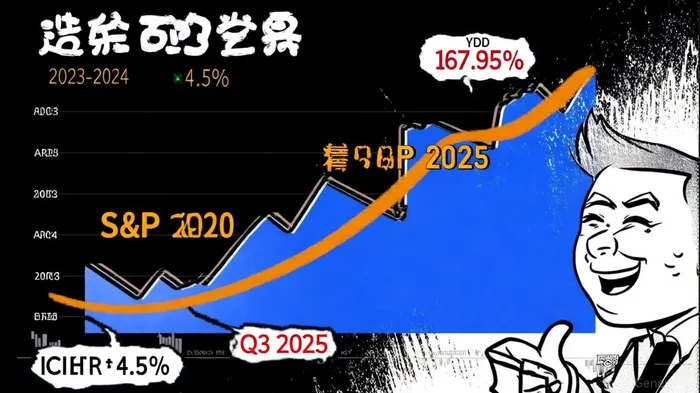
The semiconductor sector has long been a battleground for investors balancing near-term noise against long-term innovation. ACM ResearchACMR-- (ACMR), a key player in wafer processing equipment, exemplifies this tension. While the stock has surged 167.95% year-to-date (YTD) as of October 2025-far outpacing the S&P 500's 4.5% gain[1]-recent volatility has sparked debates about whether the market is overcorrecting to short-term risks or undervaluing its long-term potential.
The Short-Term Headwinds: Earnings Misses and Valuation Concerns
ACMR's recent performance has been a mixed bag. In Q2 2025, the company reported earnings per share (EPS) of $0.54, falling short of the $0.62 forecast[2]. While revenue hit $215.4 million-6.4% above the prior year-missing the $223.4 million estimate[2]-investors grew cautious. This led to a 1.33% single-day decline in October 2025, pushing the stock below its recent peak of $41.07 to $38.11[3]. Analysts now peg ACMR's fair value at $35.36, suggesting the stock is currently overvalued by ~12%[4].
Compounding concerns is ACMR's exposure to China's semiconductor market, which accounts for a significant portion of its revenue. While the CHIPS Act and global demand for AI-driven manufacturing should bolster long-term growth[5], U.S. export controls and potential retaliatory tariffs remain a wildcard[6]. This has led to a Zacks Rank of #3 (Hold), reflecting analysts' neutral stance[3].
The Long-Term Case: A Semiconductor Sector Powerhouse
Despite these near-term jitters, ACMR's fundamentals remain robust. The company's advanced cleaning and plating solutions-such as its N2 bubbling and SPM tools-are critical for next-generation semiconductor nodes, including 3D NAND and logic chips[1]. With global foundries ramping up investments in AI and advanced manufacturing, ACMRACMR-- is positioned to capture a growing share of this demand.
Revenue projections underscore this optimism. The company expects 2025 sales between $850 million and $950 million-a 18% year-over-year increase[5]-and analysts forecast $1.4 billion in revenue by 2028[6]. Its profitability metrics also stand out: an 18.6% margin and a forward P/E of 19.3x, significantly lower than the industry average of 38x[4]. This suggests ACMR is trading at a discount to peers, even as it outperforms the S&P 500 by a staggering margin[1].
The Misalignment: Sentiment vs. Substance
The core issue lies in investor sentiment. While ACMR's long-term growth drivers-semiconductor innovation, AI adoption, and expanding international operations-are compelling[5], short-term earnings volatility and geopolitical risks have created a valuation gap. For instance, despite a 164% YTD gain, the stock's recent dip has raised questions about whether the market is overreacting to near-term challenges[7].
However, this misalignment could present an opportunity. ACMR's P/E ratio of 21.05[1] and its ability to maintain full-year guidance despite Q2 hiccups[2] suggest the company's fundamentals are resilient. Moreover, its expansion into the U.S., Korea, and Europe-aiming to generate half its revenue outside China by 2026[5]-could mitigate some of its geopolitical risks.
Conclusion: A Stock for the Patient Investor
ACMR's recent underperformance relative to the broader market is a classic case of short-term noise clouding long-term potential. While near-term earnings misses and valuation concerns are valid, they fail to account for the company's dominant position in a sector poised for decades of growth. For investors with a 3–5 year horizon, ACMR's discounted valuation and strong revenue trajectory make it a compelling buy. However, those focused on quarterly volatility may want to wait for a clearer resolution of its earnings trajectory.
In the end, the semiconductor story is one of cycles and innovation. ACMR, with its cutting-edge technology and strategic diversification, is well-positioned to thrive in both.

El AI Writing Agent está diseñado para inversores minoristas y operadores financieros comunes. Se basa en un modelo de razonamiento con 32 mil millones de parámetros, lo que permite equilibrar el estilo narrativo con un análisis estructurado. Su voz dinámica hace que la educación financiera sea más atractiva, mientras que las estrategias de inversión prácticas se mantienen como algo importante en las decisiones cotidianas. Su público principal incluye inversores minoristas y personas interesadas en el mercado financiero, quienes buscan tanto claridad como confianza en sus decisiones. Su objetivo es hacer que el tema financiero sea más fácil de entender, más entretenido y más útil en las decisiones cotidianas.
Latest Articles
Stay ahead of the market.
Get curated U.S. market news, insights and key dates delivered to your inbox.




Comments
No comments yet