
Ackman’s Berkshire Play: A $900M Bet on Howard Hughes’ Conglomerate Dream
The real estate world is rarely the stage for bold conglomerate-building ambitions, but Bill Ackman has just rewritten the script. On May 5, 2025, Pershing Square Capital Management’s $900 million investment in Howard HughesHHH-- Holdings Inc. (HHH) signaled a seismic shift for the firm, positioning it as a potential Berkshire Hathaway of the real estate era. The move, which saw Ackman acquire a 46.9% stake and assume the role of executive chairman, marks one of the most aggressive corporate restructurings of the year—and a high-stakes bet on Ackman’s ability to replicate Warren Buffett’s legacy.
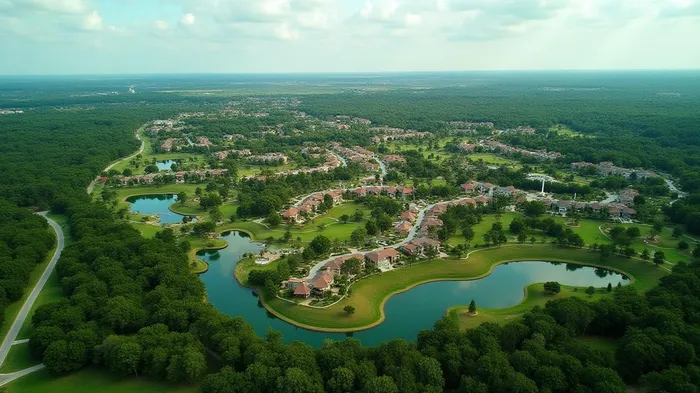
The Deal’s Bold Stakes: A 48% Premium and a Conglomerate Vision
At first glance, the numbers alone tell a story of ambition. Pershing Square paid $100 per share for newly issued HHH stock—a 48% premium over the closing price on May 2, 2025—locking in a stake worth roughly $900 million. But the financial terms are just the start. The deal restructures Howard Hughes into a dual-track business: maintaining its core real estate operations (managed through Howard Hughes Corporation) while building a Berkshire-style holding company to acquire undervalued public and private businesses.
“The goal is to create a company that can grow both organically and through acquisitions, much like Berkshire Hathaway,” Ackman declared in the press release, framing the shift as a long-term play. The strategy hinges on leveraging Howard Hughes’ existing real estate assets as a cash flow engine while deploying capital into diverse sectors. Notably, the plan includes exploring an insurance subsidiary—a cornerstone of Berkshire’s success—to enhance financial flexibility and risk management.
Governance Tightrope: Balancing Control and Independence
Ackman’s move is as much about governance as it is about growth. To assuage investor concerns about overconcentration of power, the deal imposes strict limits: Pershing Square’s voting rights cap at 40%, and its beneficial ownership at 47%. The board now features a majority of independent directors, including Jean-Baptiste Wautier, a private equity veteran with experience scaling investment platforms, and Ryan Israel, Pershing Square’s CIO, who now doubles as Howard Hughes’ CIO.
Yet the arrangement isn’t without tension. CEO David O’Reilly retains his role but now shares the spotlight with Ackman, who will guide strategic acquisitions. The dual leadership structure raises questions about decision-making synergy. “This isn’t just a real estate company anymore—it’s a hybrid,” said one analyst. “But the success hinges on whether Howard Hughes can attract and integrate non-real estate assets without diluting its core strengths.”
The Berkshire Model: Blueprint or Pipe Dream?
Ackman’s explicit nod to Berkshire Hathaway sets a high bar. Berkshire’s success relied on a patient, value-oriented approach to acquisitions and a culture of operational excellence. Howard Hughes, by contrast, faces hurdles: its real estate portfolio is concentrated in a few high-profile projects, and its track record in diversification is nonexistent.
The management fee structure further complicates the calculus. Howard Hughes will pay Pershing Square a $3.75 million quarterly base fee plus 0.375% of the increase in its equity market cap beyond a fixed reference point. This incentivizes growth but could lead to conflicts if shareholders perceive fees as excessive.
Risks on the Horizon: Economic Volatility and Execution
Analysts are cautiously optimistic but wary of overpromising. The deal’s press release included typical disclaimers about macroeconomic risks, regulatory hurdles, and execution challenges—a nod to the reality that even Ackman’s vision can’t insulate Howard Hughes from a downturn.
“The real test is whether Howard Hughes can find undervalued assets in a rising-rate environment,” said one market observer. “And given the complexity of building a conglomerate from scratch, the next 18 months will be critical.”
Conclusion: A Conglomerate’s Make-or-Break Moment
Ackman’s bet on Howard Hughes is audacious, but it’s also a masterclass in leveraging his reputation as a contrarian investor. With a 48% premium and a governance framework designed to balance ambition with accountability, the deal could redefine Howard Hughes as a multi-sector powerhouse—or it could founder under the weight of its own aspirations.
The early signals are mixed. Howard Hughes’ stock rose 5% post-announcement, suggesting investor buy-in, but the path to replicating Berkshire’s success requires more than capital: it demands disciplined acquisitions, operational cohesion, and patience. For now, the question isn’t whether Ackman can disrupt real estate—it’s whether he can master the art of building a conglomerate in an era where short-termism reigns. The answer, much like Howard Hughes’ Master Planned Communities, will take years to fully unfold.

Stay ahead of the market.
Get curated U.S. market news, insights and key dates delivered to your inbox.
AInvest
PRO
AInvest
PRO



Comments
No comments yet