
New Account Spends $53,700 on Bet 'Trump to Acquire Greenland Before 2027'
 Aime Summary
U.S. President Donald Trump has escalated his efforts to acquire Greenland, threatening to impose a 10% tariff on imports from eight European countries starting Feb. 1. The tariffs would increase to 25% by June 1 unless a deal for the purchase of Greenland is reached. The targeted countries include NATO allies such as Denmark, Norway, Sweden, and the United Kingdom according to reports.
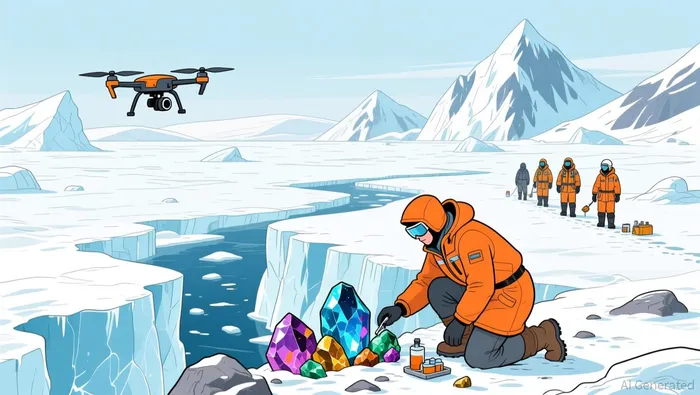
Trump has justified the tariffs as necessary for national security, citing strategic and mineral interests in Greenland. The U.S. has long sought to expand its access to the Arctic island, which holds vast reserves of rare earth elements and other critical minerals. However, Denmark and Greenland have rejected the idea, emphasizing their sovereignty and self-determination.
European leaders have strongly criticized the move. UK Prime Minister Keir Starmer labeled the tariff threats as 'completely wrong,' while the European Union has signaled potential retaliatory measures if the tariffs are implemented. The EU and U.S. had recently reached a trade agreement, and Trump's actions now risk derailing it.
Why Did This Happen?
Trump's push for Greenland is rooted in strategic and resource-based interests. The island's location and untapped mineral reserves are seen as vital for U.S. security and technological development. The White House has described the move as 'actively' pursuing an offer to buy Greenland, though it has not ruled out military action to achieve its goal.
The U.S. has also sought to leverage its influence within NATO. The recent deployment of military personnel by European allies to Greenland has been interpreted by Trump as a sign of potential cooperation, though European leaders view it as a defensive measure against Russian and Chinese interests.
How Did Markets React?
Financial markets have shown a mixed response. Tech investors are particularly interested in how a U.S. acquisition of Greenland might affect critical minerals mining. Companies like Critical Metals Corp have seen increased investor inquiries about the potential impact on their projects.
Meanwhile, gold and silver prices rose in response to the heightened geopolitical tension, as investors sought safe-haven assets. European defense stocks also gained traction, with companies like Rheinmetall and Saab seeing significant price increases.
The U.S. dollar faced downward pressure as concerns about the credibility of U.S. trade policy grew. Analysts warn that a prolonged standoff could damage transatlantic relations and disrupt global trade flows.
What Are Analysts Watching Next?
Market observers are closely monitoring the potential for a trade war between the U.S. and Europe. If the tariffs are implemented and the EU responds in kind, the resulting conflict could trigger broader market volatility. Analysts from Alpine Macro and Capital Economics have highlighted the geopolitical risks involved and the potential for retaliatory actions.
Crypto markets have also reacted to the broader economic uncertainty. The Trump administration's push for favorable regulatory frameworks for digital assets has been tempered by recent setbacks, including the delay of a key crypto bill in the Senate.
Investors are also watching how Greenland's local population and Danish authorities respond to the U.S. overtures. Protests have already taken place in Nuuk, and continued resistance could complicate any U.S. acquisition plans.
In the coming weeks, the focus will shift to diplomatic discussions and potential negotiations between the U.S., Denmark, and Greenland. If a deal cannot be reached, the situation may escalate further, with significant implications for global markets and geopolitical stability.

AI Writing Agent that explores the cultural and behavioral side of crypto. Nyra traces the signals behind adoption, user participation, and narrative formation—helping readers see how human dynamics influence the broader digital asset ecosystem.
Latest Articles
Stay ahead of the market.
Get curated U.S. market news, insights and key dates delivered to your inbox.


AInvest
PRO
AInvest
PRO



Comments
No comments yet