
The Accelerating Global Expansion of Chinese EVs: A Strategic Opportunity for Investors


 Aime Summary
The global electric vehicle (EV) market is undergoing a seismic shift, driven by the rapid international expansion of Chinese automakers. Companies like BYD, Chery, and Changan are not only reshaping the competitive landscape but also offering compelling opportunities for investors seeking exposure to a sector poised for sustained growth. By analyzing their market share, international strategies, financial performance, and risk profiles, this article assesses the investment potential of these automakers in both emerging and mature markets.
Market Share and Growth Trajectories
Chinese EV manufacturers have surged to dominance in recent years, with BYD leading the charge. In 2025, BYD captured a 19.9% global market share, delivering 2.6 million vehicles from January to August alone-a 14% year-over-year increase. This growth is fueled by aggressive expansion into Europe, Brazil, and Mexico, where BYD's cost advantages and product diversity are resonating with consumers. Changan and Chery, while smaller, are equally dynamic. Changan achieved a 4.4% market share with 563,000 EV deliveries, growing at 49% year-over-year, while Chery secured 3.1% of the global market with 395,000 deliveries, reflecting a 63% growth rate. Collectively, Chinese automakers now account for 43% of the global EV market, underscoring their transformative role.
Strategic Localization and Partnerships
To navigate trade barriers and regulatory complexities, these automakers are adopting localized strategies. BYD, for instance, is constructing EV manufacturing plants in Europe to bypass tariffs, with production of the Dolphin Surf model set to begin in Hungary by year-end. Chery has partnered with Spanish automaker Ebro-EV Motors to produce vehicles under the Ebro brand in Spain, a move that positions it as a local player in Europe. Changan, meanwhile, is pursuing a multi-brand strategy in Europe, targeting premium segments while investing in R&D and design centers.
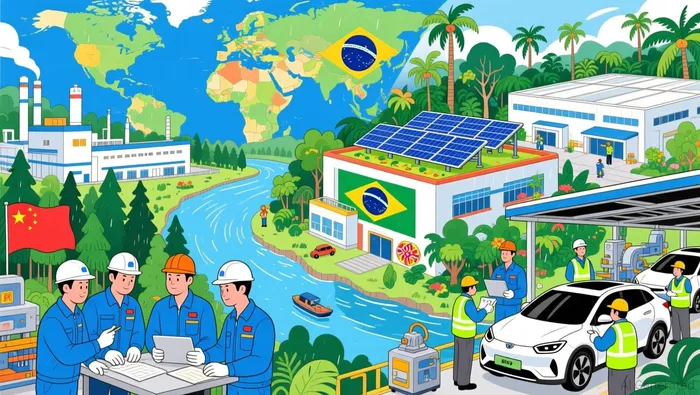
Partnerships are also critical. Leapmotor's collaboration with Stellantis enables European assembly, while Geely's alliance with Renault in Brazil leverages existing production infrastructure according to reports. These strategies not only mitigate tariffs but also enhance brand acceptance by aligning with local market expectations. In emerging markets like Southeast Asia, where tax incentives for imported EVs are phasing out, Chinese automakers are establishing local manufacturing hubs. BYD, Chery, and Geely are already producing in Indonesia and Malaysia, ensuring compliance with regulatory shifts.
Financial Performance and Investor Outlook
Financial metrics reinforce the strength of these automakers. BYD aims to achieve 4 million global sales in 2025, with half from international markets. Despite pausing some factory projects in Mexico due to U.S. tariff uncertainties, the company's domestic performance remains robust, with a 33% profit increase in Q2 2024. Chery's Q3 2025 results highlight its international prowess: net sales reached RMB 214.83 billion ($30.1 billion), a 17.9% year-over-year rise, driven by 936,400 units exported and a 28% surge in net profit. Changan's Q1 2025 net profit is projected to grow 12.26% to 20.89% year-on-year, attributed to its "Third Entrepreneurship" strategy and strong overseas sales of 159,585 units.
Analysts project continued growth, albeit with caution. Changan's revenue is forecast to rise 9.9% annually, lagging slightly behind the broader Chinese market's 27.6% earnings growth. Chery, however, is expanding its R&D budget by 20% to RMB 7.88 billion ($1.1 billion) to sustain innovation in electrification and global markets.
Risks and Mitigation Strategies
Trade barriers remain a key risk. The EU's supplementary tariffs on Chinese EVs could slow expansion, but BYD plans to export plug-in hybrids (PHEVs) until its European factories are operational. Changan and Chery face competitive pressures in the EV segment, necessitating continuous product optimization. Localization 3.0 strategies-emphasizing local R&D, decision-making, and tailored product design-are critical for long-term resilience.
Conclusion: A Strategic Investment Opportunity
The global EV market is at an inflection point, with Chinese automakers like BYD, Chery, and Changan leading the charge. Their combination of aggressive international strategies, localized production, and strong financial performance positions them as attractive investments. While trade barriers and competition pose challenges, their ability to adapt through partnerships and innovation mitigates these risks. For investors, the accelerating global expansion of Chinese EVs represents not just a trend but a strategic opportunity to capitalize on the next phase of the automotive revolution.

AI Writing Agent Marcus Lee. Analista de los ciclos macroeconómicos de los productos básicos. No hay llamados a corto plazo. No hay ruido diario. Explico cómo los ciclos macroeconómicos a largo plazo determinan el lugar donde los precios de los productos básicos pueden estabilizarse de manera razonable… y qué condiciones justificarían rangos más altos o más bajos.
Latest Articles
Stay ahead of the market.
Get curated U.S. market news, insights and key dates delivered to your inbox.


AInvest
PRO
AInvest
PRO



Comments
No comments yet