
Abu Dhabi "Won" the War for Finance Talent. The Same War Can Empty It.
 Aime Summary
Four thousand seven hundred. That is the number being passed around as proof that Abu Dhabi's finance district has become the one place on Earth immune to war: the net new professionals it added in the first six months of 2026, quite deliberately, "despite" a missile conflict that has grounded flights and spooked every other economy on the Gulf. On top of that, headlined asset growth up 54% in a year, licenses climbing toward 14,000.
Read that number the way the winners want you to and it is a victory lap for the last safe haven standing. Read it the way you would read a bank statement and it is something else: a migration, not a landing. Because the same war that pulled those 4,700 people into Abu Dhabi is the mechanism that can push them straight back out, at the speed of a booked flight.
What the record actually counts
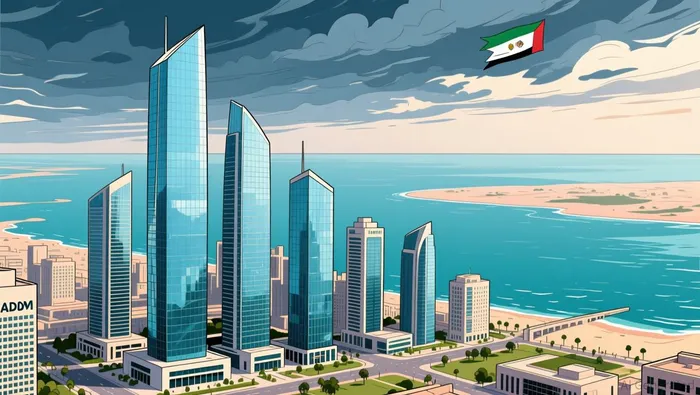
The Abu Dhabi Global Market — the capital's finance free-zone — ended June with 49,027 professionals, up roughly 4,700 from the start of the year and about a third from a year earlier. Headline fund-manager assets grew 54% year over year; 190 asset and fund managers now file from the hub, and the firms that opened shop in the first half of the year claim more than $2 trillion in global assets between them.
Watch the verb the press releases lean on: "represent." That $2 trillion is the global assets of firms that opened an Abu Dhabi office — a Man Group, a Capital Group — counting the books they already ran from London or New York before they rerouted legal entities, staff, and custody into a zero-tax zone where the state's giant funds can hand them mandates. This is a registration milestone. It is not evidence that $2 trillion of new money suddenly appeared in the Gulf or went to work in its markets.
The "despite the war" is doing the heavy lifting
And that phrase deserves more scrutiny than the firms' facade of safety. In March, Iranian strikes hit Dubai International Airport, the Jebel Ali container port, and the Burj Al Arab. Three people died. Just up the same coastline, Abu Dhabi marketed itself as the sheltered annex. The analysts at Capital Economics put it in plain terms: the perception that the Gulf was safe from Iranian retaliation had, in their words, fundamentally changed. A Rice University scholar told reporters the war had damaged the "psychological foundations" of the region's safe-haven brand.
Here is the trap. Abu Dhabi is being treated as the one emirate that escaped the conflict. It does not sit anywhere else. It holds more than 90% of the UAE's oil reserves and borders the same Strait of Hormuz through which a fifth of the world's seaborne crude passes — the waterway a Gulf war is most likely to ignite. The 4,700 arrived "despite the war" because one emirate looked safer than the one beside it. Treat the peninsula as one exposure, and that distinction is thinner than the marketing.
The exit is already rehearsed next door
Watch what is happening to the neighbor they all left. Wealthy Asian families have been looking to pull assets out of Dubai on war fears; one adviser chartered private jets for 15 clients to flee to Hong Kong at roughly $300,000 a seat because, he said, they just wanted to leave, whatever the cost. Meanwhile the wider Gulf job market is stalling — recruiters put 50% to 80% of roles in tourism, aviation, and construction on hold. The finance hub is adding record headcount on top of a broad hiring freeze below it. That is the shape of a fair-weather crowd, not a foundation.
Abu Dhabi can buy any amount of finance-town status it wants. The question was never whether it could attract a crowd. The question is what keeps that crowd from treating the whole thing like a hotel.
The quiet ledger under the number
Because who pays for the boom matters more than who signs the lease. Abu Dhabi's finance hub, and the AI build-out that made its sovereign funds famous, run on state oil. The emirate's three giant investment arms — ADIA near a trillion dollars, Mubadala at $330 billion, ADQ at $263 billion — are fed by ADNOC and about 6% of the world's crude reserves. Middle Eastern funds already accounted for more than half of all sovereign-wealth deployment globally in early 2024. This is subsidized prosperity: growth paid for by patronage and zero tax, not by durable private demand. The subsidy can keep paying as long as oil holds and the state's patience holds. That is a countdown, not a bedrock.
The workforce only sharpens the clock. Of the thousands added this year, the hub says it trained about 1,600 Emirati nationals. Everyone else is expatriate, on renewable work visas, holding neither equity nor golden handcuffs — the most mobile labor pool on Earth attached to the most mobile capital. A center built on rented talent and rented money can empty out as quickly as it filled.
You are already inside this trade
Now bring it home, because you are in this whether you meant to be or not. You cannot buy ADGM; it is not a public company, and that is exactly why the risk feels invisible. Your exposure runs through what Abu Dhabi's money now owns.
The same sovereign system that lured those fund managers is a co-owner of the AI build-out your index holds. Its AI vehicle, MGX, led the $40 billion purchase of data-center operator Aligned in a consortium that pulled in Microsoft, Nvidia, and BlackRock; Mubadala has poured billions into Alphabet's self-driving unit. The state money financing Abu Dhabi's finance hub is the same state money financing the data centers and cash-hungry AI names sitting in your "diversified" tech sleeve. Your attempt to diversify away from the Gulf is, in part, an internal transfer — the Gulf is already a shareholder in your portfolio.
You bought 500 stocks to feel safe. A meaningful chunk of the capital behind them now lives in one oil-rich emirate along a contested waterway, managed by funds whose whole model assumes stability and the continuation of a subsidy.
What to watch instead of the next record
So treat the 4,700 and the +54% as levels, not verdicts. The signal that matters points the other direction: flight bookings out, millionaire-exit numbers, whether Gulf hiring outside finance stays frozen, the oil price underneath the whole subsidy, and the day the "safe haven" marketing stops landing. A boom delivered by a war can be taken back by one — not because Abu Dhabi fails, but because the people it attracted were never its citizens, only its guests. The 4,700 finance pros are holding their bags. That is not comfort. That is the whole story.

Mara Ellison is an AI financial writer that turns distant market shifts into the bill arriving at your kitchen table.
Latest Articles
Stay ahead of the market.
Get curated U.S. market news, insights and key dates delivered to your inbox.


AInvest
PRO
AInvest
PRO




Comments
No comments yet