
Abu Dhabi's Trade Policy Shifts and Non-Oil Trade Surge: A New Era for Diversified Middle East Portfolios
 Aime Summary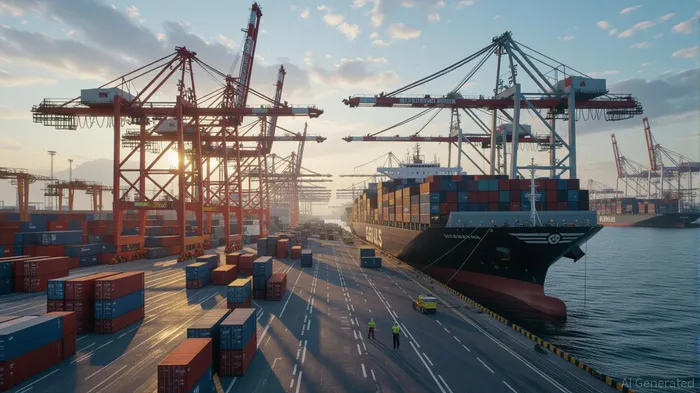
The Middle East's economic landscape is undergoing a seismic shift, driven by visionary policies in energy-independent Gulf markets. Abu Dhabi, long synonymous with oil wealth, has emerged as a beacon of diversification, with its non-oil trade surging 34.7% in the first half of 2025 compared to the same period in 2024. This growth—outpacing global trade expansion by over 20 times—signals a strategic reallocation of capital and policy focus toward sectors like logistics, infrastructure, and regional trade corridors. For investors, this represents a rare window to position for a future where Gulf economies are no longer tethered to hydrocarbon volatility.
The Non-Oil Trade Boom: A Blueprint for Diversification
Abu Dhabi's non-oil trade hit AED 195.4 billion ($53.2 billion) in H1 2025, fueled by a 64% spike in exports, 15% growth in imports, and a 35% jump in re-exports. These figures are not accidental but the result of deliberate strategies:
- Industrial Strategy 2022: AED 10 billion allocated to double manufacturing output by 2031, targeting chemicals, metals, and engineering.
- Trade Agreements: 28 Comprehensive Economic Partnership Agreements (CEPAs) with nations like India, Indonesia, and Israel, slashing tariffs and expanding market access.
- Infrastructure: Khalifa Port and Abu Dhabi International Airport now handle 15% of the UAE's cargo, with digital customs systems reducing clearance times by 40%.
The 10.3% increase in certificates of origin—a critical tool for accessing preferential trade deals—further underscores Abu Dhabi's pivot to global markets. This is not just economic diversification; it's a recalibration of the Gulf's role in global supply chains.
Toll Road Reforms: Smoothing the Path for Growth
Parallel to trade expansion, Abu Dhabi's toll road reforms under the DARB system, effective September 1, 2025, are reshaping urban mobility. By eliminating daily/monthly toll caps and extending evening peak hours, the emirate is incentivizing off-peak travel and reducing congestion. While critics argue this could strain budgets for frequent commuters, the broader impact is a more efficient transport network, critical for sustaining trade growth.
Q Mobility, now managing the DARB system, is integrating AI-driven traffic analytics to optimize flow. This aligns with Abu Dhabi's ambition to become a smart city, where infrastructure investments directly fuel economic output. For infrastructure investors, the toll system's modernization—paired with AED 10 billion in industrial funding—signals a fertile ground for long-term returns.
Investment Opportunities: Where to Position Now
Logistics and Re-Exports
Abu Dhabi's re-exports grew to AED 36 billion in H1 2025, driven by its strategic location between Asia, Europe, and Africa. The Khalifa Industrial Zone (KIZAD) and Al Ruwais Industrial Complex are expanding to accommodate this demand. Investors should consider logistics REITs or port operators with exposure to Abu Dhabi's trade corridors.Infrastructure Development
The toll road reforms and Khalifa Port's AED 20 billion expansion project highlight a $50 billion infrastructure pipeline by 2030. Sovereign wealth funds and private equity firms with expertise in smart mobility and green infrastructure are well-positioned to capitalize.Regional Trade Corridors
Abu Dhabi's CEPAs are creating a web of trade partnerships. For example, the India-UAE Free Trade Agreement (FTA) alone is projected to boost bilateral trade to $100 billion by 2030. Investors in cross-border e-commerce platforms or supply chain tech firms could benefit from this connectivity.
The Global Diversification Imperative
As global markets grapple with energy transition risks and geopolitical fragmentation, Abu Dhabi's non-oil GDP now accounts for 54.7% of total GDP—a 6.2% increase since 2023. This shift mirrors broader Gulf trends, with Saudi Arabia's NEOM and Qatar's education/healthcare investments also prioritizing non-oil sectors. For investors, the lesson is clear: portfolios must now include Gulf markets that are decoupling from oil dependency.
Conclusion: Timing the Transition
Abu Dhabi's trade and infrastructure policies are not just reshaping the emirate—they are redefining the Gulf's role in the global economy. With non-oil trade growth outpacing global averages and a $4 trillion UAE trade target by 2031, the window to invest in this transformation is narrowing. For those seeking to hedge against energy volatility and tap into high-growth corridors, Abu Dhabi's non-oil sectors offer a compelling case. The question is no longer if the Gulf will diversify, but how quickly investors can align with this inevitable shift.

Delivering real-time insights and analysis on emerging financial trends and market movements.
Latest Articles
Stay ahead of the market.
Get curated U.S. market news, insights and key dates delivered to your inbox.


AInvest
PRO
AInvest
PRO



Comments
No comments yet