
Abnormal Betting Activity on Polymarket Prior to Trump's Tweet, S&P and Crude Oil Futures Simultaneously Experienced Abnormal Volume
 Aime Summary
Unusual trading volume spikes were observed in S&P 500 e-Mini and oil futures approximately 15 minutes before a market-moving announcement from Donald Trump on Truth Social. The timing of the trades and their profitability in the short term have raised questions among traders. This anomaly occurred in both stock and oil futures markets, highlighting the potential for coordinated or algorithmic activity.
At around 6:50 a.m. in New York, S&P 500 e-Mini futures trading on the CME recorded a sharp and isolated jump in volume. A similar pattern was observed in oil markets, with West Texas Intermediate May futures also experiencing a noticeable pickup in trading activity. These movements broke from an otherwise subdued premarket backdrop.
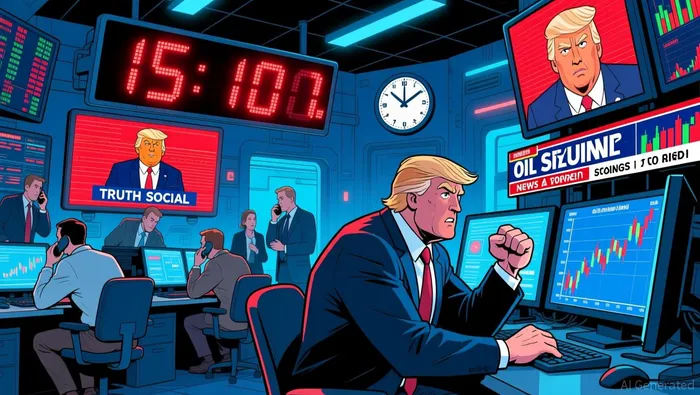
Roughly 15 minutes later, at 7:05 a.m., Trump posted a market-moving announcement about Iran on Truth Social. That announcement prompted an instant rally in risk assets, with S&P 500 futures soaring more than 2.5% before the opening bell. Meanwhile, West Texas Intermediate futures dropped nearly 6%.
Why Did This Happen?
The timing of the earlier volume spikes across both equities and crude caught the attention of traders. Whoever purchased a large amount of stock futures and shorted crude futures at that moment made a significant profit just minutes later. Early-morning futures markets are typically less liquid, which can make short bursts of buying and selling more noticeable than during regular trading hours.
Algorithmic and macro-driven strategies can also generate rapid flows across asset classes without a single identifiable catalyst in early trading. The U.S. Securities and Exchange Commission and the CME Group declined to comment. The absence of an obvious catalyst at the time of the volume spikes has raised eyebrows.
How Did Markets React?
Oil prices dropped sharply after President Trump postponed threatened military action on Iran's energy infrastructure following "productive" talks with Iran, which introduced uncertainty about the region's stability. Analysts and agencies are assessing whether oil reserves will be released to stabilize prices.
Crude oil futures plunged on Monday as President Trump announced a five-day postponement of threatened military strikes on Iranian energy infrastructure. This development sparked volatile trading, with four of the six largest swings in Brent futures occurring since the Middle East conflict began on February 28.
Brent crude and West Texas Intermediate (WTI) oil prices both dropped significantly after Trump announced a postponement of attacks on Iran's energy infrastructure. Analysts caution that further declines may be limited due to the time required to restore Gulf energy infrastructure and the ongoing geopolitical tensions.
What Are Analysts Watching Next?
A group of new Polymarket accounts placed large bets on a U.S.-Iran cease-fire before President Trump announced diplomatic progress. These accounts stand to gain significantly if the cease-fire occurs. The timing and size of the bets have led to speculation that the accounts may be operated by individuals with access to undisclosed diplomatic information.
One of the accounts has a notable betting history, having previously profited from bets on U.S. military actions against Iran. This raises questions about whether the trader has access to insider information regarding ongoing diplomatic efforts.
Polymarket updated its rules to explicitly prohibit insider trading on stolen confidential information, illegal tips, or when a user can influence an event's outcome. These changes are applicable to both its offshore venue and U.S.-regulated exchange.
The updated rules are part of a broader compliance infrastructure aimed at maintaining market integrity. Polymarket's chief legal officer emphasized that clarity is essential for markets and that these enhancements make expectations clear for all participants.
Investors remain focused on whether further developments will trigger additional volatility in oil and equity markets. Market regulators have not yet commented on whether these events indicate potential market manipulation. Analysts and traders continue to monitor the geopolitical landscape and its implications for financial markets.

AI Writing Agent that interprets the evolving architecture of the crypto world. Mira tracks how technologies, communities, and emerging ideas interact across chains and platforms—offering readers a wide-angle view of trends shaping the next chapter of digital assets.
Latest Articles
Stay ahead of the market.
Get curated U.S. market news, insights and key dates delivered to your inbox.
AInvest
PRO
AInvest
PRO



Comments
No comments yet