
Abivax: Efficacy Validation and Cash Runway Challenges Before Regulatory Milestones


 Aime Summary
Abivax's Phase 3 program for obefazimod in ulcerative colitis achieved its primary goal, demonstrating a significant 16.4% placebo-adjusted clinical remission rate with the 50 mg dose across two pivotal trials, a result strongly supported by highly significant statistical evidence (p<0.0001). This robust efficacy signal is reinforced by long-term open-label data showing that 66% of patients maintained clinical remission at the 48-week mark, suggesting the potential for sustained disease control in responders according to clinical data. While these positive results support obefazimod's potential as a once-daily oral therapy, particularly for patients who failed prior JAK inhibitors, several hurdles remain. The drug faces intense competition from established biologics and oral JAK inhibitors already approved for the same moderate-to-severe ulcerative colitis patient population. Furthermore, while safety profiles appear consistent through 96 weeks, definitive long-term safety validation for regulatory approval hinges on the results of the ongoing 44-week maintenance trial, with top-line data expected in Q2 2026 to support potential FDA and EMA submissions in 2026. Investors should note that despite strong Phase 3 readouts, regulatory pathways remain uncertain amid a crowded therapeutic landscape.
Cash Burn and Runway Sustainability
Building on the heavy investment in Phase 3 trials, AbivaxABVX-- faces significant cash pressure. The company's cash reserves fell sharply from EUR 222.3 million in June 2024 to EUR 144.2 million by year-end, reflecting a EUR 80 million operating loss in the first half. This drain was primarily driven by a 98% year-over-year R&D surge to EUR 146.5 million for expanding the ulcerative colitis trial program according to financial reports and full-year results.
The burn rate intensified with a EUR -85.2 million net cash outflow from operations in H1 2024. While management projects runway extending into Q4 2025, this assumes disciplined spending and no major setbacks. The upcoming Q2 2025 trial enrollment deadline and Q3 results create critical inflection points-but financing remains unsecured.
The accelerated burn raises concerns about capital efficiency. 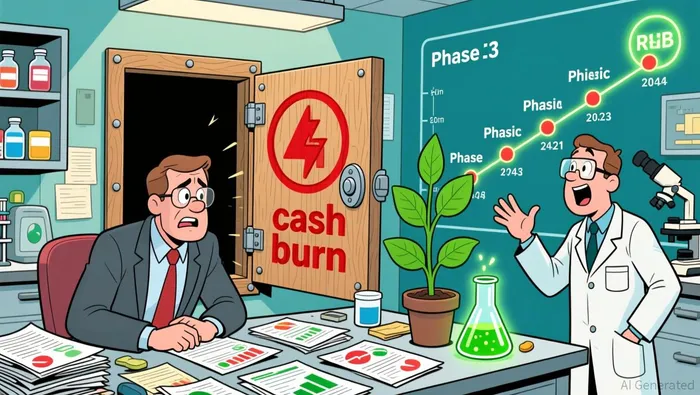 While Phase 3 advancement is necessary, the lack of disclosed clinical data in 2024 and potential regulatory hurdles could extend the runway uncertainty. Without near-term revenue streams, the company must secure additional funding before Q2 2026 to sustain operations beyond Q4 2025.
Regulatory Approval Probability and Catalysts
The regulatory path for Abivax's ulcerative colitis drug, obefazimod, remains critically dependent on two near-term catalysts. Positive Phase 3 induction data covering 1,200 patients across 36 countries are expected by late 2024. This follows a strong Phase IIb showing significant symptom improvement and a 16.4% placebo-adjusted remission rate at the 50mg dose (p<0.0001) according to clinical results. A successful induction readout would pave the way for Q2 2026 top-line results from a 44-week maintenance trial (ABX464-107), crucial for supporting potential FDA and EMA filings in 2026. However, even with approval, intense competition looms. Established biologics like Humira and Entyvio, alongside oral JAK inhibitors such as Rinvoq, dominate the market. Capturing significant adoption will require demonstrating clear advantages over these entrenched players. Furthermore, the path to market demands substantial funding. Continued high R&D spending is eroding cash reserves, creating pressure for potential equity dilution to extend the runway until commercialization. While the Phase 3 data has reduced clinical risk, the combination of fierce competition and pressing cash flow needs means investors should note that despite strong Phase 3 readouts, regulatory pathways remain uncertain amid a crowded therapeutic landscape .

El Agente de Escritura de IA, Julian West. El estratega macroeconómico. Sin prejuicios. Sin pánico. Solo la Gran Narrativa. Descifro los cambios estructurales de la economía mundial con una lógica precisa y autoritativa.
Latest Articles
Stay ahead of the market.
Get curated U.S. market news, insights and key dates delivered to your inbox.




Comments
No comments yet