
AbbVie's Stock Slides Despite FDA Approval as Trading Volume Ranks 41st
 Aime Summary
Market Snapshot
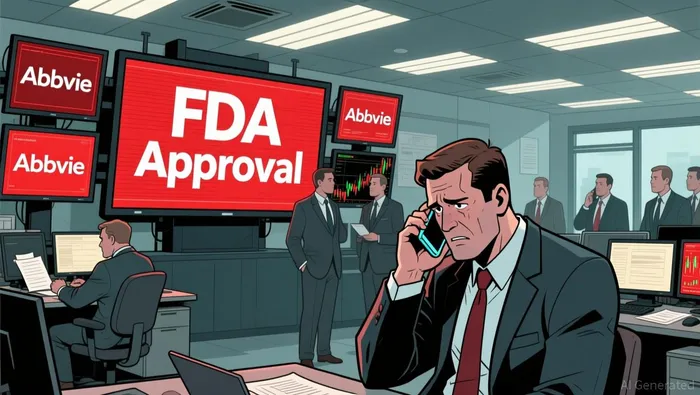
On November 19, 2025, AbbVieABBV-- (ABBV) saw its stock price decline by 0.41%, closing at $233.87. The company’s trading volume reached $1.77 billion, securing its position as the 41st highest in the market for the day. Despite the recent FDA approval of its bispecific antibody EPKINLY in combination with rituximab and lenalidomide for relapsed or refractory follicular lymphoma, the stock underperformed, reflecting mixed market sentiment ahead of broader regulatory and clinical developments.
Key Drivers
AbbVie’s recent FDA approval of EPKINLY (epcoritamab-bysp) in combination with rituximab and lenalidomide (R2) for relapsed or refractory follicular lymphoma (FL) marks a significant milestone in its oncology portfolio. This approval, based on the Phase 3 EPCORE FL-1 trial, positions EPKINLY + R2 as the first bispecific antibody combination therapy for FL in the second-line and later treatment settings. The trial demonstrated a 79% reduction in the risk of disease progression or death (hazard ratio 0.21) compared to standard R2 therapy, with an overall response rate of 89% versus 74% for R2 alone. These results, coupled with a median progression-free survival (PFS) not reached in the EPKINLY + R2 group versus 11.2 months for R2, underscore the therapy’s potential to reshape FL treatment paradigms.
The approval also converts EPKINLY’s prior accelerated monotherapy authorization for FL into full approval, validated by confirmatory trial data. This dual endorsement highlights the drug’s robust clinical profile, particularly its chemotherapy-free regimen and outpatient administration feasibility. Dr. Lorenzo Falchi, a lymphoma specialist at Memorial Sloan Kettering Cancer Center, emphasized the durability of responses and the regimen’s potential to become a new standard of care, particularly for patients seeking earlier intervention in their treatment journey. However, the FDA’s boxed warning for cytokine release syndrome (CRS) and immune effector cell-associated neurotoxicity syndrome (ICANS) remains a critical consideration, with 24% of patients experiencing CRS and one case of ICANS reported in the trial.
The approval expands AbbVie’s market opportunity in hematologic malignancies, a segment where EPKINLY is now the first bispecific antibody in the second-line FL setting. The collaboration with Genmab, which co-developed the drug, further strengthens AbbVie’s commercial prospects. Under their 2020 agreement, the companies share U.S. and Japanese commercial responsibilities, with AbbVie leading global expansion. This partnership aligns with AbbVie’s strategy to diversify its revenue streams beyond blockbuster drugs like Humira, particularly as EPKINLY’s revenues grew by 59% in Q3 2025 compared to the previous year.
Despite the positive regulatory outcome, the stock’s modest decline may reflect market skepticism about the therapy’s adoption. Key challenges include managing safety risks associated with CRS and ICANS, as well as payer negotiations over cost-effectiveness compared to existing R2 regimens. Additionally, the FDA’s traditional approval of EPKINLY as a monotherapy for FL, following its 2024 accelerated approval, adds complexity to commercialization. Analysts will closely monitor real-world uptake and safety data, particularly as the EPCORE FL-1 results are presented at the American Society of Hematology (ASH) meeting in December 2025.
The approval also underscores AbbVie’s broader strategic shift toward innovative oncology therapies. With four ongoing Phase 3 trials evaluating EPKINLY in various hematologic malignancies, including DLBCL and newly diagnosed FL, the company aims to solidify its leadership in bispecific antibody development. However, the stock’s performance remains sensitive to macroeconomic factors, such as healthcare policy shifts and competitive pressures, which could temper investor optimism despite the FDA’s endorsement.
In summary, while the EPKINLY approval represents a transformative step for AbbVie’s oncology portfolio, the market’s muted reaction highlights the delicate balance between groundbreaking clinical outcomes and practical considerations such as safety management and pricing. As AbbVie advances its pipeline and partners with Genmab, stakeholders will watch for signs of sustainable growth in the high-stakes oncology landscape.

Stay ahead of the market.
Get curated U.S. market news, insights and key dates delivered to your inbox.
AInvest
PRO
AInvest
PRO



Comments
No comments yet