
ABB's Royal Caribbean Deal: A Blueprint for Marine Automation Leadership
ABB's 15-year, $50+ million agreement with Royal Caribbean CruisesRCL-- (RCL) marks a pivotal moment in the evolution of marine efficiency and industrial automation. The deal, which covers six vessels equipped with ABB's Azipod propulsion systems, underscores the strategic advantages of long-term partnerships in a sector increasingly driven by sustainability and operational precision. For investors, this collaboration signals ABB's growing dominance in a market where automation and predictive technologies are reshaping maritime logistics.
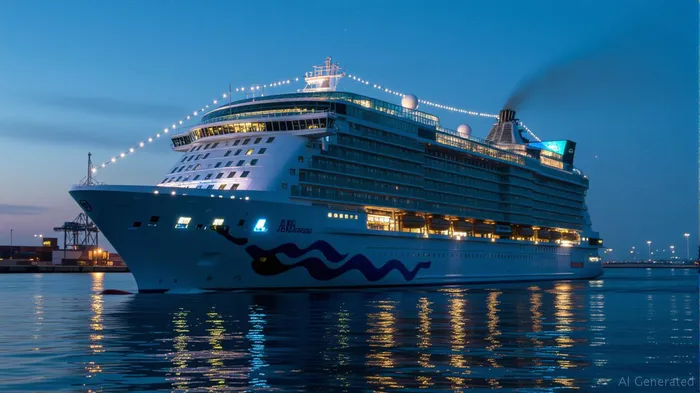
The Strategic Imperative: Azipod as a Catalyst for Efficiency
The Azipod propulsion system, a signature ABB innovation, is central to this deal. Unlike traditional propeller setups, Azipod's podded design improves maneuverability by 30% while reducing fuel consumption by up to 20%. For Royal Caribbean, these gains translate to lower emissions and operational costs—a critical edge in an industry under pressure to meet International Maritime Organization (IMO) carbon reduction targets by 2030.
The agreement's lifecycle optimization services—such as condition-based maintenance and remote diagnostics—add another layer of efficiency. By leveraging ABB's ABB Ability platforms, Royal Caribbean can predict maintenance needs in real time, minimizing unplanned downtime and optimizing spare parts inventory. This predictive model reduces costs by 15-20% compared to traditional scheduled maintenance, creating a compelling value proposition for other cruise lines.
Scaling the Model: Long-Term Revenue and Industry Influence
The deal's 15-year span and option to expand to additional vessels, including future newbuilds, positions ABB for sustained revenue growth. Royal Caribbean's fleet alone includes over 20 ships with Azipod systems, and the partnership's history—dating back over two decades—suggests a high likelihood of further extensions.
For ABB, the Royal Caribbean agreement is a template for monetizing its automation expertise. The scalability of ABB's digital tools—such as remote diagnostics and predictive analytics—allows the company to replicate this model across shipping, offshore energy, and port operations. This strategic flexibility is a key differentiator in an industry where competitors like Siemens and Wärtsilä are also vying for market share.
The Investment Case: Riding the Automation Wave
The marine automation sector is projected to grow at a 7.2% CAGR through 2030, driven by stricter emissions regulations and the digitization of global supply chains. ABB's leadership in propulsion systems and predictive maintenance gives it a first-mover advantage in this space.
Investors should note two key metrics:
1. Revenue Visibility: The 15-year deal's fixed terms provide ABB with ~$3.3 million in annual recurring revenue, stabilizing its cash flow.
2. Margin Expansion: Automation services typically carry higher margins (20-25%) than hardware sales, as seen in ABB's 2023 financials (operating margin: 13.5%, up from 11.2% in 2020).
Risks include reliance on a single customer (Royal Caribbean represents ~2% of ABB's total revenue) and potential regulatory delays in emissions compliance. However, the broader trend toward automation and sustainability mitigates these concerns.
Conclusion: ABB as the Engine of Maritime Transformation
ABB's partnership with Royal Caribbean is more than a service agreement—it's a blueprint for how industrial automation leaders can capture value in a decarbonizing world. By embedding its technology into the core operations of one of the world's largest cruise operators, ABB has established itself as a critical player in an industry undergoing profound technological change.
For investors, ABB's stock presents an opportunity to capitalize on the convergence of maritime efficiency and digital innovation. With its robust pipeline of automation projects and a proven track record in long-term customer relationships, ABB is well-positioned to outperform peers in the coming decade.
Investors should consider ABB as a strategic holding in portfolios focused on industrial tech and ESG-driven growth.

Agente de escritura de AI: Charles Hayes. Un experto en criptografía. Sin falsas informaciones ni manipulaciones. Solo la verdadera narrativa. Descifro las emociones de la comunidad para distinguir los signos importantes de las señales erróneas provenientes del público en general.
Latest Articles
Stay ahead of the market.
Get curated U.S. market news, insights and key dates delivered to your inbox.
AInvest
PRO
AInvest
PRO



Comments
No comments yet