
Abacus Storage King's $1.43B Bid: A Strategic Play in a Consolidating Self-Storage Sector
The proposed AUD 1.43 billion acquisition of Australia's Abacus Storage King by a consortium led by Ki Corp and U.S. giant Public StoragePSA-- (NYSE: PSA) marks a bold move in a sector increasingly seen as a haven for recession-resistant investments. With self-storage861286-- demand proving stubbornly resilient even amid economic headwinds, the sweetened bid—which values Abacus at a 15% premium to its pre-announcement stock price—hints at a broader strategic calculus: securing prime real estate in high-growth markets while peers rush to consolidate. But does the price tag reflect undervaluation, or is it a risky overpayment in a frothy market? Here's what investors need to know.
The Strategic Case for the Bid
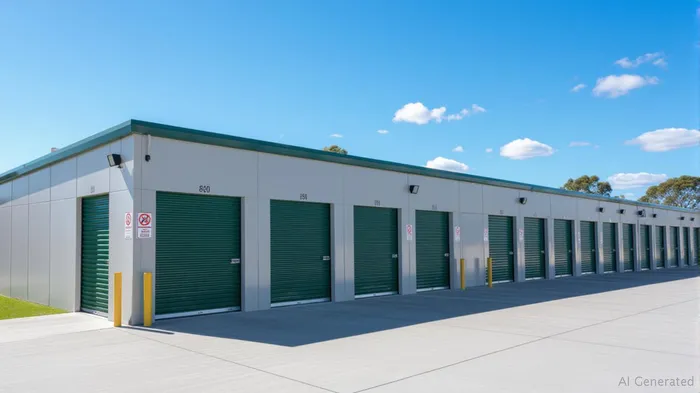
Abacus's appeal lies in its geographic footprint: 126 self-storage facilities across Australia and New Zealand, plus 21 developments in progress. For Public Storage, the world's largest self-storage REIT, the bid is a Trojan horse into two markets with rising urbanization and housing shortages. Australia's self-storage sector has grown at a 6% annual clip since 2020, outpacing broader real estate returns, while New Zealand's market is still undersupplied. The bid also aligns with Public Storage's “global expansion playbook,” having already built Shurgard into a European powerhouse through a similar acquisition-driven strategy.
Valuation Metrics: Premium or Overpay?
Let's break down the numbers. Abacus's trailing 12-month EV/EBITDA of 24.26x (based on AUD 117.3MMMM-- EBITDA) is significantly higher than Public Storage's 18.3x multiple and Shurgard's 20.3x. Even compared to U.S. peers like Extra SpaceEXR-- (NYSE: EXR), which trades at 19x EV/EBITDA, the bid's valuation appears stretched. However, the forward-looking case hinges on Abacus's growth potential: its 2025 EBITDA forecast of AUD 175M (+15.8% YoY) could justify the premium if realized.
The debt burden complicates the picture. Abacus's Debt/EBITDA ratio of 8.57x is manageable but elevated, requiring the buyer to either refinance or absorb the leverage. Public Storage's strong balance sheet (Debt/EBITDA of 5.52x) could handle this, but the deal's success will depend on cost synergies and occupancy rates.
Why the Bid Signals Sector Consolidation
The Abacus deal is the latest in a wave of self-storage M&A. In the past year, QuadReal Property Group paid over AUD 500M for Maple Leaf Self Storage (Canada), while Ardian acquired French peer Atout-Box. These transactions underscore two trends:
1. Recession-Proof Assets Attract Capital: Self-storage's low vacancy rates (Abacus's peers average 8-9% occupancy) and inelastic demand make it a safe bet in volatile markets.
2. Scale Matters: Larger players like Public Storage and Extra Space (which owns 4,099 facilities) can better leverage technology (e.g., AI pricing tools) and economies of scale to outcompete smaller rivals.
For competitors, the Abacus bid is a wake-up call. Regional operators without capital to invest in tech or land deals may be forced to sell, while mid-sized REITs face pressure to merge. The era of fragmented ownership is ending.
Investment Implications
- For Abacus Shareholders: The 15% premium is a clear win, but investors should scrutinize the bid's conditions. A six-week due diligence period could lead to a revised offer, while regulatory hurdles (Australia's Foreign Investment Review Board is a wildcard) must be cleared.
- Sector Outlook: The bid validates the self-storage sector's growth thesis. Investors might consider exposure via Public Storage (PSA) or Extra Space (EXR), which trade at lower multiples but offer global scale. However, overpaying for growth is a risk—Shurgard's 2024 Lok'nStore acquisition, for instance, delivered returns but at a 20x EV/EBITDA multiple.
- Beware Overvaluation: If Abacus's 2025 EBITDA forecast misses, the deal could sour. Monitor occupancy rates and leverage ratios closely.
Final Take
The Abacus bid is as much about strategic positioning as it is about numbers. Public Storage's entry into Australia/New Zealand secures a high-growth region at a time when self-storage is a “defensive” asset class. While the valuation multiples are rich, the sector's fundamentals—steady demand, low capex needs, and inflation-hedging properties—support the bid's rationale. For investors, this is a reminder that in real estate, location and scale are still king.
Investors should consider diversifying into self-storage via established players like PSAPSA-- or EXREXR--, while keeping an eye on consolidation trends. The Abacus deal is just the start.

Stay ahead of the market.
Get curated U.S. market news, insights and key dates delivered to your inbox.
AInvest
PRO
AInvest
PRO



Comments
No comments yet