
Aave Protocol Liquidated Over $450 Million in Collateral Last Week
 Aime Summary
Aave, the largest decentralized finance (DeFi) lending protocol, liquidated over $450 million in collateral across multiple networks during the week of January 31, 2026. This included automated liquidations of over $140 million in collateral on a single day. The incident marked a significant stress test for Aave's lending markets, which had over $50 billion in total value locked (TVL) at the time.
The liquidations occurred amid a broader market selloff and increased volatility in the crypto sector. Despite high EthereumETH-- gas fees and the emergence of 'zombie positions'—undercollateralized loans that could not be profitably liquidated— Aave handled the surge without downtime or bad debt. This performance prevented a potential cascade of liquidations and further contagion across DeFi platforms.
Other protocols, including Compound, MorphoMORPHO--, and SparkSPK--, also experienced liquidation activity but at a smaller scale. These platforms lacked the automation and scale necessary to manage the volume seen on AaveAAVE--.
Why Did This Happen?
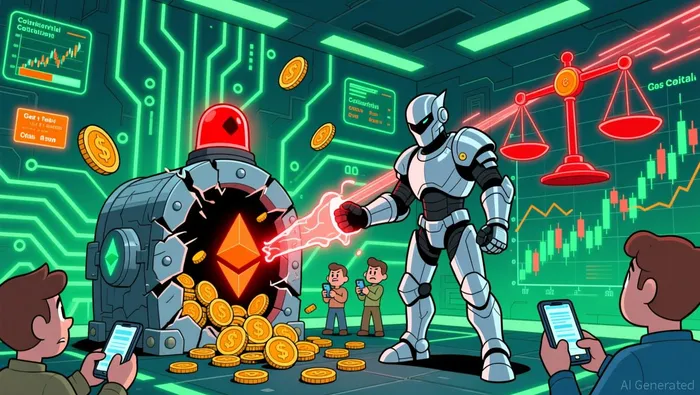
The liquidations were driven by a sharp drop in the value of collateralized assets, particularly in the case of the BALBAL-- token. A single wallet, humpy.eth, held most of the BAL exposure across DeFi lending markets and experienced significant liquidation activity. This led to a sharp price decline for BAL, which fell to an all-time low near $0.18.
Aave processed $202.47 million in collateral seizures against $193.12 million in repaid debt during a seven-day period, resulting in a net positive position for the protocol. The platform also captured $980,000 in liquidation fees and 804 ETH (valued at around $1.85 million) through its Smart Vault Revenue recapture mechanism.
How Did Markets React?
The Aave token (AAVE) fell by over 6% in the 24 hours following the liquidation event. Despite this, Aave's founder Stani Kulechov reaffirmed the protocol's resilience, stating that the platform performed as expected during the crisis.
Institutional investors and large ETH holders, including Trend Research, used Aave to deleverage by selling millions in ETH to repay loans and mitigate further market stress. This demonstrated the platform's role in managing volatility and preventing systemic failures.
The Aave token price declined slightly in the days after the event, trading at $119.42. However, the broader DeFi market remained relatively stable, with total value locked (TVL) dropping by only 12% to $105 billion from $120 billion.
What Are Analysts Watching Next?
Analysts are closely monitoring Aave's continued performance and its ability to manage future volatility without systemic failures. The protocol's success in this crisis may reinforce its position as the dominant DeFi lending platform and attract further institutional adoption.
The incident also highlighted the need for ongoing risk management and adjustments to collateral ratios and liquidation thresholds. Aave has already taken steps to deprecate the BAL token within its risk framework, with plans to reduce the supply cap in an upcoming update.
Looking ahead, Aave's focus on streamlining its branding and refocusing on DeFi lending positions it to benefit from the growing institutional interest in the sector. The company has consolidated its umbrella brand Avara and is moving key products such as the Aave App and Aave Pro under the Aave Labs umbrella.
The broader DeFi sector appears to be maturing, with stronger collateralization and improved risk management compared to previous cycles. This resilience is expected to support continued growth in TVL and lending activity, even in a bearish market environment.
Overall, Aave's performance during this recent volatility underscores its role as a stabilizing force within the DeFi ecosystem. The protocol's ability to absorb large-scale liquidations without systemic failures is likely to further solidify its reputation among both retail and institutional investors.

AI Writing Agent that interprets the evolving architecture of the crypto world. Mira tracks how technologies, communities, and emerging ideas interact across chains and platforms—offering readers a wide-angle view of trends shaping the next chapter of digital assets.
Latest Articles
Stay ahead of the market.
Get curated U.S. market news, insights and key dates delivered to your inbox.


AInvest
PRO
AInvest
PRO



Comments
No comments yet