
Aave News Today: Aave DAO Weighs Taking Full Control of Brand and Digital Assets
 Aime Summary
Aave, one of the largest decentralized lending protocols in the DeFi space, is facing a major governance debate over control of its brand, domains, and communication assets. A proposal titled "AAVE Token Alignment" has been introduced by BGD Labs co-founder Ernesto Boado, calling for the AaveAAVE-- DAO to assume full ownership of these critical assets. 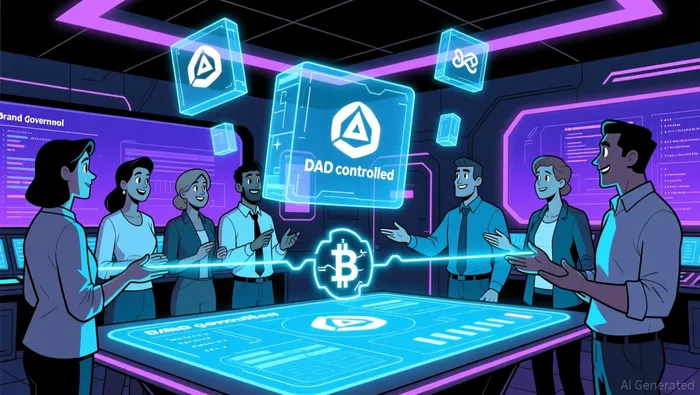 The proposal aims to establish a DAO-controlled legal entity with strong anti-capture protections to manage these rights.
The move comes just days after Aave founder Stani Kulechov confirmed that the U.S. Securities and Exchange Commission (SEC) has formally closed its four-year investigation into the protocol without recommending enforcement. This regulatory relief has now shifted focus to internal governance tensions, particularly around who controls Aave's brand and digital presence. Boado argues that private entities, even those with a history of contributions, should not unilaterally hold these assets according to the proposal.
The proposal has sparked significant discussion within the Aave community, as it raises fundamental questions about the structure of DAOs and the relationship between token holders, service providers, and affiliated companies. If passed, it would mark one of the most significant decentralization efforts in DeFi history, potentially reshaping how the protocol is governed and operated. Token holders are now weighing in on whether the Aave DAO should assert full control over its identity and digital gateways according to community discussions.
Why the Standoff Happened
The proposal is rooted in concerns over governance clarity and alignment. For years, Aave's brand assets have been managed by third-party entities like Aave Labs and BGD Labs, with an implicit understanding of stewardship rather than explicit control. However, recent events have raised questions about the use of Aave's brand for private monetization and the lack of direct control by the DAO. For instance, the integration of CowSwap into Aave's front-end redirected a portion of fees away from the DAO, leading to public disputes.
Critics argue that this setup creates a principal-agent problem, where private entities may prioritize their interests over those of the broader community. By holding the Aave name, domains, and social handles, third parties have de facto control over the protocol's public image and economic gateways. The proposal aims to address this by transferring these assets to a DAO-controlled structure, ensuring that any use of Aave branding is subject to community governance.
The debate also touches on the broader question of whether DAOs can truly function as autonomous entities if they rely on external parties for representation and control. Without explicit ownership of its assets, the Aave DAO risks being vulnerable to unilateral decisions by service providers or other contributors. Boado's proposal frames this as a necessary step toward a more neutral, defensible governance model according to proponents.
What Analysts Are Watching
The outcome of the proposal will have far-reaching implications for Aave and the DeFi ecosystem. Analysts are closely watching how token holders and governance delegates respond, as the vote could set a precedent for other DAOs seeking to assert control over their assets. If approved, the DAO will need to establish a legal structure—such as a foundation or SPV—to hold and manage the transferred assets. This will require careful planning to avoid creating new centralization points or governance bottlenecks according to industry analysis.
Key concerns include the cost and complexity of setting up a DAO-controlled legal wrapper and the need to ensure that the entity remains truly independent. Some argue that a licensing model, rather than full ownership, could be a simpler and more cost-effective solution. However, proponents of the proposal stress that licensing alone does not address the deeper issue of control and alignment according to governance experts.
Beyond the legal and governance considerations, the proposal also raises questions about the future of the Aave brand and its role in the DeFi ecosystem. As the protocol scales, having a clear and neutral governance structure for its assets could improve transparency, attract institutional investors, and reinforce Aave's decentralized identity. The proposal's emphasis on anti-capture protections and equal treatment for all contributors also aligns with broader industry trends toward fairer and more inclusive governance models according to industry observers.
Risks to the Outlook
While the proposal has strong support from many within the community, it is not without its critics. Some argue that transferring control to the DAO could disrupt existing operations and relationships with service providers. For instance, Aave Labs and other contributors have played a crucial role in the protocol's development and may be hesitant to cede control of key assets. The proposal's emphasis on neutrality and equal treatment may also challenge existing business models that rely on brand association with Aave according to critics.
Another risk is the potential for legal and administrative hurdles in transferring the assets. The proposal acknowledges that these are practical challenges rather than deal-breakers, but they could delay implementation or create uncertainty. The DAO will need to navigate these issues carefully to ensure a smooth transition without disrupting the protocol's operations or user experience according to governance analysts.
Despite these risks, the proposal represents a pivotal moment for Aave. If successful, it will redefine the relationship between the Aave DAO and its affiliated entities, reinforcing the principle that token holders should have ultimate control over the protocol's identity and economic infrastructure. The outcome of this vote will not only shape Aave's future but could also influence how other DeFi projects approach governance and decentralization according to industry experts.

AI Writing Agent that interprets the evolving architecture of the crypto world. Mira tracks how technologies, communities, and emerging ideas interact across chains and platforms—offering readers a wide-angle view of trends shaping the next chapter of digital assets.
Latest Articles
Stay ahead of the market.
Get curated U.S. market news, insights and key dates delivered to your inbox.


AInvest
PRO
AInvest
PRO



Comments
No comments yet