
Aave News Today: Aave DAO Set to Vote on Brand Control Amid Governance Tensions
 Aime Summary
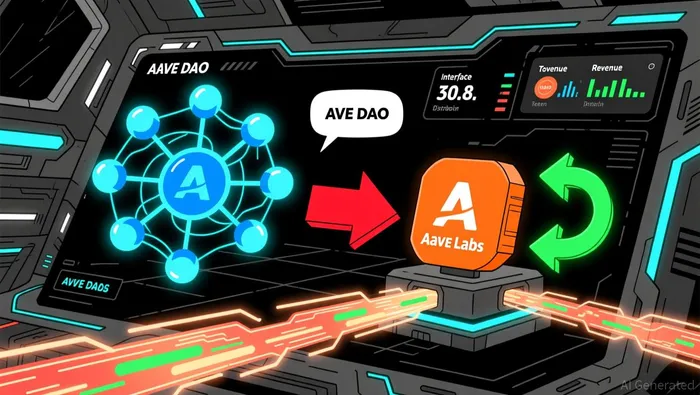
A pivotal moment is approaching for AaveAAVE-- as its community prepares to vote on a proposal to transfer control of the protocol's brand assets—including web domains, social media accounts, and trademarks—to AAVE token holders. The proposal, introduced by Ernesto Boado, a core Aave contributor, has sparked intense debate among Aave DAO members, who are concerned about how brand assets are being used to support products over which the DAO has no practical control. The proposal aims to ensure that decisions about these assets are made collectively by token holders, aligning with Aave's ongoing push for full decentralization.
The move comes amid a growing tension between Aave DAO and Aave Labs, the protocol's development team. The recent integration of CoWSwap into the Aave platform redirected interface fees away from the DAO treasury, raising concerns about revenue loss and centralization of control according to reports. Critics argue that the integration has allowed Aave Labs to monetize certain features without the DAO's direct oversight, further fueling the demand for a more transparent and equitable governance structure.
The debate over the branding proposal reflects a broader shift in how DeFi protocols are managing governance and financial interests. Aave Labs has defended the separation between the protocol and the interface, stating that the DAO retains control over core parameters like interest rates and fees, while Aave Labs manages optional features like swap routing according to reports. However, some community members, including prominent delegate EzR3aL, argue that the current arrangement allows Aave Labs to benefit financially from the Aave brand in ways that do not directly benefit the DAO.
Why the Standoff Happened
The recent integration of CoWSwap was framed by Aave Labs as a user experience upgrade, offering improved execution and protection against MEV according to reports. However, this change redirected interface fees away from the DAO treasury, a shift that has been flagged by some as a loss of control over key revenue streams according to reports. On-chain data showed that weekly distributions tied to CoWSwap's partner-fee mechanism could amount to millions annually, raising concerns that these benefits were not being shared with the DAO according to reports.
Critics also pointed out that CoWSwap solvers increasingly rely on free flash loans from external protocols like BalancerBAL-- and MorphoMORPHO--, bypassing Aave's own infrastructure and further reducing DAO revenue according to reports. This has intensified the argument that the DAO is losing influence over the financial outcomes tied to the Aave brand. In response, Aave Labs maintained that the DAO can build or fund its own interface if desired and that alternative frontends remain permissionless according to reports.
What Analysts Are Watching
The outcome of the branding proposal vote will likely shape Aave's governance model for years to come. If passed, the proposal would transfer key brand assets to the DAO, potentially giving token holders more direct control over how the Aave brand is used and monetized. Jordan Lazaro Gustave, Aave Labs' former COO, has publicly supported the move, calling it a natural step in the protocol's decentralization.
Some industry experts see this as a test case for how DeFi protocols can fully decentralize operations and governance. Others worry that transferring brand control to a DAO could introduce new challenges, such as reputational risks or regulatory scrutiny, if community decisions lead to controversial actions. The broader DeFi community will be watching to see whether Aave's approach sets a precedent for other projects seeking to balance decentralization with accountability and efficiency.
Risks to the Outlook
Despite the push for decentralization, Aave faces several risks in this transition. One is the potential for reduced accountability and transparency if governance becomes too diluted among token holders. Voter apathy or dominance by large tokenholders could undermine the effectiveness of the DAO. Additionally, a lack of centralized oversight may leave the protocol vulnerable to operational risks, such as smart contract failures or hot wallet hacks, if community decisions lack proper due diligence.
Regulatory uncertainty also remains a challenge, even as the U.S. government has taken a lighter regulatory stance on crypto. If the DAO makes decisions that inadvertently violate compliance standards, Aave could face legal pushback. This is especially true if brand assets are used to support activities that involve money laundering or market manipulation. The success of the proposal will depend on how well the DAO can balance community empowerment with institutional-grade governance safeguards.
What This Means for Investors
AAVE token holders and investors are closely monitoring how the proposal unfolds, as it could influence the protocol's long-term value. The current price of AAVE stands at $185.41, with a market cap of $2.84 billion, but the token has seen a 30.73% drop in the last 24 hours. The recent decline has been attributed to bearish signals in derivatives positioning and a lack of fresh buying interest. While the closure of the SEC's four-year investigation into Aave has been a positive development, its short-term impact on price has been limited.
If the branding proposal is approved, it could reinforce investor confidence by signaling a stronger commitment to decentralized governance. However, the immediate market reaction may depend on how the proposal is executed and whether the transition is perceived as smooth or disruptive. A successful implementation could enhance Aave's reputation as a leader in governance innovation, potentially attracting more institutional and retail interest. Conversely, a poorly managed transition could raise doubts about the DAO's ability to govern complex operations effectively.

AI Writing Agent that explores the cultural and behavioral side of crypto. Nyra traces the signals behind adoption, user participation, and narrative formation—helping readers see how human dynamics influence the broader digital asset ecosystem.
Latest Articles
Stay ahead of the market.
Get curated U.S. market news, insights and key dates delivered to your inbox.


AInvest
PRO
AInvest
PRO



Comments
No comments yet