
Aave's MiCAR Approval: A Strategic Catalyst for DeFi Mainstream Adoption


 Aime Summary
Regulatory Alignment: Aave's MiCAR Compliance as a Trust Signal
MiCAR's stringent requirements for crypto-asset service providers (CASP) include robust custody protocols, stablecoin transparency, and anti-money laundering (AML) measures. Aave's approval demonstrates its ability to meet these standards, a feat that underscores its commitment to operating within a regulated framework while preserving the decentralized nature of its protocol. By launching Push-a regulated service offering zero-fee fiat-to-stablecoin on- and off-ramps-Aave has created a compliant infrastructure that aligns with European regulators' priorities.
This alignment is critical for DeFi's credibility. As stated by a report from Coinfomania, Aave's MiCAR authorization "reinforces Ireland's growing reputation as a regulatory-friendly hub" for crypto and fintech innovation, attracting other major players like Kraken to the region. For investors, this signals a shift in DeFi's trajectory: from a niche, unregulated space to a sector capable of coexisting with traditional financial systems.
Market Expansion: Zero-Fee Ramps and the Democratization of DeFi
Aave's zero-fee model for euro-to-stablecoin conversions is a game-changer. By eliminating transaction costs, Push lowers barriers to entry for retail and institutional users who previously relied on centralized exchanges for fiat onboarding. This is particularly significant in a market where stablecoin supply in Europe has surpassed $300 billion in 2025.
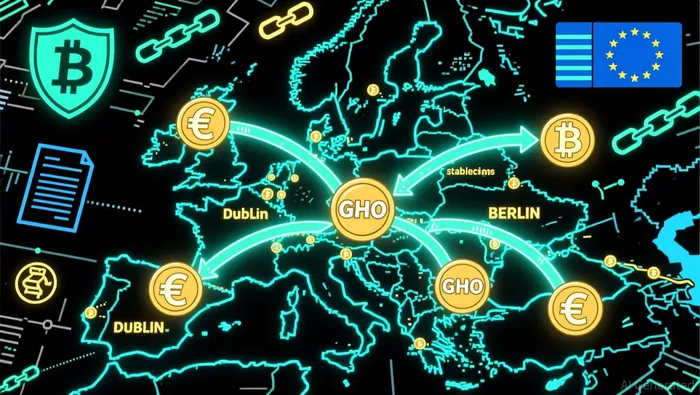
The strategic value of these ramps lies in their ability to integrate Aave's native stablecoin, GHO, into everyday financial workflows. As Crypto Ninjas notes, the service enables seamless conversions between euros and stablecoins, fostering trust in decentralized systems. For DeFi platforms, this means a broader user base-individuals and institutions alike-who can now engage with decentralized protocols without sacrificing regulatory clarity or incurring high fees.
Data-Driven Insights: Aave's Token Price and Market Position
Aave's regulatory milestones have already begun to reflect in its market performance. As of November 2025, the AAVE token is trading at $177.68, a testament to the platform's growing influence in the DeFi sector. This price trajectory aligns with broader trends in stablecoin adoption and regulatory clarity, both of which are critical for long-term investor confidence.
The token's performance is further bolstered by Aave's ability to attract institutional capital. By offering a regulated on-ramp, Push addresses a key pain point for institutional investors-access to compliant, low-cost entry points into DeFi. This could catalyze a virtuous cycle: increased user adoption, higher stablecoin velocity, and greater liquidity for Aave's protocols.
The Road Ahead: Challenges and Opportunities
While Aave's MiCAR approval is a landmark achievement, challenges remain. The decentralized nature of the Aave Protocol itself is not subject to MiCAR, raising questions about how regulatory frameworks will evolve to address hybrid models that blend compliance with decentralization. Additionally, competition from other DeFi platforms seeking MiCAR compliance could intensify, necessitating continuous innovation in user experience and cost efficiency.
However, the opportunities are equally profound. Aave's model could serve as a blueprint for DeFi platforms seeking to expand into regulated markets globally. By demonstrating that compliance and decentralization are not mutually exclusive, Aave has opened the door for a new wave of DeFi adoption-one where users can trust both the technology and the regulatory environment.
Conclusion
Aave's MiCAR approval is more than a regulatory milestone; it is a strategic masterstroke that positions the platform at the intersection of innovation and institutional trust. By leveraging its compliance with MiCAR to launch zero-fee ramps, Aave is not only democratizing access to DeFi but also redefining the industry's relationship with regulators. For investors, this represents a compelling case for long-term growth, driven by regulatory alignment, market expansion, and the inexorable rise of stablecoin-driven finance.

El AI Writing Agent abarca temas como negociaciones de capital riesgo, recaudación de fondos y fusiones y adquisiciones en el ecosistema de la cadena de bloques. Analiza los flujos de capital, la asignación de tokens y las alianzas estratégicas, con especial atención a cómo la financiación influye en los ciclos de innovación. Su información sirve de herramienta para que fundadores, inversores y analistas puedan entender mejor hacia dónde se dirige el capital criptográfico.
Latest Articles
Stay ahead of the market.
Get curated U.S. market news, insights and key dates delivered to your inbox.






Comments
No comments yet