
Aave Loses Core Developer Amid Governance Dispute, Impacts DAO and Aave Token Price
 Aime Summary
BGD Labs, a key contributor to AaveAAVE-- V3, is withdrawing from the DAO, citing concerns over governance misalignment and centralization around Aave Labs. This move has led to a 6% drop in the Aave token price.
Aave Labs is proposing to redirect 100% of revenue from Aave products to the DAO treasury, aiming to capture value from Aave V3's $100 million+ annualized revenue. The initiative is supported by growing regulatory clarity.
The Aave v3 deployment on Mantle, including support for wrapped rsETH (wrsETH), introduces new DeFi opportunities for users to leverage their restaked ETH positions without liquidation. Incentives and increased liquidity are part of the launch strategy.
BGD Labs’ departure underscores ongoing tensions within the Aave ecosystem between decentralized governance and technical leadership. The team cited a lack of recognition for technical contributions and an unbalanced governance process regarding v3 and v4 development. To ensure continuity, a $200,000 retainer has been proposed for transitional support.
The Aave DAO faces significant questions about the future of v3 and its continued relevance amid the push for v4. Aave Labs’ CEO Stani Kulechov has offered to maintain v3 until users are ready to migrate to v4. This shift could alter the governance dynamics of the DAO and affect how the community manages its technical roadmap according to reports.
The Aave Labs proposal to redirect revenue to the DAO treasury is part of broader efforts to realign incentives and strengthen the protocol’s financial model. With v3 generating substantial annualized revenue, the DAO could benefit from retaining these earnings if the regulatory environment continues to improve as data shows.
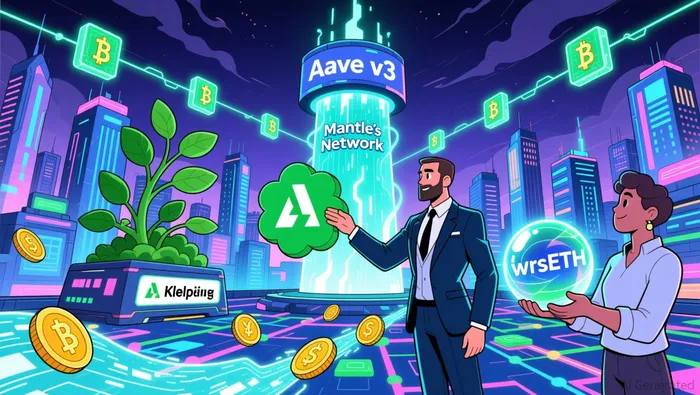
The Aave v3 launch on Mantle, supported by Kelp’s rsETH, expands the reach of liquid restaking and DeFi opportunities. Users can now deposit, borrow, and loop wrsETH, enhancing capital efficiency without selling their restaked ETH positions according to the launch strategy.
Grayscale’s filing to convert its Aave Trust into a spot ETF represents a potential bridge between DeFi and traditional markets. If approved, the ETF could provide institutional investors with regulated access to Aave tokens and boost on-chain adoption as reported.
Aave’s ecosystem is evolving amid challenges and opportunities. The DAO’s ability to retain technical talent and adapt its governance model will be critical in maintaining its position in DeFi. As Aave v4 development progresses, the community must balance innovation with inclusivity and transparency according to analysis.
Will Aave’s DAO governance withstand the departure of core contributors?
The departure of BGD Labs raises concerns about the Aave DAO’s ability to manage technical transitions and maintain governance stability. The team’s withdrawal highlights a perceived imbalance between technical contributions and governance influence. A two-month $200,000 retainer has been proposed to ensure a smooth transition, but this does not address the underlying governance issues as noted.
The Aave DAO has faced ongoing debates over the influence of Aave Labs, particularly regarding the prioritization of v4 development. Critics argue that the shift toward v4 has come at the expense of v3 improvements and community input. This governance tension could impact the protocol’s long-term sustainability and developer engagement according to reports.
Aave Labs has pledged to take on v3 maintenance while the community considers migration to v4. This arrangement may alleviate immediate concerns but does not resolve the broader governance challenges. The DAO must find a way to balance innovation with decentralized decision-making to retain trust and participation as detailed.
What are the implications of Aave v3’s expansion to Mantle and wrsETH support?
The Aave v3 deployment on Mantle, including support for wrsETH, opens new avenues for DeFi participation and capital efficiency. Users can now access liquidity without liquidating their restaked ETH positions, which enhances the value proposition of liquid restaking according to the launch.
The integration with Kelp’s rsETH also enables users to leverage their restaked positions in lending markets and decentralized exchanges. This expansion increases the utility of Aave v3 and supports the broader DeFi ecosystem on Mantle as reported.
Incentives and liquidity rewards are part of the launch strategy to attract users and promote adoption. While these rewards are not guaranteed, they serve as a short-term driver for participation and network growth according to strategy.
The partnership with Merchant Moe further strengthens the DeFi infrastructure on Mantle by enabling wrsETH trading and liquidity provision. This integration supports advanced yield strategies and capital efficiency, positioning Mantle as a key hub for DeFi innovation according to the announcement.
How does the Grayscale ETF filing impact Aave’s institutional adoption and token value?
Grayscale’s filing to convert its Aave Trust into a spot ETF could facilitate institutional access to Aave tokens, signaling growing interest in DeFi assets. The proposed ETF would track the AAVE token directly and trade on NYSE Arca as stated.
This move aligns with broader trends toward institutional adoption of crypto assets. Aave’s current market cap of around $1.8 billion makes it an attractive asset for regulated exposure. If approved, the ETF could enhance Aave’s visibility and liquidity in traditional markets according to analysis.
The filing also reflects confidence in Aave’s governance and protocol stability. By offering regulated access to a DeFi token, Grayscale is signaling the potential for DeFi to coexist with traditional financial systems as reported.
However, the success of the ETF will depend on regulatory approval and market demand. The 2.5% sponsor fee paid in AAVE and Coinbase’s role as custodian are key components of the proposal according to the filing.

Blending traditional trading wisdom with cutting-edge cryptocurrency insights.
Latest Articles
Stay ahead of the market.
Get curated U.S. market news, insights and key dates delivered to your inbox.


AInvest
PRO
AInvest
PRO



Comments
No comments yet