
AAVE Jumps 10% as Founder Proposes Revenue Sharing After Governance Clash
 Aime Summary
- Aave founder Stani Kulechov proposed sharing off-protocol revenue with AAVEAAVE-- holders after a failed governance vote.
- The AAVE token surged 10% following the announcement of the revenue-sharing framework.
- Concerns remain about governance centralization and the dual onchain-offchain structure.
- The proposal aims to support Aave's expansion into real-world assets and institutional finance.
Aave (AAVE) is navigating a pivotal governance moment after founder Stani Kulechov proposed sharing revenue from non-protocol businesses with token holders. This follows a rejected December vote that sought to transfer brand assets like domains and social media accounts to decentralized autonomous organization (DAO) control. The rejection sparked concerns about Aave Labs' influence and led to a 14% price drop. Kulechov's new revenue-sharing plan quickly reversed that loss, driving a 10% rally as investors bet on improved alignment.
What Led to Aave's Revenue Sharing Proposal?
Tensions flared when an Aave governance proposal to transfer brand assets to the DAO failed decisively. The vote, rejected by 55% of participating token holders with 41% abstaining, aimed to decentralize control over websites and social media. Critics argued Aave Labs retained excessive influence over off-protocol revenue streams like front-end swap fees. That tension triggered a 14% drop in AAVE's price.
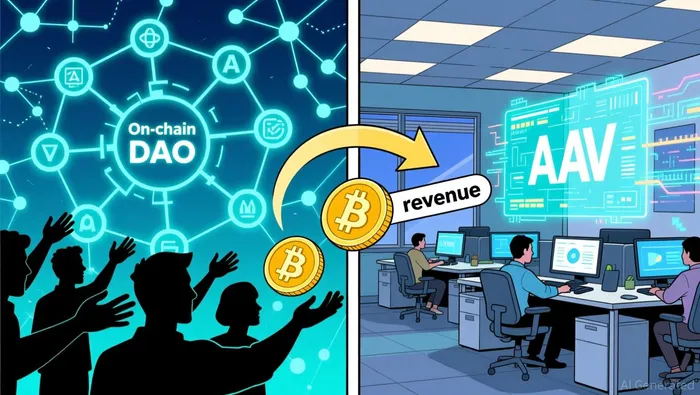
Founder Stani Kulechov responded by pledging a new revenue-sharing model. He committed to distributing income from products built atop Aave's core lending protocol directly to token holders. The proposal also addresses governance safeguards for the Aave brand. This structural reset aims to mend the rift while supporting expansion.
How Will Revenue Sharing Work and What Are the Challenges?
The framework targets revenue generated outside Aave's core lending protocol. This includes fees from the official app, future consumer products, and institutional offerings. A formal vote is expected soon to outline distribution mechanics and brand safeguards. Still, significant governance hurdles remain.
Centralization risks persist, with the top three wallets controlling 58% of voting power. Kulechov's recent $15 million token purchase raised questions about founder influence despite his stated conviction. The dual structure — onchain DAO governance versus offchain Aave Labs monetization — creates inherent tension. Investors are watching whether the new model can achieve true alignment.
What Does This Mean for Aave's Future?
Kulechov's vision extends beyond decentralized crypto lending. He is pushing Aave toward real-world assets (RWAs), institutional credit, and consumer finance. Upcoming protocol upgrades like V4 and the GHO stablecoin are central to this expansion. Revenue sharing could help fund and incentivize these ambitious goals.
However, execution risks are high as the protocol scales. Balancing decentralized governance with efficient product development requires careful design. The outcome of the upcoming DAO vote will signal whether token holders back this new direction. Success hinges on resolving the governance-value capture disconnect.

Blending traditional trading wisdom with cutting-edge cryptocurrency insights.
Latest Articles
Stay ahead of the market.
Get curated U.S. market news, insights and key dates delivered to your inbox.


AInvest
PRO
AInvest
PRO



Comments
No comments yet