
Aave Consolidates DeFi Focus as SHIB Burn Rate Pauses and Price Drops
 Aime Summary
- Aave founder Stani Kulechov announced the retirement of the Avara brand and the shutdown of the Family wallet, refocusing operations on decentralized finance.
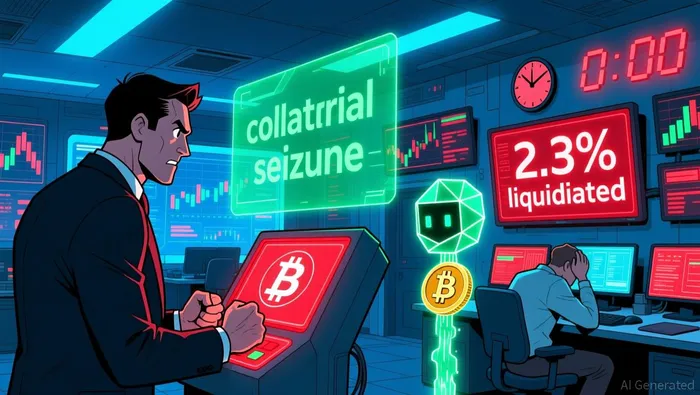
- A loan backed by 2.3% of the total AAVEAAVE-- supply is undergoing tranches of liquidations due to a price drop, with $2 million in USDC debt being covered by seizing AAVE collateral.
- Shiba Inu's burn rate has dropped to zero in the last 24 hours, while its price has declined by 4.51%, raising concerns about further downward movement if key support levels are breached.
Aave continues to solidify its position as a dominant DeFi lending platform, with 61.5% market share and 52.4% TVL, as it shifts to streamline its operations and branding under Aave Labs. The consolidation reflects Aave's strategy to focus on DeFi initiatives and improve capital efficiency for users. The recent liquidation of a significant loan backed by AAVE underscores the protocol's active risk management mechanisms and the challenges of volatile market conditions.
Meanwhile, the pause in Shiba Inu's burn rate highlights growing uncertainty in the memeMEME-- coin space. With no tokens removed from circulation and a declining price, investors are closely watching whether SHIBSHIB-- will continue to lose value or stabilize in the near term. The lack of active burning exacerbates concerns over supply pressure and investor sentiment in the Shiba InuSHIB-- ecosystem.
Why Is Aave's Liquidation Mechanism Important for DeFi?
Aave's liquidation system plays a critical role in maintaining the stability of the DeFi ecosystem by ensuring that risky loans are managed efficiently. When a loan's health factor drops below 1, the system triggers liquidation events, allowing any user to repay debt and seize collateral at a discount. This mechanism ensures the platform's solvency and deters excessive leverage. The recent liquidation of a $2 million loan backed by 2.3% of the AAVE supply demonstrates how Aave's system operates in real-world scenarios of market volatility.
The impact of such events can ripple across DeFi, as large collateral seizures may affect the broader market's perception of risk and liquidity. In this case, the borrower has a history of gradually increasing loan sizes, highlighting the potential for high-stakes lending within the Aave platform.
What Does the Zero Burn Rate Mean for Shiba Inu's Future?
The zero burn rate for Shiba Inu is a red flag for investors, as it removes one of the key mechanisms for reducing supply and increasing token value. The burn rate had been a critical component of SHIB's strategy to create scarcity and drive long-term value. The absence of burning activity, combined with a price drop, suggests that investor confidence may be waning. Analysts are now monitoring whether SHIB can stabilize or if it will continue to fall below key support levels, potentially leading to an 81% decline.
For SHIB, the burn rate's pause also highlights the challenges of relying on a single mechanism for value creation. While the Shiba Inu project has expanded into NFTs and other initiatives, the token's price remains highly sensitive to market sentiment and macroeconomic conditions. A sustained period of zero burning may signal that the project is recalibrating its approach or facing internal challenges in maintaining its burn strategy.
How Are Institutional Investors Leveraging Aave's DeFi Infrastructure?
Institutional investors are increasingly leveraging Aave's lending infrastructure to optimize capital efficiency and yield generation. Aave's dominance in DeFi lending, with 61.5% market share and 52.4% TVL, positions it as the primary capital engine for the ecosystem. The platform's high liquidity allows institutions to redeploy capital across multiple DeFi protocols, maximizing returns while maintaining liquidity. This strategy has led to a 19.74% retention rate of funds on Aave, the highest among major DeFi lending platforms.
In contrast, some institutions are exploring liquid staking tokens (LSTs) to gain redeployable yield while maintaining staking benefits. LSTs allow for strategic deployment of capital but offer less raw liquidity compared to Aave's lending pools. The choice between Aave and LSTs reflects a broader trend of institutional capital seeking to balance liquidity, yield, and risk in the evolving DeFi landscape.
As the DeFi sector matures and regulatory clarity emerges, Aave's role as a capital engine is likely to expand, driven by growing demand for efficient and transparent financial tools. Meanwhile, projects like Shiba Inu face the challenge of adapting their strategies to maintain relevance in a competitive and rapidly changing market.

Blending traditional trading wisdom with cutting-edge cryptocurrency insights.
Latest Articles
Stay ahead of the market.
Get curated U.S. market news, insights and key dates delivered to your inbox.


AInvest
PRO
AInvest
PRO



Comments
No comments yet