
A2 Milk's Strategic Expansion: Leveraging Chinese Demand and Local Manufacturing to Drive Margin Growth and Shareholder Value
 Aime Summary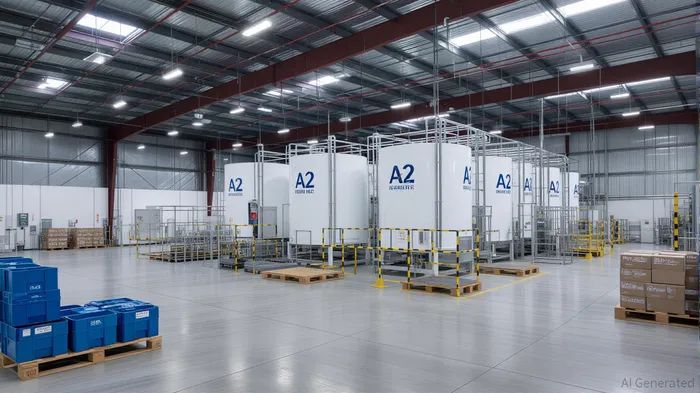
The global dairy sector is undergoing a transformation, driven by shifting consumer preferences, regulatory pressures, and the rise of premiumized nutrition products. At the forefront of this evolution is A2 Milk Co., a New Zealand-based dairy innovator that has positioned itself as a leader in the A2 protein market—a niche but rapidly growing segment of infant and adult nutrition. With China as its largest market and a strategic pivot toward local manufacturing in New Zealand, A2 Milk is demonstrating how supply chain optimization, geographic diversification, and product innovation can drive margin expansion and long-term shareholder value.
Strategic Acquisitions and Supply Chain Control
A2 Milk's recent acquisition of the Pokeno infant formula plant in New Zealand for NZ$282 million from Mengniu's subsidiary Yashili marks a pivotal step in its strategy to consolidate control over its supply chain. This move, coupled with an additional NZ$100 million in capital expenditure to boost production capacity, underscores the company's intent to meet the surging demand for its China-labeled infant formula (IMF) products. The Pokeno plant already holds critical regulatory approvals for China label registrations, eliminating a major bottleneck in scaling production for the Chinese market.
The acquisition also aligns with A2 Milk's broader goal of achieving end-to-end operational efficiency. By vertically integrating its manufacturing and distribution networks, the company reduces reliance on third-party suppliers and mitigates risks from global trade tensions and input cost volatility. This is particularly crucial in China, where the IMF market is projected to grow at a 15.7% compound annual growth rate (CAGR) through 2033, driven by rising disposable incomes and a shift toward premium, easily digestible formulas.
Margin Expansion Through Premiumization and Cost Efficiency
A2 Milk's financial performance in fiscal 2025 (ended June 30) highlights the effectiveness of its premiumization strategy. The company reported a 21% increase in post-tax net profit to NZ$202.9 million, with China and Other Asia segment revenue rising 14% to NZ$1.30 billion. This growth was fueled by A2's ability to command higher price points for its A2 protein-based infant formulas, which are marketed as gentler on digestion and less likely to trigger allergic reactions.
The company's cost structure has also benefited from operational efficiencies. For instance, the Mataura Valley Milk (MVM) plant in New Zealand, now fully electrified and powered by 100% renewable energy, has reduced production costs while aligning with global ESG standards. This sustainability-driven approach not only lowers expenses but also enhances brand appeal in markets where environmental responsibility is a key consumer consideration.
However, challenges remain. The Chinese IMF market is highly competitive, with smaller players exiting due to stringent regulatory requirements. A2 Milk's 6.4% market share in China—a 12% segment of the A2 protein niche—positions it as a formidable player, but margin pressures from trade-related costs (e.g., tariffs on agricultural inputs) could test its profitability. The company's projected operating margins of 15–16% for fiscal 2026, up from 14.4% in 2025, suggest confidence in its ability to offset these headwinds through pricing power and cost discipline.
Geographic Diversification: Mitigating Risk and Capturing New Markets
While China remains A2 Milk's core market, the company has aggressively expanded into North America, Europe, and emerging Asian markets to diversify revenue streams. In the U.S., A2's premium liquid milk segment grew 13.4% in H1 2025, with market share rising to 2.4%. The launch of products like a2 Grassfed and a2 Platinum, fortified with lactoferrin and other functional ingredients, has resonated with health-conscious consumers.
Europe, another key growth area, is expected to see A2 milk market growth at an 18.1% CAGR through 2030. A2 Milk's expansion into A2 yogurts and cheeses, alongside its emphasis on organic and grass-fed sourcing, aligns with European consumers' demand for high-quality, sustainably produced dairy. Meanwhile, in Southeast Asia and the Middle East, the company is capitalizing on rising middle-class demand for premium nutrition products, particularly in countries like India and Vietnam, where lactose intolerance is prevalent.
This geographic diversification not only reduces reliance on China's volatile IMF market but also taps into regions with more stable demographic trends. For example, while China's birth rate decline poses a long-term risk, A2's expansion into maternal and adult nutrition segments—such as fortified milk powders for seniors and immune support—offers new revenue avenues. These products, though lower-margin than infant formula, provide a buffer against sector-specific downturns.
Investment Implications and Risks
A2 Milk's strategic moves present a compelling case for long-term investors. The company's focus on premiumization, supply chain control, and geographic diversification positions it to outperform in a fragmented and competitive dairy sector. Its recent share price rally—up 6.5% following the Pokeno acquisition announcement—reflects investor optimism about its growth trajectory.
However, risks persist. Trade tensions between the U.S. and China could escalate, increasing input costs for A2's New Zealand-based operations. Additionally, demographic headwinds in China, such as the declining birth rate, may constrain IMF market growth. A2's reliance on a single product category (infant formula) for 70% of its revenue also exposes it to regulatory and competitive shocks.
Conclusion: A High-Conviction Play in a Premiumized Sector
A2 Milk's strategic pivot to local manufacturing in New Zealand, combined with its aggressive expansion into premium nutrition markets, underscores its potential to deliver sustained margin growth and shareholder value. While challenges like trade tensions and demographic shifts in China remain, the company's diversified product portfolio, ESG-aligned operations, and strong brand equity provide a robust foundation for resilience.
For investors seeking exposure to the global dairy sector's premiumization trend, A2 Milk offers a compelling opportunity. Its ability to balance innovation, cost efficiency, and geographic diversification positions it as a leader in a market where differentiation and quality are increasingly valued. As the company aims to reach NZ$2 billion in sales by 2027, the path to long-term value creation appears well-defined—provided it continues to execute its strategic vision with discipline.

Stay ahead of the market.
Get curated U.S. market news, insights and key dates delivered to your inbox.


AInvest
PRO
AInvest
PRO



Comments
No comments yet