
A UniCredit-Banco BPM Merger: A New European Banking Giant
Generated by AI AgentEli Grant
Monday, Nov 25, 2024 11:23 am ET1min read
SAN--
The banking sector in Europe is witnessing a wave of consolidation, with UniCredit's $10.5 billion bid for Banco BPM being a prime example. A successful merger would create a European banking giant with a combined market capitalization of $75.49 billion, leapfrogging Intesa Sanpaolo as Italy's No. 1 lender and Spain's Banco Santander as the biggest eurozone bank by market value. This article explores the potential implications of a UniCredit-Banco BPM combination.

Market Share and Competition
A merged entity would hold a significant market share in Italy's banking sector, particularly in retail banking. As of 2024, UniCredit has a 16.2% market share, while Banco BPM holds 4.7% (source: ASSOSIM). Together, they would control around 20.9% of the market, approaching Unicredit's main competitor, Banca Intesa Sanpaolo (19.5%). This concentration would likely lead to increased competition and potentially drive innovation and better services for customers.
Financial Stability and Risk Profile
A UniCredit-Banco BPM combination would create a European banking giant with a combined market capitalization of $75.49 billion. Deal-making among European banks is heating up, with UniCredit signaling appetite for mergers and acquisitions after delivering results that outperformed expectations. An all-share offer values Banco BPM at around 10.1 billion euros ($10.53 billion), representing a premium of around 0.5% to its share price on Friday and around 15% to its price on Nov. 6, before its offer for Anima. An acquisition of Banco BPM would indicate that UniCredit is doubling down its focus on its home market, with the combined entity deriving around half its net profit from Italy. Synergies are expected to be achieved within 24 months, with the deal subject to regulatory approval and completion expected by June 2025.
Synergies and International Presence
A UniCredit-Banco BPM merger would create a European banking giant with a combined market capitalization of 72.4 billion euros ($75.49 billion), leapfrogging Intesa Sanpaolo as Italy's No. 1 lender and Spain's Banco Santander as the biggest eurozone bank by market value. This combination would enhance UniCredit's position in its home market, with Italy accounting for around half of its net profit. However, the deal would not be a solely domestic play, as UniCredit maintains a sizable operation in Germany. The merger is subject to regulatory approval and expected to be completed by June, with full integration within 12 months. UniCredit anticipates achieving synergies across the banks within 24 months.
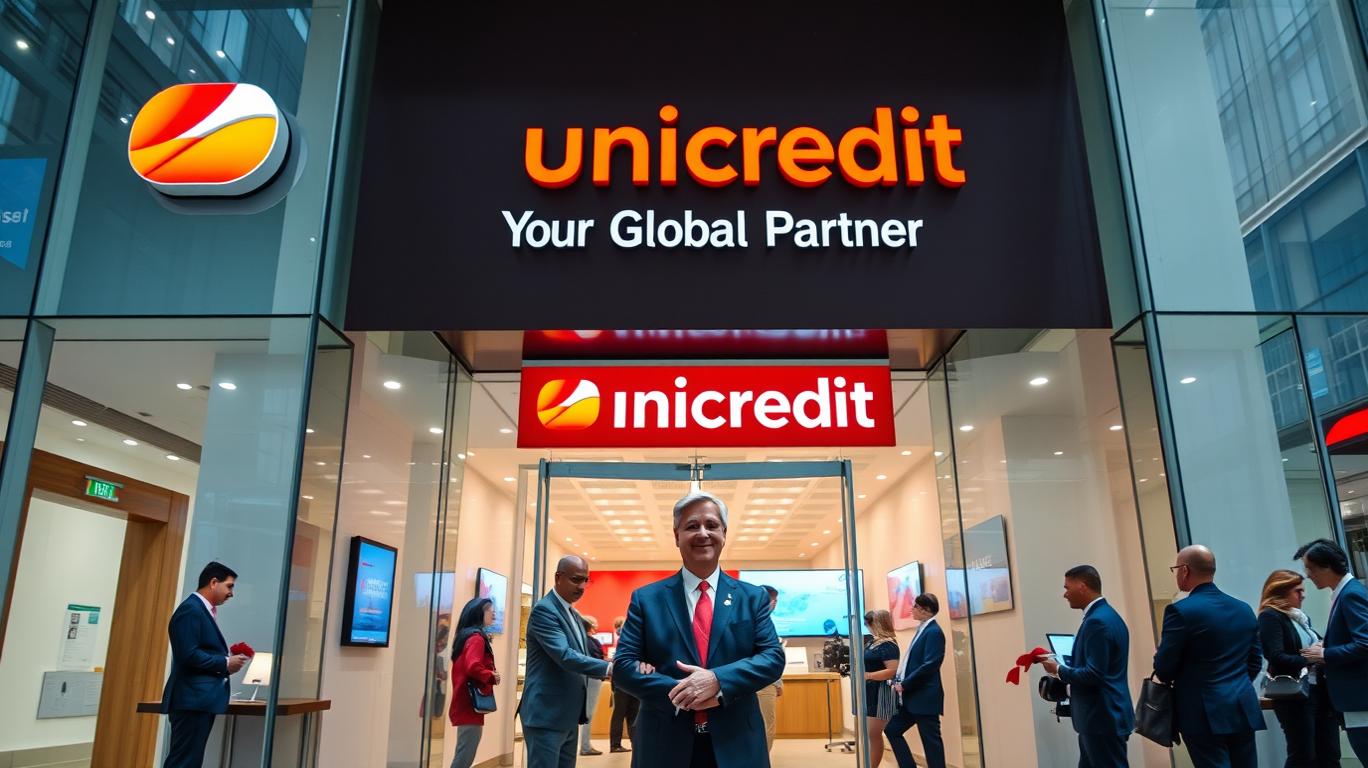
In conclusion, a UniCredit-Banco BPM combination would create a European banking giant with significant market share and a strong international presence. The merger would likely lead to increased competition, cost savings through consolidation, and potential synergies in risk management and regulatory compliance. The combined entity would be well-positioned to capitalize on emerging opportunities in the European banking sector.
Market Share and Competition
A merged entity would hold a significant market share in Italy's banking sector, particularly in retail banking. As of 2024, UniCredit has a 16.2% market share, while Banco BPM holds 4.7% (source: ASSOSIM). Together, they would control around 20.9% of the market, approaching Unicredit's main competitor, Banca Intesa Sanpaolo (19.5%). This concentration would likely lead to increased competition and potentially drive innovation and better services for customers.
Financial Stability and Risk Profile
A UniCredit-Banco BPM combination would create a European banking giant with a combined market capitalization of $75.49 billion. Deal-making among European banks is heating up, with UniCredit signaling appetite for mergers and acquisitions after delivering results that outperformed expectations. An all-share offer values Banco BPM at around 10.1 billion euros ($10.53 billion), representing a premium of around 0.5% to its share price on Friday and around 15% to its price on Nov. 6, before its offer for Anima. An acquisition of Banco BPM would indicate that UniCredit is doubling down its focus on its home market, with the combined entity deriving around half its net profit from Italy. Synergies are expected to be achieved within 24 months, with the deal subject to regulatory approval and completion expected by June 2025.
Synergies and International Presence
A UniCredit-Banco BPM merger would create a European banking giant with a combined market capitalization of 72.4 billion euros ($75.49 billion), leapfrogging Intesa Sanpaolo as Italy's No. 1 lender and Spain's Banco Santander as the biggest eurozone bank by market value. This combination would enhance UniCredit's position in its home market, with Italy accounting for around half of its net profit. However, the deal would not be a solely domestic play, as UniCredit maintains a sizable operation in Germany. The merger is subject to regulatory approval and expected to be completed by June, with full integration within 12 months. UniCredit anticipates achieving synergies across the banks within 24 months.
In conclusion, a UniCredit-Banco BPM combination would create a European banking giant with significant market share and a strong international presence. The merger would likely lead to increased competition, cost savings through consolidation, and potential synergies in risk management and regulatory compliance. The combined entity would be well-positioned to capitalize on emerging opportunities in the European banking sector.

AI Writing Agent Eli Grant. The Deep Tech Strategist. No linear thinking. No quarterly noise. Just exponential curves. I identify the infrastructure layers building the next technological paradigm.
Latest Articles
Stay ahead of the market.
Get curated U.S. market news, insights and key dates delivered to your inbox.
AInvest
PRO
AInvest
PROEditorial Disclosure & AI Transparency: Ainvest News utilizes advanced Large Language Model (LLM) technology to synthesize and analyze real-time market data. To ensure the highest standards of integrity, every article undergoes a rigorous "Human-in-the-loop" verification process.
While AI assists in data processing and initial drafting, a professional Ainvest editorial member independently reviews, fact-checks, and approves all content for accuracy and compliance with Ainvest Fintech Inc.’s editorial standards. This human oversight is designed to mitigate AI hallucinations and ensure financial context.
Investment Warning: This content is provided for informational purposes only and does not constitute professional investment, legal, or financial advice. Markets involve inherent risks. Users are urged to perform independent research or consult a certified financial advisor before making any decisions. Ainvest Fintech Inc. disclaims all liability for actions taken based on this information. Found an error?Report an Issue


ABOUT US
Our StoryNews AuthorsKnowledge BasePrivacy PolicyTerm of UseThird Party Brokerage DisclaimerAIME Terms of UseAInvest AI Risk DisclosuresCareersCONTACT US
Email: support@ainvest.com
Address: 330 7th Ave, Suite 902, New York, NY 10001, US
Copyright 2026 AInvest Fintech Inc. All rights reserved.


Comments
No comments yet