
The $9.8M FAST NY Grant and Xerox Campus Redevelopment: Unlocking Industrial Real Estate Value in Webster, NY


 Aime Summary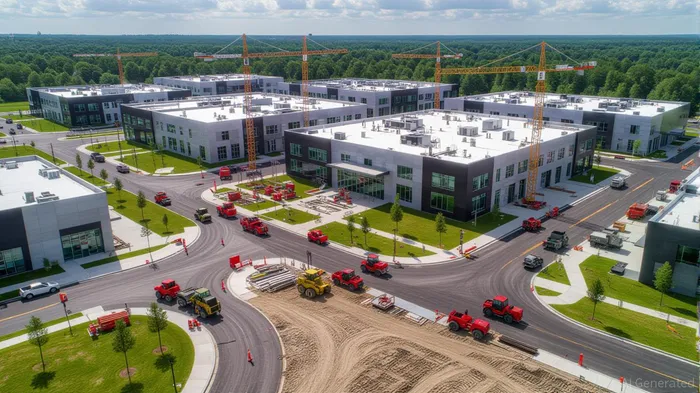
The $9.8 million FAST NY Grant allocated for the XeroxXRX-- campus redevelopment in Webster, NY, represents more than just infrastructure spending—it is a strategic catalyst for unlocking long-term value in secondary markets. As secondary markets increasingly outperform primary ones in real estate growth and economic development, Webster's transformation offers a compelling case study for investors seeking to capitalize on industrial real estate opportunities.
The FAST NY Grant: A Blueprint for Shovel-Ready Development
The FAST NY (Focused Attraction of Shovel-Ready Tracts) program, part of a $51 million statewide initiative, is designed to accelerate site readiness for advanced manufacturing and high-tech industries. The Xerox campus in Webster, a 300-acre brownfield site, is being redeveloped with infrastructure upgrades including road reconstruction, sanitary sewer expansion, and electrical grid modernization. These improvements are not just about aesthetics—they are about creating a functional, scalable environment for industries like semiconductors, clean energy, and food manufacturing.
By 2025, the campus will offer over one million square feet of industrial space, primed for companies seeking to establish operations in a region with low labor costs, skilled talent, and proximity to major transportation corridors. The project aligns with Governor Kathy Hochul's vision of a “sustainable economic ecosystem,” leveraging public-private partnerships to reduce barriers for businesses. For investors, this means a site that is not only shovel-ready but also strategically positioned to attract high-growth tenants.
Secondary Markets: The New Frontier for Real Estate Growth
Webster's redevelopment mirrors broader trends in secondary markets, where population and job growth have outpaced primary cities. From 2020 to 2025, secondary markets like Raleigh, Nashville, and Boise saw population increases of 10% or more, driven by affordability, remote work flexibility, and diversified economies. For example, the Bureau of Labor Statistics reported that non-metropolitan employment grew 4.8% in 2023, outpacing the national average.
Webster itself, while a smaller market, shares key attributes with these success stories: a median household income 27% higher than Monroe County, a top-tier school district, and a workforce trained in precision manufacturing and automation. These fundamentals make it an attractive location for industries seeking cost-effective, skilled labor. The Xerox campus, with its proximity to the $650 million fairlife production facility (which will create 250 high-paying jobs), further reinforces the region's economic resilience.
Infrastructure as a Multiplier Effect
Infrastructure investments like the FAST NY Grant act as a multiplier, amplifying broader economic development. The upgrades at the Xerox campus will not only attract manufacturers but also stimulate ancillary industries, from logistics to professional services. This creates a reinforcing cycle of investment, where public spending catalyzes private-sector activity.
For real estate investors, the implications are clear: industrial properties in Webster are likely to appreciate as demand for warehouse, manufacturing, and distribution space grows. The National Association of Realtors notes that secondary markets already offer 30% lower median home prices than primary markets, with multifamily cap rates 50-75 basis points higher. As the Xerox campus becomes operational, commercial real estate values in Webster could see a significant uplift, particularly for properties near the site.
Data-Driven Insights and Investment Opportunities
To contextualize the potential of secondary markets like Webster, consider the following data:
These metrics underscore a consistent pattern: secondary markets are not just surviving but thriving in the post-pandemic economy. The Xerox campus, with its alignment to state economic goals and infrastructure readiness, is poised to benefit from this trend.
Risks and Mitigations
While secondary markets offer strong fundamentals, they are not without risks. For instance, Apartment List's 2024 report noted rent declines in some secondary markets like Boise and Austin. However, Webster's unique combination of industrial-focused development, public investment, and proximity to a major employer (fairlife) provides a buffer against such volatility. Additionally, the site's transformation from a brownfield to a high-tech hub addresses environmental and regulatory challenges that often hinder secondary market growth.
Conclusion: A Strategic Bet on the Future
The Xerox campus redevelopment in Webster, NY, exemplifies how targeted infrastructure spending can unlock long-term value in secondary markets. By aligning with state economic strategies, leveraging public-private partnerships, and addressing infrastructure bottlenecks, the project positions Webster as a hub for advanced manufacturing and industrial real estate. For investors, this represents an opportunity to capitalize on a market that is not only shovel-ready but also strategically positioned for sustained growth.
As secondary markets continue to outperform primary ones, the lessons from Webster offer a roadmap for identifying undervalued assets with high-growth potential. The key is to focus on locations where infrastructure investments directly align with economic development goals—a formula that promises both capital appreciation and long-term stability.

Combina la sabiduría tradicional en el comercio con las perspectivas más avanzadas sobre criptomonedas.
Latest Articles
Stay ahead of the market.
Get curated U.S. market news, insights and key dates delivered to your inbox.
AInvest
PRO
AInvest
PRO



Comments
No comments yet