
Is the $891M Crypto Liquidation a Death Knell or a Golden Setup for Long-Term Investors?


 Aime Summary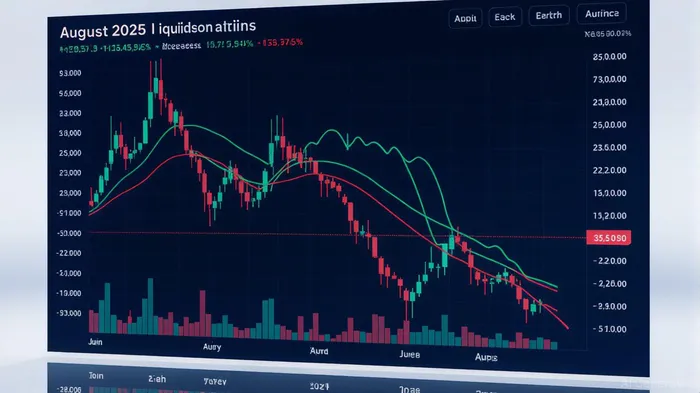
The cryptocurrency market is no stranger to bloodletting. But the recent $891 million in leveraged liquidations—triggered by a 24,000 BTC whale dump that sent BitcoinBTC-- tumbling from $114,700 to $110,700 in minutes—has left investors scrambling to answer a critical question: Is this the end of the bull run, or a buying opportunity for those with the stomach to weather the storm?
Let's break it down.
The Psychology of Leverage: A Double-Edged Sword
Leveraged trading in crypto is a high-stakes game. When traders borrow capital to amplify their bets, they're not just risking their own money—they're betting on their ability to predict price swings with surgical precision. The problem? Volatility is crypto's middle name. In the last quarter alone, we've seen $904 million in liquidations, $325 million in April, and $250 million in March. These numbers aren't anomalies; they're symptoms of a market addicted to leverage.
The August 2025 crash exposed the fragility of this system. Over 206,000 accounts were wiped out in 24 hours, with 78% of losses coming from long positions. Platforms like Bybit, BinanceETH--, and OKX absorbed the brunt, with OKX's $12.49 million single-liquidation event serving as a stark reminder of how concentrated risk can spiral. The lesson? Leverage isn't a tool—it's a loaded gun. And when the trigger is pulled, the fallout is indiscriminate.
The Halving's Shadow: Scarcity vs. Short-Term Pain
The April 2024 halving reduced Bitcoin's block reward from 6.25 BTC to 3.125 BTC, tightening supply and historically setting the stage for price surges. Post-2012 and 2016 halvings saw Bitcoin rally 90x and 30x, respectively. But this time, the market is starting from a higher base. The 30-day post-halving price increase of +10.52% as of July 2024 suggests the playbook is still in play—but with a twist.
Here's the rub: The halving's effects typically take 100–180 days to materialize. If history repeats, we could see Bitcoin test $200,000 by late 2025. But the August liquidation proves that the path won't be smooth. Whale activity—like the $2.7 billion BTC dump—remains a wildcard. These actors hold over 152,874 BTC (worth $17 billion), and their next move could dictate whether the market stabilizes or collapses further.
Institutional Adoption: The New Lifeline
While retail traders are getting bloodied, institutions are stepping in. The SEC's approval of spot Bitcoin ETFs in January 2024 has been a game-changer. Bernstein analysts now project $200,000 by 2025, citing ETF inflows that could hold 7% of Bitcoin's supply by 2025 and 15% by 2033. Fidelity's Global Macro team even dares to predict $1 billion per Bitcoin by 2040, citing Metcalfe's Law and Bitcoin's growing network effect.
But here's the catch: ETFs are a double-edged sword. They bring liquidity and legitimacy, but they also create a dependency on institutional inflows. If macroeconomic conditions sour—say, a U.S. recession hits—ETFs could become a flight-to-safety asset, not a speculative one. The key will be whether Bitcoin's adoption as a “digital gold” outpaces its role as a leveraged plaything.
Macro Risks: The Fed's Tightrope
The U.S. economy is teetering. Rising bond yields, a strong dollar, and geopolitical tensions have created a risk-off environment. The Sahm Rule (a recession indicator) has already triggered in 20 U.S. states, and the Mel Rule—a more timely signal—has also flipped. If the Fed pivots to easier monetary policy in 2025, Bitcoin could benefit. But if inflation stubbornly resists, the market could face another round of margin calls.
The Verdict: Buy the Blood or Batten Down the Hatches?
So, is this a buying opportunity? Let's crunch the numbers.
- On the Bullish Side:
- Bitcoin's marginal cost of production is ~$60,700, meaning miners aren't in immediate distress.
- Accumulation activity has rebounded, with long-term holders buying the dip.
- The 2024 halving's supply-side tailwinds are still ahead.
ETF inflows are creating a new demand driver.
On the Bearish Side:
- Whale-driven volatility remains a threat.
- Leverage is still rampant, with open interest at $809 billion.
- A U.S. recession could force a reevaluation of Bitcoin's risk profile.
My Take: This isn't the end of the bull run—it's a correction. For long-term investors, the $891 million liquidation is a forced buying opportunity. But it's not for the faint of heart. If you're considering a position, do the following:
1. Dollar-Cost Average: Avoid overexposure by buying in tranches.
2. Hedge with Shorts: Use inverse ETPs to offset potential losses.
3. Monitor Whale Activity: Track large wallet movements via tools like Glassnode.
4. Set Stops: Protect gains with tight stop-loss orders.
The crypto market is a psychological battlefield. Right now, fear is in the driver's seat. But history tells us that scarcity, adoption, and institutional demand will eventually win out. The question isn't whether Bitcoin will recover—it's whether you're ready to ride the next leg up.
In the end, the blood in the streets is just a reminder: This is a high-risk, high-reward game. Play it with discipline, or get left behind.

Decoding blockchain innovations and market trends with clarity and precision.
Latest Articles
Stay ahead of the market.
Get curated U.S. market news, insights and key dates delivered to your inbox.


AInvest
PRO
AInvest
PRO



Comments
No comments yet