
U.S. 8-Week Bill Auction Yields Signal Sector Rotation Opportunities
 Aime Summary
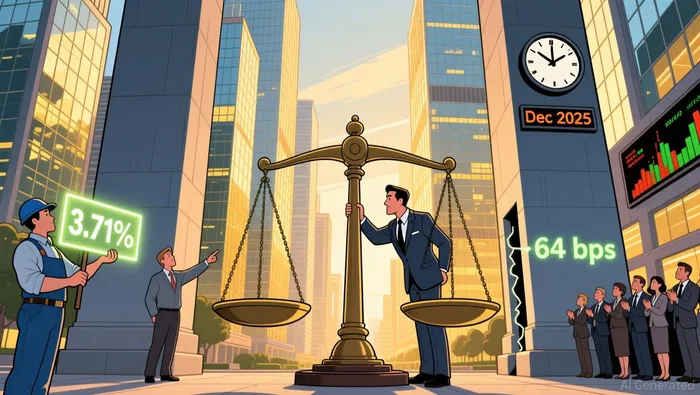
The U.S. 8-Week Treasury Bill (T-Bill) yield has emerged as a critical barometer for short-term interest rate expectations and sectoral equity positioning in the tightening monetary environment of 2024–2025. As of December 4, 2025, the yield stood at 3.71%, reflecting a 0.23 percentage point decline from its August 2025 peak of 4.100% but remaining 0.72 percentage points higher than the same period in 2024. Analysts project the yield to rise to 3.90% by the end of the quarter and stabilize at 3.83% in 12 months. This trajectory underscores a normalization of the yield curve, with a 64-basis-point spread between 2-year and 10-year Treasuries, reshaping capital flows and sector dynamics.
Financials and Industrials: Beneficiaries of Higher Rates
The surge in short-term yields has disproportionately favored sectors sensitive to interest rate cycles. Financial institutionsFISI--, such as JPMorgan ChaseJPM-- (JPM) and Goldman SachsGS-- (GS), have expanded net interest margins, while the Financial Select Sector SPDR Fund (XLF) gained nearly 1% in August 2025. Similarly, industrials have thrived on improved financing conditions and demand for capital-intensive projects, particularly in AI infrastructure and energy transition technologies.
Investors are advised to overweight these sectors, as higher yields reduce borrowing costs and enhance profitability for capital-dependent industries. For instance, CaterpillarCAT-- (CAT) has seen inflows as infrastructure spending accelerates, while regional banks like KeyCorp (KEY) benefit from margin expansion.
Long-Duration Sectors: Under Pressure
Conversely, long-duration sectors such as utilities and real estate have faced headwinds. Rising borrowing costs have constrained growth potential for companies like NextEra Energy (NEE) and Prologis (PLD), which rely on low-cost debt to fund long-term projects. The Utilities Select Sector SPDR Fund (XLU) has underperformed, reflecting investor caution toward sectors with extended cash flow horizons.
The technology sector has also shown mixed results. While speculative valuations in AI-driven firms face pressure, defensive subsectors like healthcare and consumer staples remain resilient. This divergence highlights the importance of selective positioning within the tech space.
Strategic Reallocation and Diversification
The normalization of the yield curve has triggered a strategic reallocation of assets. Investors are advised to hedge volatility by diversifying across sectors and geographies. International equities, particularly in Europe and China, have outperformed U.S. markets in 2025, driven by valuation catch-ups and improved earnings expectations. For example, European defense stocks have benefited from increased spending, while Chinese tech firms have rallied on AI advancements.
Investment Advice for a Tightening Cycle
- Overweight Rate-Sensitive Sectors: Financials and industrials are prime candidates for capital allocation, given their alignment with higher-yield environments.
- Hedge with Defensive Sectors: Healthcare and consumer staples offer stability amid volatility, particularly as long-duration sectors face margin compression.
- Monitor Federal Reserve Signals: Anticipated rate cuts in 2026 may favor cyclical sectors, but near-term positioning should prioritize sectors insulated from rate hikes.
- Leverage Global Diversification: International equities provide uncorrelated returns and reduce exposure to U.S. dollar dynamics.
The U.S. 8-Week Bill yield remains a pivotal signal for sector rotation. By aligning portfolios with the rhythm of the rate cycle and sectoral responses, investors can navigate the uncertainties of 2026 and beyond. As the Federal Reserve balances inflation control with economic growth, strategic positioning in rate-sensitive and defensive sectors will be key to capital preservation and growth.

Stay ahead of the market.
Get curated U.S. market news, insights and key dates delivered to your inbox.
AInvest
PRO
AInvest
PRO



Comments
No comments yet