
$600B Crypto Inflow Wave? 401(k) Shift Could Fuel Boom
A tidal wave of fresh capital could be about to hit the crypto market — one that’s automatic, relentless, and unlike anything seen before. Analysts say the potential size is measured not in billions, but in hundreds of billions, and once it starts, it may be impossible to stop.
Bitcoin and EthereumETH-- prices have surged, with BitcoinBTC-- hitting a fresh all-time high and Ethereum hovering near its own peak.
The crypto bull market has been buoyed by policy support. Recently, U.S. President Donald TrumpTRUMP-- signed an executive order allowing 401(k) and other retirement plan accounts to invest in cryptocurrencies. He also directed institutions to reassess prior restrictions on private equity and crypto, lowering regulatory barriers for alternative assets to enter 401(k) plans.
As of Q1 2025, U.S. employer-sponsored defined contribution (DC) retirement plans totaled $12.2 trillion, with 401(k) plans accounting for $8.7 trillion.
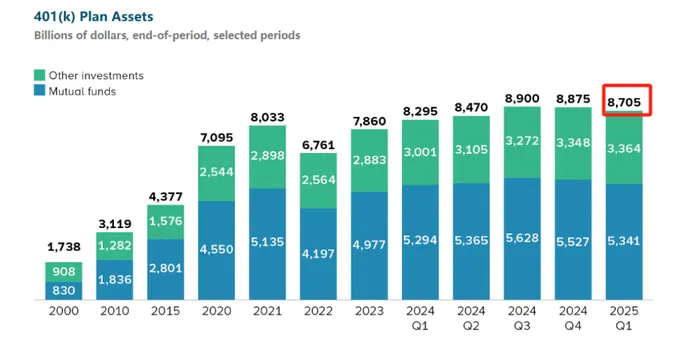
Some market analysts argue that “Crypto in 401(k)s is 100x bigger news than ETFs — the real tidal wave will come from retirement accounts, and most people don’t realize it yet.”
In the U.S., over 100 million people hold a 401(k). Every two weeks, part of their paycheck is automatically invested — that’s $12 trillion in assets with roughly $50 billion flowing in every two weeks.
Now imagine this:
If crypto allocation caps were set at just 1%, that would mean $120 billion in new capital. A 3% allocation? $360 billion. A 5% allocation? $600 billion in recurring inflows.
This isn’t a one-time splash — it’s persistent, automatic capital. Once set, these allocations keep buying with every paycheck. This mechanism has fueled U.S. equity markets for two decades. Now imagine that engine turned toward Bitcoin, Ethereum, and other digital assets.

Why did Trump allow 401(k)s to invest in crypto?
1. Personal financial interests
Trump himself has issued the $TRUMP token and holds other cryptocurrencies. His wife, Melania Trump, has launched the $MELANIA token. Trump MediaDJT-- has filed for a “Crypto Blue Chip ETF,” while his son Eric Trump founded American Bitcoin in April 2025, focused on Bitcoin mining and stablecoin projects. A crypto bull market would significantly benefit the Trump family’s wealth.
2. Political strategy
With the 2026 midterms approaching, loosening investment restrictions could help Trump win support from younger voters and high-net-worth investors:
Private equity and private credit — traditionally limited to wealthy individuals — could become accessible via retirement accounts.
The crypto community, with its young and active voter base, could be drawn into his political camp.
3. Continuity of stablecoin policy
Stablecoins, as blockchain-based extensions of the U.S. dollar’s dominance, help maintain the dollar’s role as the global settlement and reserve currency. Popular reserve-backed stablecoins typically use U.S. Treasuries and other short-term dollar assets as collateral, increasing demand for U.S. debt.

Institutional and endowment buying accelerates
More companies are following MicroStrategy’s lead in hoarding Bitcoin — and increasingly Ethereum. Bitmine Immersion TechnologiesBMNR-- has announced a $20 billion equity offering to buy more Ethereum.
University endowments are joining in as well. Harvard University made a major investment in BlackRock’s Bitcoin ETF in Q2 2025, tapping its $53 billion endowment. Yale, Brown, and the University of Michigan have also invested in crypto.
Investor interest soars
In July, Bitcoin ETFs saw $12.8 billion in inflows — a record high.
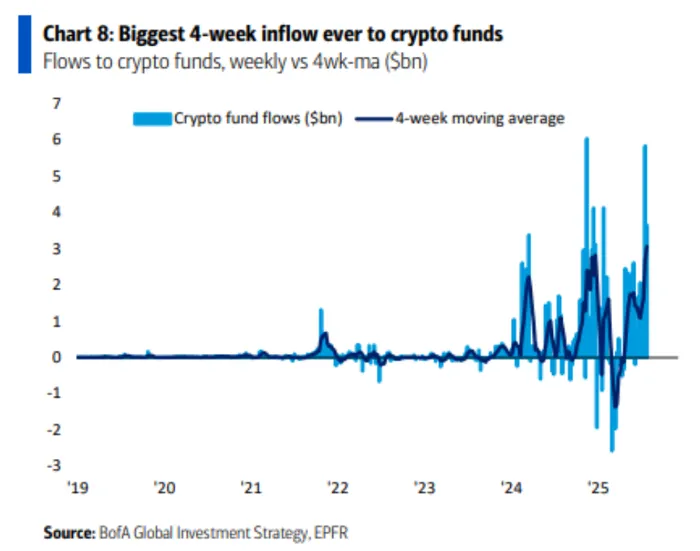
As of mid-2025, 59% of financial advisors are fielding crypto inquiries. Crypto hedge fund assets under management are projected to grow from $15 billion in 2023 to $94.9–$139.7 billion by 2030.
Ben Kurland, CEO of crypto research platform DYOR, said:
“Slowing inflation, stronger rate-cut expectations, and unprecedented institutional participation via ETFs are creating powerful momentum. This time, the demand base is far more mature — it’s not just retail mania but structural buying from asset managers, corporations, and sovereign wealth funds.”
Chris Newhouse, research director at Ergonia, noted:
“Crypto is showing a positive correlation with equities, with Ethereum even more correlated than Bitcoin. Overall sentiment looks upbeat.”
IPO activity is reflecting the boom: digital assetDAAQ-- exchange Bullish jumped 83% on its debut, while Circle — the leading stablecoin issuer — surged 170% on day one.
Risks of 401(k) crypto investing
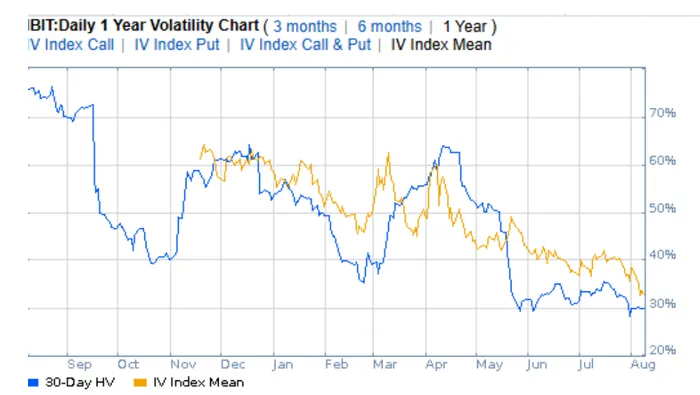
The biggest concern is extreme volatility. Bitcoin’s implied volatility is currently around 30%, but can spike to 75% during turbulent periods. Compared to stocks or bonds, crypto may be unsuitable for risk-averse investors.
Unlike traditional assets whose pricing is grounded in transparent market mechanisms, crypto valuation often stems from speculative trading, lacking standardized methods for assessing intrinsic value. Without reliable valuation frameworks, fiduciaries may struggle to assess risk-adjusted returns or ensure fair pricing for participants.

Independent investment research powered by a team of market strategists with 20+ years of Wall Street and global macro experience. We uncover high-conviction opportunities across equities, metals, and options through disciplined, data-driven analysis.
Latest Articles
Unlock Market-Moving Insights.
Subscribe to PRO Articles.
Already have an account? Sign in
Unlock Market-Moving Insights.
Subscribe to PRO Articles.
Already have an account? Sign in
Stay ahead of the market.
Get curated U.S. market news, insights and key dates delivered to your inbox.




