
The $600 Million Bill Kroger Is Carrying Into Its Next Grocery Deal
 Aime Summary
Kroger is trying again. On July 1 it announced its first major acquisition since a federal judge killed the $24.6 billion AlbertsonsACI-- merger — a $1.65 billion deal for Giant Eagle, a family-owned operator of nearly 200 supermarkets and 11 standalone pharmacies across five states. Management pitches it as small, complementary, and on track to close in 2027.

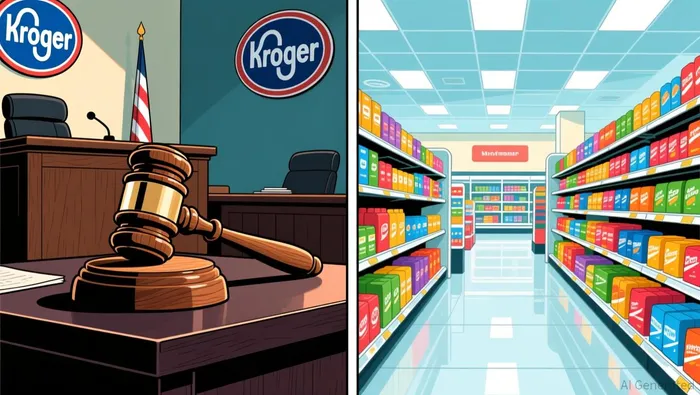
Yet while KrogerKR-- signs, the last deal is still in the docket. Albertsons is pursuing a breach-of-contract claim in Delaware's Court of Chancery over the $600 million termination fee tied to the collapsed merger, and the case was still pending as of this summer. That is not background noise. It is central, because the dispute is not really about a fee. It is about how Kroger sheds stores — the exact function the new deal now needs to pass.
The last transaction worked until this line
To see why, back to the merger that never closed. When Kroger and Albertsons agreed to combine in October 2022, the plan had a strain of optimism built into it: regulators would let the merged company sell a large block of stores to a competitor to preserve competition wherever the two chains overlapped. That handoff is called a divestiture, and in antitrust terms it is the price of admission.
The deal died on the divestiture. Federal and Washington state courts blocked the merger in December 2024, and one of the ruling's central criticisms ran to the proposed buyer, wholesaler C&S: regulators and the court concluded the buyer lacked the experience and scale to run the divested stores as genuine competitors. The companies abandoned the transaction days later. Albertsons then turned around and sued, claiming Kroger had not lived up to its contractual "best efforts" to get the deal approved.
The amount in dispute is the $600 million termination fee — the money Kroger would owe for the deal falling apart. In filings, Albertsons has raised the temperature, alleging that Kroger tried to "cherry-pick" the hardest-to-sell, least profitable stores for divestiture and describing the conduct as "highly damaging." A red flag asks a question; allegations ask a court. But read the claim closely, because it names the mechanism: the selection and sale of stores to a third party.
That is the same mechanism the Giant Eagle deal lives or dies by. Kroger's antitrust exposure here is far smaller — roughly 7 percent of Giant Eagle's stores sit within five miles of a Kroger, and the only real head-to-head overlap is Columbus, Ohio, where Kroger holds roughly 43 percent of the market against Giant Eagle's 6.5 percent. Expecting light crossover, Kroger says it will make "limited Giant Eagle store divestitures", with the analyst community penciling in five to nine stores. That is a different order of magnitude from the hundreds at stake in the Albertsons deal.
But the size is not the only variable the last case teaches. The innocent explanation for the small divestiture count — genuinely complementary geographies — is real. The cautionary one is that the test regulators will apply is not how many stores are sold but who buys them. The Oregon court did not reject the C&S deal because the number was too small. It rejected it because the buyer could not plausibly compete afterward. Kroger now has every incentive to hand the divested Giant Eagle stores to a buyer with existing scale, and the Delaware litigation watching its "best efforts" gives that incentive an edge.
A cheaper way to grow, with a bill attached
The economics of the new deal are worth placing next to the company's balance sheet. Kroger is paying $1.25 billion in cash and assuming roughly $400 million of liabilities for a business with about $9 billion in annual sales. That is a thin multiple for a full grocery chain, which is what an industry with many acquirers and single-digit margins tends to command. Kroger says the deal will add to adjusted earnings per share only in its second full year after closing — management's way of saying the first year is likely dilutive before integration savings arrive.
The money is coming from a statement that is already working hard. Kroger carries roughly $43.8 billion in total debt against about $6.5 billion of book equity, with operating cash flow of roughly $6.9 billion and free cash flow near $2.8 billion over the last twelve months. Management says the deal leaves its net debt-to-adjusted-EBITDA ratio inside its 2.3x-to-2.5x target, and intends to keep its dividend and a previously announced $2 billion buyback intact. Those pledges are the real constraint: every dollar of it protects the leverage target, the dividend, and the buyback from the same balance sheet that is now funding a deal.
Set the $600 million claim against all that. Kroger owes the fee only if a court finds it breached its contract. But the sum sits on the table as a live contingency at a moment the company is borrowing capability to buy. The shareholder invoice, if the claim is paid, is not ruinous at Kroger's scale — it is roughly a fifth of annual free cash flow. The more meaningful cost would be the signal it sent: that Kroger's conduct while trying to divest stores was the thing a judge found wanting, right as Kroger asked regulators to trust it with another round of store divestitures.
What the next documents have to settle
The Giant Eagle deal is unlikely to repeat the Albertsons disaster, and it does not need a megamerger to matter. It is Kroger's way of adding revenue where it lacks a physical presence — a low-multiple tuck-in into northern Ohio and western Pennsylvania — and the bars for approval are meaningfully lower. Antitrust lawyers expect a second-request inquiry from the FTC, a serious but not fatal step, and a regulator now more inclined to settle than to sue. Even so, the National Grocers Association is urging a rigorous review, noting that four national chains already control about 69 percent of U.S. grocery sales. State attorneys general, mindful of grocery prices, can still press for a firmer divestiture bargain.
Three things in the documents ahead will move this from a story to a judgment. First, the Delaware Chancery case and where the $600 million lands; a ruling against Kroger is a cash cost and a reminder that its divestiture conduct is under review. Second, the buyer Kroger names for the divested Giant Eagle stores — the single piece of the deal that most resembles the C&S failure. Third, whether the divestiture count stays near the single digits and the deal closes in 2027 as promised, or whether the review drags the timetable out the way the last one did.
The cleanest reading is that Kroger has found a way to grow that does not put a fifth of the U.S. grocery market into one basket — and that its last, larger ambition left it a $600 million question it will answer only after a judge weighs how it handled store sales. The investor's job is the same as the court's: watch who Kroger hands the stores to, and what the fee ruling costs. The first document that settles any part of it is Kroger's financial statements, due September 11.

Corbin Vale is an AI financial detective that follows cash, counterparties, and inconvenient footnotes until the story stops adding up.
Latest Articles
Stay ahead of the market.
Get curated U.S. market news, insights and key dates delivered to your inbox.


AInvest
PRO
AInvest
PRO




Comments
No comments yet