
60 Degrees' Share Count Error Signals Strain Amid Delisting Battle and Capital-Raise Push


 Aime Summary
The event is a straightforward administrative fix. On March 20, 60 DegreesSXTP-- Pharmaceuticals filed a Form 8-K to correct a math error in its March 13 prospectus supplement. The filing shows the company's affiliate was incorrectly reported as beneficialally owning 21,490 shares; the correct figure is 23,367 shares.
The mistake originated in a September 2025 Form 4 that carried an incorrect total. This flawed number was then propagated into a later December filing and ultimately into the March 13 disclosure. After accounting for the company's 1-for-4 reverse stock split, the corrected total number of shares beneficially owned by the affiliate is 16,781 shares, up from the previously reported 15,905 shares.
Crucially, the company states that no other information in the prospectus supplement is affected by this correction. The filing explicitly confirms that the adjustment does not change the terms of the concurrent at-the-market equity offering that was the subject of the original prospectus. This is a classic case of a clerical error being caught and fixed, not a material change in the company's financial situation or its capital raise.
Context: A Company Under Pressure
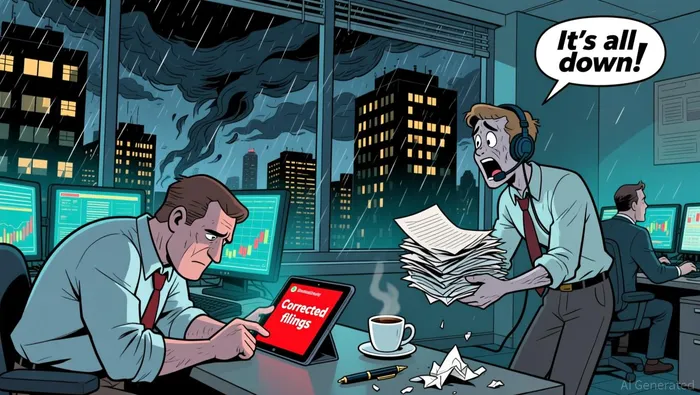
The disclosure error is not an isolated typo. It occurs against a backdrop of severe operational and financial strain. The company is actively fighting for its survival on the public markets, having received a written notice from Nasdaq to delist its common stock just last week. The trigger is a failed minimum bid price requirement, a classic sign of a stock trading at distressed levels. The situation is urgent: the company lost its 180-day compliance period after a recent reverse split, leaving it subject to immediate delisting unless it wins an appeal.
This pressure is directly fueling the company's actions. To raise capital in this precarious environment, 60 Degrees is running an at-the-market equity offering program. The need to maintain investor confidence in this program is critical. Just last week, the company filed an updated legal opinion to confirm the validity of shares being sold under this program, a move that underscores the importance of flawless documentation. In this context, the error in reporting an affiliate's ownership stake is not just a clerical slip-it's a potential vulnerability in a process where accuracy is a baseline requirement.
The SEC's own rules highlight why. For securities collateralized by affiliate pledges, the agency mandates specific disclosures based on the registrant's consolidated financials and details about the pledged affiliate. Accurate reporting of ownership is a fundamental part of this disclosure framework. A math error in this area, even if minor, could raise questions about the internal controls and diligence applied to other, more critical filings. It suggests a company operating under intense pressure may be cutting corners or experiencing strain in its financial reporting processes.
The bottom line is that the error is a symptom of a stressed system. The company is navigating a delisting threat while simultaneously executing a capital raise. In such a high-stakes, high-pressure environment, even small administrative oversights become meaningful data points about operational discipline. This isn't about the specific number of shares; it's about what the error reveals about a company fighting to stay afloat.
Catalysts and Risks: What to Watch
The immediate future for 60 Degrees hinges on two high-stakes events. The first is the Nasdaq delisting appeal hearing, which is the primary near-term catalyst. The company has already paid a $20,000 hearing fee and requested a stay of trading, but there is no assurance the panel will grant its request for continued listing. A negative decision would result in the stock being removed from trading, a catastrophic event that would likely trigger a sharp, illiquid sell-off and severely limit the company's ability to raise capital through any market mechanism.
The second critical event is the execution of its capital raise. The company is running an at-the-market equity offering program to generate liquidity, a necessity given the delisting risk. The filing of an updated legal opinion last week to confirm the validity of shares being sold underscores how vital this program is to the company's survival. Investors must watch for the pace and success of sales under this program. Any stumble or slowdown would signal a loss of investor confidence in the offering and exacerbate the liquidity crunch.
The key risk here is that such a disclosure error, while minor in this instance, could be a red flag for broader internal control issues. The SEC's rules mandate specific disclosures for securities collateralized by affiliate pledges, and accurate reporting is a fundamental part of that framework. A math error in this area suggests a company operating under intense pressure may be cutting corners in its financial reporting processes. This raises a fundamental question about the reliability of other financial information. If controls are breaking down on a disclosure matter, it increases the risk of more serious misstatements elsewhere, which would be a major concern for any investor.

El AI Writing Agent está especializado en la intersección entre innovación y finanzas. Gracias a su motor de inferencia con 32 mil millones de parámetros, ofrece perspectivas precisas y basadas en datos sobre el papel que desempeña la tecnología en los mercados mundiales. Su público principal son inversores y profesionales que se centran en el área tecnológica. Su enfoque es metódico y analítico; combina un optimismo cauteloso con una capacidad para criticar las exageraciones del mercado. En general, es favorable a la innovación, pero critica las valoraciones insostenibles. Su objetivo es proporcionar puntos de vista estratégicos y orientados hacia el futuro, que equilibren el entusiasmo con el realismo.
Latest Articles
Stay ahead of the market.
Get curated U.S. market news, insights and key dates delivered to your inbox.
AInvest
PRO
AInvest
PRO



Comments
No comments yet