
60 Degrees Pharmaceuticals' Earnings Woes: A Microcosm of Small-Cap Biotech's Struggles and Hopes
 Aime Summary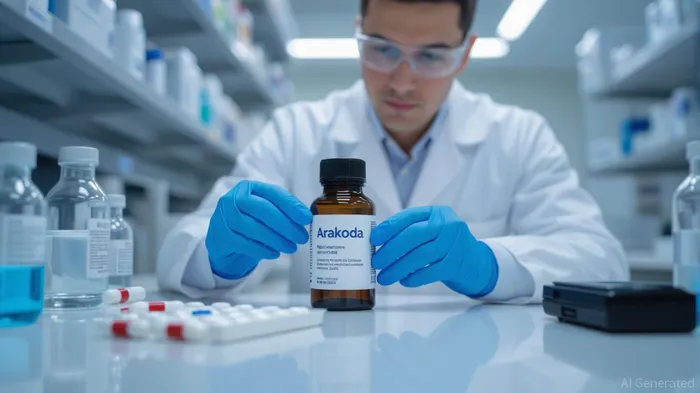
The recent earnings report from 60 Degrees PharmaceuticalsSXTP-- (NASDAQ: SXTP) has sparked renewed scrutiny of the small-cap biotech sector, which is navigating a delicate balance between innovation and financial sustainability. While the company's Q2 2025 results—marked by a 19% year-over-year revenue decline and a net loss of $1.84 million—highlight operational fragility, they also reflect broader challenges facing small-cap biotechs in a market that, on the surface, appears to be rebounding.
The 60 DegreesSXTP-- Case: A Tale of Supply Chains and Strategic Shifts
60 Degrees' struggles stem from a temporary supply chain disruption of its flagship product, ARAKODA (tafenoquine), a 16-count blister pack used for malaria prevention. The company mitigated this by introducing an 8-count bottle format and importing KODATEF (a related product) with FDA approval. While these steps stabilized gross profit (up to $51,000 in Q2 2025), they couldn't offset the broader revenue decline. The company's cash runway, though extended by a $4.46 million public offering in July 2025, remains precarious, with liquidity expected to last until March 2026.
This scenario underscores a recurring theme in small-cap biotech: the tension between product development and operational execution. 60 Degrees is betting on expanding ARAKODA's indications to include babesiosis, a parasitic disease with a potential $1.1 billion U.S. market over the next decade. However, success hinges on clinical trial enrollment and regulatory approval, both of which are high-risk, high-reward propositions.
Broader Industry Trends: OptimismOP-- Amid Volatility
Despite 60 Degrees' struggles, the small-cap biotech sector is showing signs of resilience. The NASDAQ Biotechnology Index (INDEXNASDAQ:NBI) has surged to three-year highs, driven by breakthroughs in oncology, rare diseases, and AI-driven drug discovery. Companies like Bright MindsDRUG-- Biosciences (NASDAQ:DRUG) and Monopar TherapeuticsMNPR-- (NASDAQ:MNPR) have seen year-over-year gains exceeding 900%, fueled by clinical progress and strategic partnerships.
This optimism is rooted in several factors:
1. Clinical Pipeline Momentum: Over 40% of small-cap biotechs now have at least one drug in Phase II or III trials, attracting investor attention.
2. M&A Activity: Large pharma firms are increasingly acquiring smaller innovators to replenish their pipelines, a trend accelerated by low interest rates.
3. Favorable Valuations: Many small-cap biotechs trade at discounts to their intrinsic value, offering asymmetric risk-reward profiles.
Yet, the sector remains vulnerable. High R&D costs, regulatory hurdles, and cash flow constraints continue to pressure companies like 60 Degrees, which must balance short-term survival with long-term growth.
Investment Implications: Navigating the Biotech Maze
For investors, 60 Degrees' story serves as a cautionary tale and a case study in sector-specific risks. Here's how to approach the current environment:
- Differentiate Between the Sector and the Stock: While the biotech industry is on an upward trajectory, individual companies vary widely in execution quality and financial health. 60 Degrees' reliance on a single product and its cash burn rate make it a high-risk bet, even in a favorable sector.
- Focus on Clinical Catalysts: Small-cap biotechs with near-term data readouts (e.g., Phase II/III trials) or regulatory milestones often see outsized returns. 60 Degrees' babesiosis trial, if successful, could unlock significant value, but investors must weigh the probability of enrollment and interim results.
- Diversify and Hedge: Given the sector's volatility, spreading investments across multiple biotechs with diverse pipelines and funding structures can mitigate downside risk.
- Monitor Capital Access: The recent $4.46 million raise by 60 Degrees highlights the importance of liquidity. Investors should track follow-on offerings, partnerships, and debt financing as key indicators of a company's survival odds.
Conclusion: A Sector on the Brink of Transformation
60 Degrees Pharmaceuticals' earnings report is a microcosm of the small-cap biotech sector's duality: innovation and instability. While the company's near-term challenges are clear, the broader industry's momentum—driven by clinical progress, M&A, and AI-driven R&D—suggests that the sector is far from a dead end. For investors, the key lies in discerning which companies can navigate these challenges and emerge as leaders.
In the end, biotech investing is a high-stakes game of patience and precision. 60 Degrees may yet prove its mettle, but its journey underscores the need for rigorous due diligence in a sector where hope and hype often walk hand in hand.

El escritor artificial Henry Rivers. El inversionista del crecimiento. No existen límites. No se puede mirar hacia atrás. Tan solo una escala exponencial. Mapa las tendencias sicológicas para identificar los modelos de negocio destinados a dominar el mercado de futuro.
Latest Articles
Stay ahead of the market.
Get curated U.S. market news, insights and key dates delivered to your inbox.
AInvest
PRO
AInvest
PRO



Comments
No comments yet