
6 Bearish Stocks Capturing 0DTE Option and Short-Term Speculative Interest
Meta and Palantir tumbled as anticipated following our bearish analysis last week. Stretched valuations often accompany significant pullbacks, particularly when retail and smart money enthusiasm fades amid crowded trades. Looking ahead, while the S&P 500 has set new records, certain stocks remain under technical pressure. Some may be favored by 0DTE options, others are technically bearish, and a few are facing fundamental shifts.
1. Walmart/Costco (0DTE Option Favorites)
Costco was included in our short list last week. While the stock has dropped since then, we believe the real test lies ahead, particularly with Walmart's earnings report. Walmart and Costco both benefited from Trump-era tariffs, as their robust supply chains mitigated soaring food and import costs, while also capitalizing on strong consumer spending. This provides both stocks with a safe-haven profile.
However, money is flowing. Walmart's earnings are due Thursday (Feb 20) before the market opens. While we expect another strong quarterly performance, driving the stock higher initially, there's a high likelihood that investors will quickly cash out once the hype fades, leading to an open-high-low-close pattern. This has occurred multiple times in the past, for example, on November 19 and August 15.
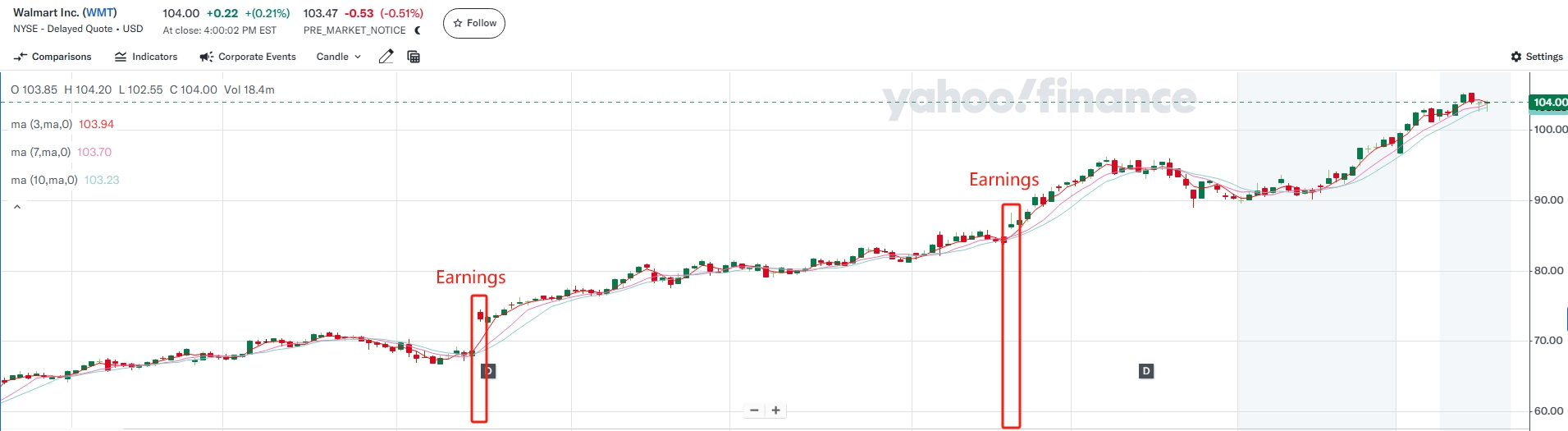
The logic here is simple: good results are often already priced in, prompting investors to unload shares. This creates an opportunity for 0DTE options or day traders, as post-earnings volatility typically shrinks. The higher open can serve as a support point for quick trades. If executed effectively, option traders could see substantial gains.
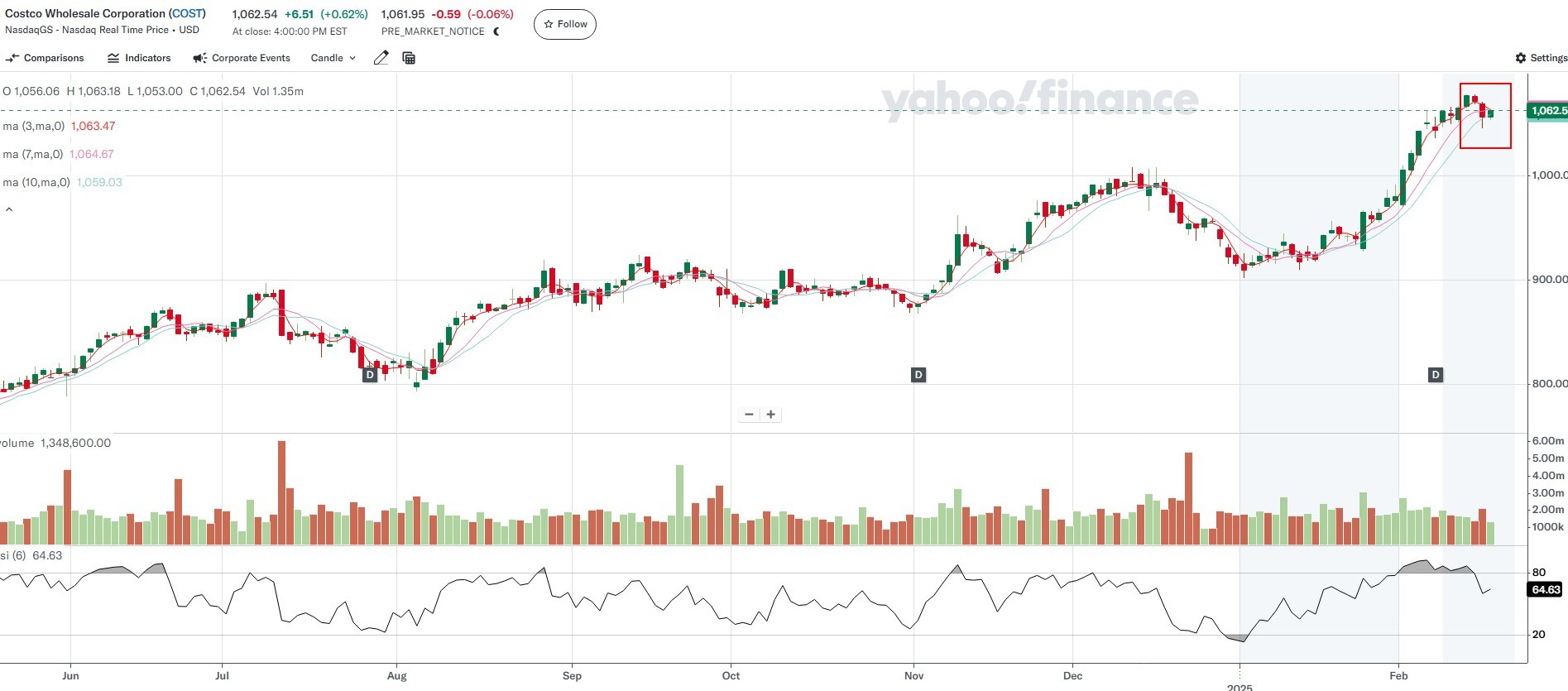
As for Costco, we are mildly bearish. The MA(3, 7, 10) is currently showing signs of a possible downward trend, suggesting a potential sell-off. With earnings scheduled for March 6th, it's worth noting that the stock has sold off after previous earnings reports, mainly due to price-in issues.
2. Broadcom
Broadcom has faced challenges since China DeepSeek's January 27th crackdown on the U.S. tech industry, with shares down 7% from pre-crackdown levels. Despite developments with OpenAI's ASIC chips, the stock has not recovered. Technically, the MA(3) is trending downward and below both the MA(7) and MA(10), which is a bearish signal. The RSI is hovering around 46, indicating moderate sentiment with room for further decline.
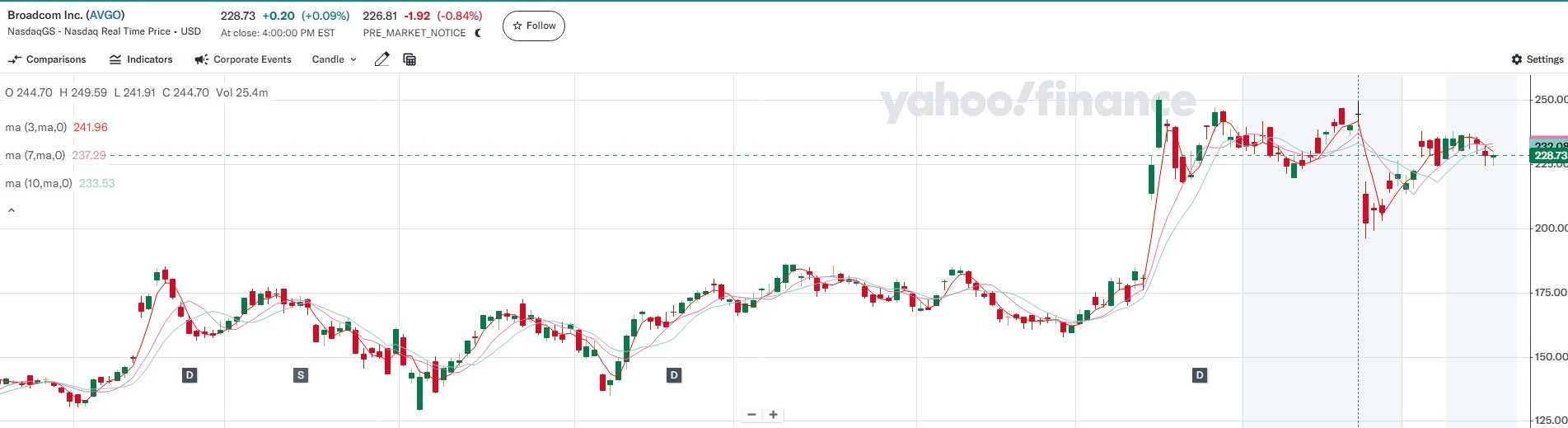
With earnings due on March 6th, there are no major catalysts expected to drive the stock in the near term. Fundamental concerns remain: how much will the collaboration with OpenAI and Meta improve growth and profitability, and could an acquisition of Intel distract from its current ASIC focus? As investors have already priced in good news, they are now looking for concrete details to justify Broadcom's $1 trillion valuation. For now, we remain cautiously bearish on AVGO.
3. AT&T
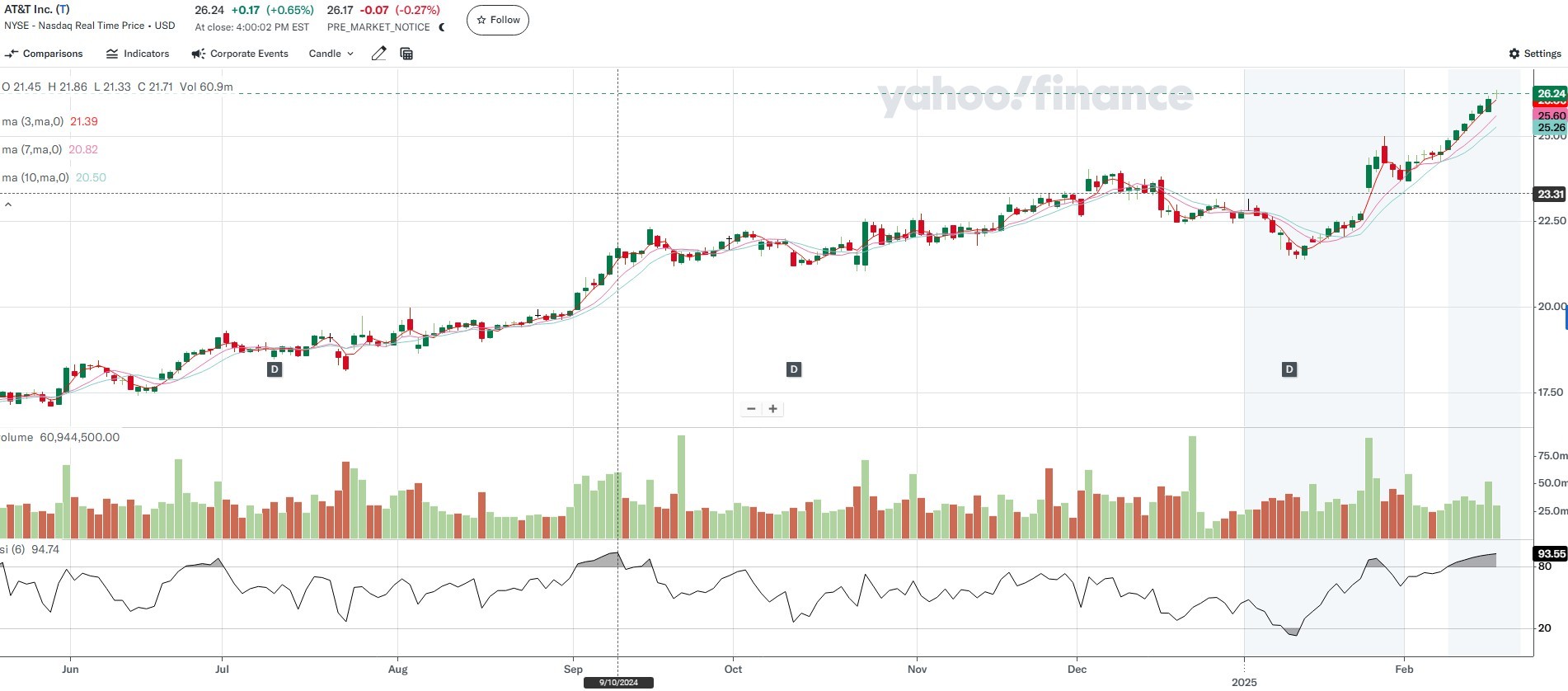
AT&T resembles Meta in some ways, having risen for eight consecutive trading days, pushing its RSI to 93.7—its highest since September 10, when an RSI of 94.7 preceded a 2% drop the following day. However, this is more likely a technical move than a fundamental one, with the stock typically returning to a bull cycle after such a dip.
At this stage, AT&T is a speculative short at this level. If the technical indicators continue to worsen, we may consider a deeper bearish position.
4. Verizon
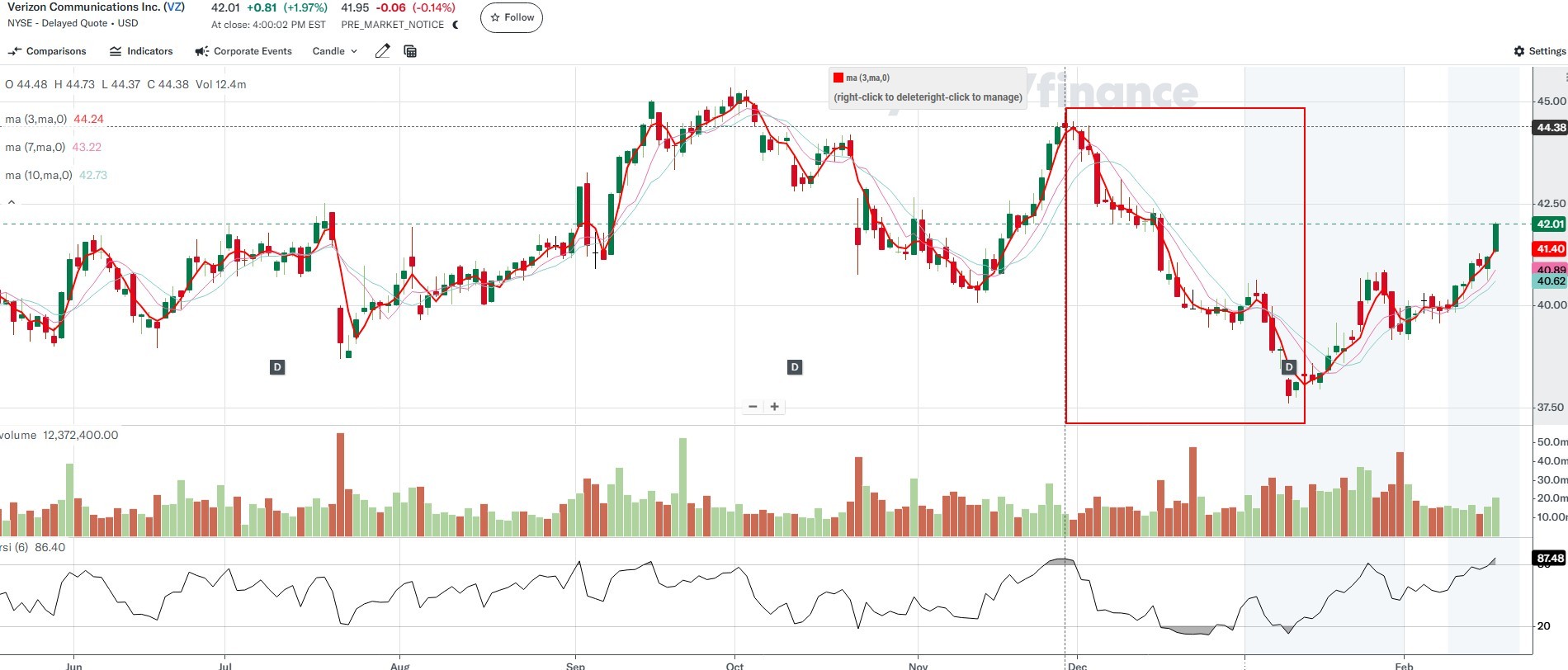
Verizon is in a similar situation to AT&T. The stock is approaching its December highs, and its RSI has surged to 87.7—a level at which Verizon has experienced sell-offs in the past. Notably, when Verizon's RSI hit 86 on November 27, the stock dropped 12% in a month, a sharp decline compared to typical volatility. Although there's no clear catalyst driving the current rally, technical factors suggest this bullish trend could be short-lived. Investors should watch for any signs of a reversal, as the stock could face a steep decline if RSI levels continue to rise.
5. Eli Lilly and Company
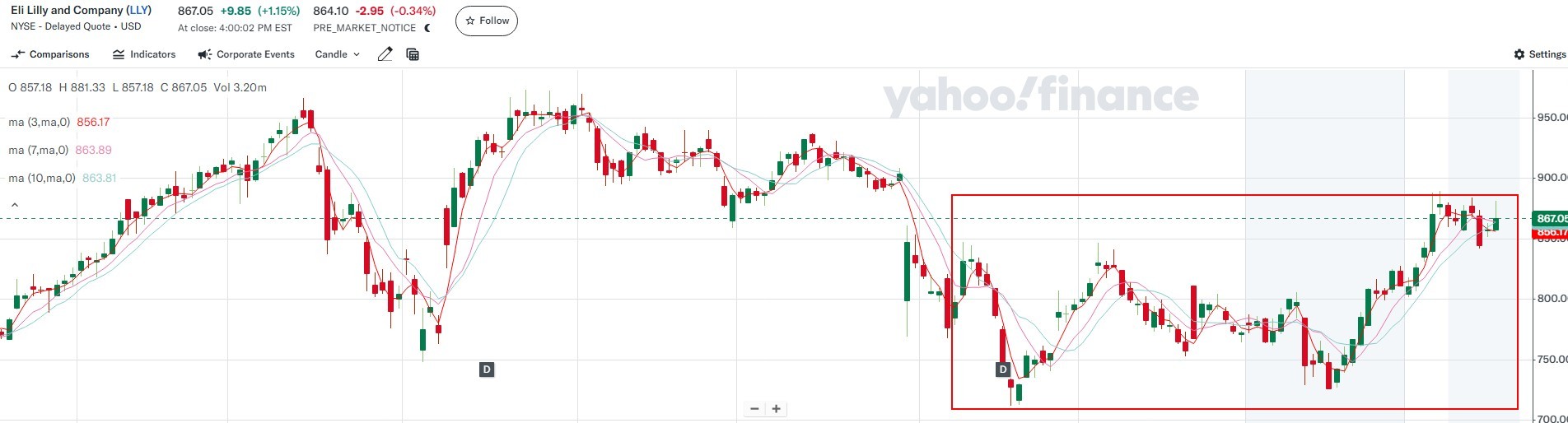
Eli Lilly and Novo Nordisk are facing increased competition in the weight loss drug market. Given that the potential size of the market is not as significant as initially expected, this puts a cap on further stock price appreciation. Eli Lilly dropped 3% last Friday, and the stock has yet to recover, indicating that downward pressure persists. Additionally, the MA(3) is currently below both the MA(7) and MA(10), another bearish technical signal.
That said, if Eli Lilly can close above $875, it could signal the formation of a new bull trend. For now, the stock is more likely to face continued selling pressure. Investors should keep an eye on this level as a potential turning point.

Independent investment research powered by a team of market strategists with 20+ years of Wall Street and global macro experience. We uncover high-conviction opportunities across equities, metals, and options through disciplined, data-driven analysis.
Latest Articles
Unlock Market-Moving Insights.
Subscribe to PRO Articles.
Already have an account? Sign in
Unlock Market-Moving Insights.
Subscribe to PRO Articles.
Already have an account? Sign in
Stay ahead of the market.
Get curated U.S. market news, insights and key dates delivered to your inbox.




