
The 6.84% Mortgage Rate and the Reshaping of U.S. Real Estate Markets: A Sectoral Analysis
 Aime Summary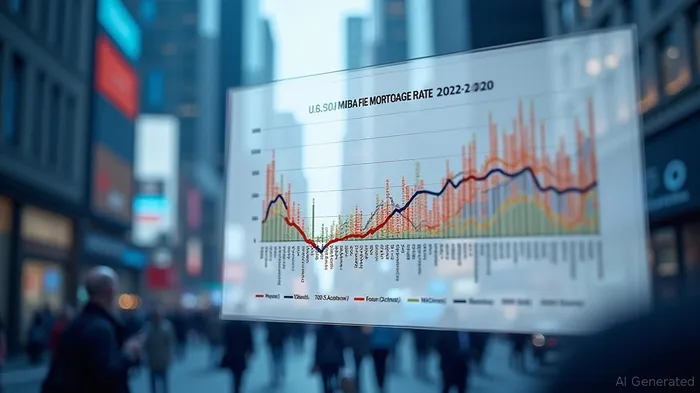
The U.S. MBA 30-Year Fixed Mortgage Rate has climbed to 6.84% in July 2025, a marginal increase from 6.82% in the previous period and a stark contrast to the sub-3% rates of 2020. This rate, now the highest in four weeks, underscores the enduring tension between inflationary pressures and the Federal Reserve's cautious pivot toward rate cuts in the latter half of 2026. For investors, the implications are profound: the real estate sector is undergoing a structural recalibration, with sector-specific impacts demanding a nuanced approach to capital allocation.
The Mortgage Rate as a Macroeconomic Lever
Mortgage rates are not merely a function of housing affordability; they are a barometer of broader economic health. The 6.84% rate reflects elevated Treasury yields, driven by robust economic data and lingering inflationary expectations. For homebuyers, this translates to a 35% of median household income consumed by mortgage payments—a level that has frozen the resale market and shifted demand toward new construction. Yet, for real estate investors, the implications are more complex.
The Mortgage Bankers Association (MBA) forecasts a decline in rates to 6.4% by late 2026, coupled with a projected drop in existing home prices below $400,000. This creates a dual narrative: short-term pain for affordability and construction costs, but long-term potential for undervalued assets. The key lies in understanding how different sectors are adapting—and where the mispricings are most acute.
Sector-Specific Pressures and Opportunities
1. Real Estate Investment Trusts (REITs): The Cap Rate Conundrum
Cap rates have expanded by 139 basis points since 2022, with multifamily and industrial properties seeing the largest increases. This reflects a recalibration of risk premiums in a higher-rate environment. REITs with strong balance sheets, such as those in the MSCIMSCI-- US REITs Index, have outperformed the S&P 500 in 2025, but their valuations remain sensitive to further rate hikes.
For instance, the 450-basis-point spread between real estate cap rates and 10-year Treasury yields offers a compelling risk premium compared to pre-2008 levels. However, this spread is narrowing as cap rates approach equilibrium with bond yields. Investors should favor REITs with defensive characteristics—such as grocery-anchored retail or Sun Belt multifamily—over cyclical sectors like office, where vacancy rates remain stubbornly high at 20%.
2. Homebuilders and Materials Suppliers: A Tale of Two Sectors
Homebuilders face a paradox: a housing boom in new construction amid a slump in existing home sales. LennarLEN-- (LEN) and PulteGroupPHM-- (PHM) have reported weaker orders and margin pressures, yet materials suppliers like Vulcan MaterialsVMC-- (VMC) and Martin MariettaMLM-- (MLM) are benefiting from infrastructure spending and pent-up demand.

Vulcan Materials, for example, reported a 12% increase in asphalt revenue in Q1 2025, driven by the Infrastructure Investment and Jobs Act (IIJA) funding. Martin Marietta's asphalt revenue grew by 37% year-over-year, with California's data center boom driving demand. However, both companies caution that Trump-era tariffs on steel and copper—set to deepen in August—could add 4–10% to construction costs, further squeezing margins.
Investors should overweight construction materials ETFs like the SPDR S&P Homebuilders ETF (XHB), which has outperformed the S&P 500 by 18% since the MBA Mortgage Market Index crossed 240 in May. Meanwhile, homebuilders with low leverage and strong land banks—such as Toll BrothersTOL-- (TOL)—are better positioned to weather rate volatility.
3. Commercial Real Estate: The Refinancing Tsunami
The $3.1 trillion refinancing challenge in commercial real estate, with a $270–570 billion equity gap in the U.S. alone, is reshaping capital flows. Lenders have tightened underwriting, with loan-to-value ratios now averaging 55%—a sharp decline from 2007 levels. This has created an opening for private credit funds, which now manage $1.4 trillion in assets, to provide mezzanine financing and distressed debt solutions.
For high-net-worth investors, opportunities lie in acquiring undervalued commercial properties in Sun Belt markets, where population growth and rent resilience offset higher cap rates. Tokenized real estate is also gaining traction, offering liquidity in an otherwise illiquid sector.
Strategic Recommendations for 2025–2026
- Undervalued Residential Construction: Overweight materials suppliers (e.g., VMC, MLM) and construction ETFs (XHB) as infrastructure spending and housing demand drive margins.
- Defensive Real Estate Sectors: Allocate to REITs in multifamily and industrial sectors, particularly those in high-growth regions. Avoid office REITs until vacancy rates normalize.
- Hedging Rate Volatility: Use Treasury futures or options to hedge against potential rate cuts in 2026, which could reignite demand for housing and related sectors.
- Private Credit and Distressed Assets: Explore private equity funds targeting commercial real estate, leveraging their flexibility to navigate refinancing challenges.
Conclusion
The 6.84% mortgage rate is a double-edged sword: it has stifled affordability but also created mispricings across real estate-linked industries. For investors, the path forward lies in disentangling short-term pain from long-term potential. By focusing on defensive sectors, leveraging infrastructure tailwinds, and hedging against rate volatility, capital can be deployed with both resilience and ambition. As the MBA forecasts a softening in rates by late 2026, the time to act is now—before the next cycle of appreciation begins.

Stay ahead of the market.
Get curated U.S. market news, insights and key dates delivered to your inbox.
AInvest
PRO
AInvest
PRO



Comments
No comments yet