
5G Networks: Enhancing Urban Navigation and IoT Evolution
 Aime Summary
- 5G signal integration with satellite navigation improves positioning accuracy in urban environments where traditional systems fail due to signal blockages according to research.
- While 5G enables transformative IoT applications, its limitations in device density and energy efficiency are driving 6G development as studies show.
- Network slicing capabilities allow 5G to support specialized applications from autonomous vehicles to industrial automation despite coverage gaps according to industry analysis.
The integration of 5G technology with existing satellite navigation systems marks a breakthrough for urban positioning reliability. High-rise buildings and urban infrastructure have traditionally degraded GNSS performance, causing navigation failures critical for applications like autonomous vehicles. Recent innovations address these limitations by merging cellular and satellite signals according to technical reports. This advancement arrives as industries push the boundaries of IoT connectivity, highlighting both opportunities and constraints in current network capabilities.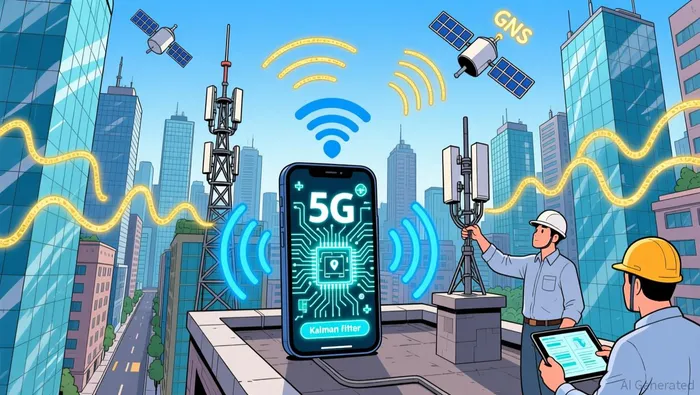
How Is 5G Integration Overcoming Urban Navigation Challenges?
Urban environments severely disrupt satellite navigation through signal blockages. Researchers now integrate commercial 5G NR signals with GNSS using advanced synchronization techniques. This approach deploys phase-stabilized Kalman filters to maintain measurement accuracy during signal fluctuations common in dense cityscapes according to technical analysis. Deep fusion of 5G reference signals with satellite data through extended Kalman filters enables real-time tracking adjustments.
Field tests demonstrate significant improvements in horizontal and vertical positioning accuracy. The hybrid system maintains reliable navigation during signal outages by leveraging existing 5G infrastructure. This solution supports autonomous vehicles and smart transportation networks without requiring major hardware modifications. Its robustness in multipath-rich environments addresses a core limitation affecting urban mobility services.
What Limitations Does 5G Face in IoT Scaling and the 6G Horizon?
5G networks confront constraints in supporting massive IoT deployments. Limitations include energy inefficiency with connected devices and insufficient device density for applications requiring ultra-reliable communication as research indicates. Network slicing provides partial solutions by creating dedicated virtual networks for critical services like industrial automation according to industry experts. Yet fundamental technology gaps remain.
The 6G evolution directly addresses these constraints through AI-native architectures and utilization. Integrating edge computing reduces latency for real-time industrial operations, while backscatter communications enable battery-free sensors according to technical papers. Federated learning and blockchain technologies enhance security across distributed IoT deployments. Though promising, challenges include balancing throughput gains with THz spectrum limitations and ensuring interoperability across legacy networks as studies show.

Stay ahead of the market.
Get curated U.S. market news, insights and key dates delivered to your inbox.






Comments
No comments yet