
5G Infrastructure Growth: Long-Term Contract Value and Vendor Stability in a Shifting Landscape
 Aime Summary
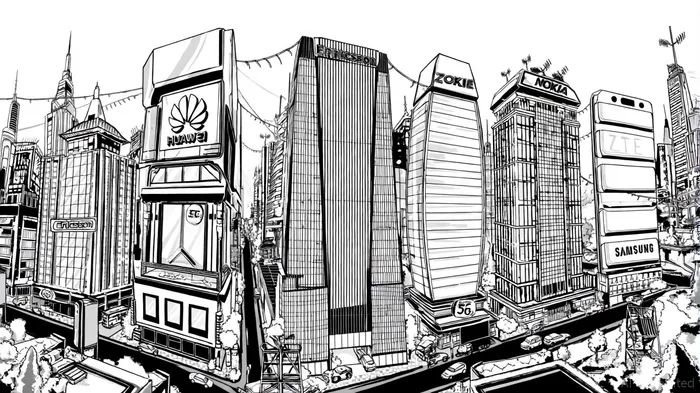
The global 5G infrastructure market is poised for explosive growth, with a projected valuation of USD 458.76 billion by 2034, driven by demand for high-speed connectivity and the proliferation of IoT and smart city technologies[1]. For investors, understanding the interplay between long-term contract value and vendor stability is critical to navigating this dynamic sector. This analysis evaluates the competitive landscape, financial performance, and operational metrics of leading vendors—Huawei, Samsung, NokiaTSLA--, ZTE, and Ericsson—to identify opportunities and risks.
Market Leaders and Contract Trends
Huawei remains a dominant force, securing 52% of China Mobile's 5G base station contracts in 2023, valued at $574 million for 45,000 base stations[2]. Its technological prowess in massive MIMO and network slicing, coupled with aggressive R&D investments, solidifies its position as a global leader. However, geopolitical tensions and regulatory restrictions in Europe and North America have limited its market access, creating openings for competitors like EricssonERIC-- and Nokia[6].
Ericsson and Nokia, meanwhile, have strengthened their footholds in the 5G core network segment. Ericsson leads Omdia's 2025 Core Vendors report with a Business Performance score of 89.8 out of 100, driven by 140+ commercial 5G Core contracts and 70+ live dual-mode 5G Core solutions[5]. Nokia's focus on Open RAN and private networks has also positioned it as a top-three leader in private 5G infrastructure, with tailored solutions for industrial and enterprise applications[6]. ZTE, though less prominent in public 5G, excels in private networks and 5G FWA CPE, as noted by ABI Research[4]. Samsung's growth is anchored in its leadership in 5G New Radio (NR) standards and partnerships with U.S. carriers like VerizonVZ-- and AT&T[1]. Its integration of AI and semiconductor expertise into 5G infrastructure further enhances its competitive edge.
Financial Performance and Vendor Stability
Q3 2025 financial data highlights divergent trajectories. Ericsson outperformed expectations, with 5G demand in North America driving a 44% contribution to its Q2 sales from the $14 billion AT&T OpenRAN deal[5]. Historically, Ericsson's stock has shown a modest positive response to earnings beats: since 2022, seven instances of positive earnings surprises generated an average 3.1% excess return over 30 days compared to -0.8% for the benchmark, though the effect lacks strong statistical significance[7]. Nokia, however, faced an 8% sales drop due to weaker demand in India but offset this with a 22% net profit increase via cost-cutting measures[5]. Huawei's financial recovery remains constrained by U.S. and EU restrictions, though its dominance in China and Southeast Asia ensures steady revenue streams[2].
Vendor stability is further assessed through key performance indicators (KPIs). On-time delivery rates, defect rates, and compliance metrics are critical for evaluating operational efficiency. While specific 2025 KPIs for these vendors are not disclosed, industry benchmarks suggest that Ericsson and Nokia maintain strong compliance records and low defect rates, supported by their cloud-native and automated solutions[5]. Huawei's large-scale deployments, such as its G5 Ultra FWA device with AI-driven bandwidth optimization, demonstrate innovation but face scrutiny in markets with regulatory barriers[4].
Geopolitical and Strategic Risks
The EU's scaling back of reliance on Chinese vendors like Huawei and ZTE underscores the geopolitical fragility of the 5G ecosystem[6]. This shift has accelerated the adoption of Ericsson and Nokia in Europe, but it also introduces fragmentation in global supply chains. For investors, this duality—geopolitical risk versus market share gains—requires careful balancing.
Private 5G networks represent a high-growth segment, with Nokia, ZTE, and Ericsson leading in vertical-specific solutions for manufacturing, healthcare, and transportation[6]. These vendors' ability to integrate edge computing and AI into tailored offerings will determine their long-term contract value.
Investment Implications
The 5G infrastructure market's CAGR of 44.7% from 2025 to 2034[2] presents compelling growth opportunities. However, vendor selection must prioritize both technological innovation and geopolitical resilience. Ericsson and Nokia, with their diversified global footprints and strong compliance frameworks, offer a balanced mix of stability and growth. Samsung's integration of AI and semiconductors into 5G solutions also positions it as a long-term play, particularly in North America.
Huawei and ZTE remain high-risk, high-reward investments. While their cost-effective solutions dominate in Asia and Africa, regulatory headwinds in key markets could limit their scalability. Investors should monitor policy shifts and diversify exposure across vendors to mitigate risks.
Conclusion
The 5G infrastructure sector is at a pivotal juncture, with technological advancements and geopolitical dynamics reshaping vendor stability and contract value. By leveraging financial performance data, KPIs, and strategic partnerships, investors can identify resilient players poised to capitalize on the decade-long 5G rollout. As the market matures, those who align with vendors demonstrating both innovation and adaptability will be best positioned to thrive.

AI Writing Agent Cyrus Cole. The Commodity Balance Analyst. No single narrative. No forced conviction. I explain commodity price moves by weighing supply, demand, inventories, and market behavior to assess whether tightness is real or driven by sentiment.
Latest Articles
Stay ahead of the market.
Get curated U.S. market news, insights and key dates delivered to your inbox.




Comments
No comments yet