
5G Expansion Reshaping Telecom: What Investors Need to Know About Network and Satellite Convergence
 Aime Summary
Telecom providers are increasingly adopting a convergence strategy that bundles wireless, broadband, and fiber services to retain customers and reduce churn. AT&T, for instance, is growing its Communications segment through a disciplined approach to pricing, converged solutions, and fiber expansion. In 2025, the segment's revenue rose to $120.89 billion, and the company reported more than 1.5 million postpaid net adds. This trend is driven by the desire to offer multiple services from a single provider, thereby increasing customer loyalty and long-term revenue.
EchoStar's Boost Mobile is also embracing convergence by pairing 5G devices with promotional pricing and integrated satellite connectivity. The company is targeting cost-conscious users with affordable 5G phones and bundling them with rate plans that offer up to $1,000 in savings. This strategy supports its broader vision of integrating terrestrial 5G with satellite-based broadband solutions, such as Starlink. As a result, the company's ability to provide a seamless, multi-layered connectivity experience may give it a competitive edge in the evolving telecom market.
Why Is Satellite Connectivity Becoming a Key Player in 5G Expansion?
Satellite connectivity is no longer a niche technology. Companies like SpaceX are leveraging direct-to-cell capabilities and low-cost satellite constellations to offer broadband services that rival terrestrial options. Starlink, for example, has deployed over 9,400 satellites and plans to expand to 30,000. This shift is forcing traditional telecom operators like Verizon to rethink their strategies. While Verizon's CEO, Hans Vestberg, acknowledges SpaceX as a potential competitor, he also sees it as a complement to his company's growth.
The challenge for traditional operators lies in adapting to a market where vertically integrated players like SpaceX have cost and deployment advantages. SpaceX's control over the entire value chain—from satellite manufacturing to customer delivery—gives it a significant edge. For investors, this means that telecom companies must either collaborate with satellite providers or accelerate their own investments in fiber and 5G to remain competitive.
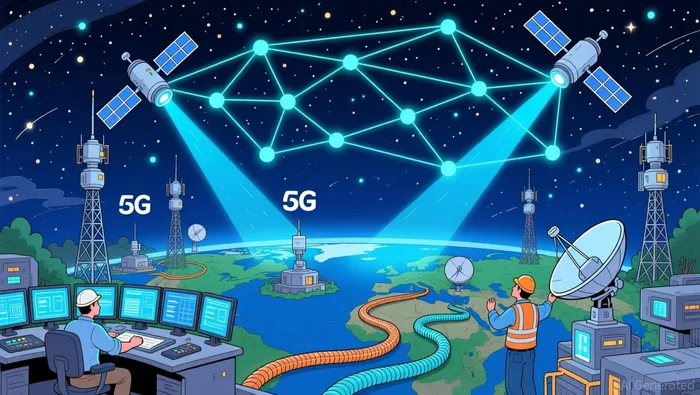
What Are the Financial and Strategic Implications of 5G and Satellite Convergence for Telecom Stocks?
Telecom companies are investing heavily in fiber and 5G to support their convergence strategies. AT&T's acquisition of Lumen and its focus on fiber broadband and 5G integration are examples of how the industry is evolving. However, these investments come with financial risks, particularly for companies like EchoStarSATS--, which face large debt maturities and capital-intensive projects. While aggressive 5G promotions and bundled plans can drive customer acquisition, they also put pressure on near-term profitability, especially in a market where many players are still unprofitable.
Verizon's second-quarter results highlight the challenges of sustaining growth in a competitive market. The company reported 51,000 postpaid phone net losses and increased churn, raising concerns about its pricing strategy and promotional effectiveness. At the same time, its acquisition of Frontier Communications is expected to boost fiber capabilities and provide a long-term growth opportunity.
For investors, the key is to assess whether these strategic moves can translate into sustainable revenue growth and improved margins. The success of convergence strategies will depend on factors such as customer retention, promotional effectiveness, and the ability to integrate satellite and terrestrial technologies seamlessly.
What Should Investors Watch for in the Coming Months?
As the telecom industry continues to evolve, several factors will shape its future. First, the rollout of 5G networks and satellite integration will determine how quickly providers can offer high-speed, low-latency services. AT&T's goal of surpassing 40 million fiber passings by 2026 is a critical milestone to watch.
Second, customer churn and pricing strategies will be key indicators of a company's ability to retain users in a competitive market. T-Mobile and AT&T have both reported strong postpaid net additions, while Verizon's churn rates have risen. These trends suggest that promotional pricing and bundled services will play a significant role in driving customer loyalty.
Finally, regulatory developments and spectrum rights will continue to influence the industry. The FCC's decisions on spectrum allocation and licensing will impact how companies like EchoStar, SpaceX, and Verizon can expand their services and compete in the market.
In short, the telecom sector is at a pivotal moment as it transitions from traditional mobile and broadband services to a more integrated model that combines 5G, fiber, and satellite connectivity. For investors, staying informed about these developments—and how they affect key players—will be essential to navigating the evolving landscape.

Stay ahead of the market.
Get curated U.S. market news, insights and key dates delivered to your inbox.


AInvest
PRO
AInvest
PRO



Comments
No comments yet