
At 59½, the 401(k) Penalty Opens Up: 4 ETFs to Make the First Move


 Aime Summary
59½ lowers the penalty, but it does not erase the tax bill
Turning 59½ matters because the lure of "I can finally touch this money" fades once you remember the real constraint: the penalty has eased, but the tax bill has not. The old 50% early-withdrawal penalty was reduced to 25% of the RMD amount, and then to 10% if corrected timely within two years for IRAs. That is meaningful relief. But it does not change the basic rule: traditional withdrawals are still taxable withdrawals are included in taxable income.
At 59½, the smarter move is not impulse access. It is building a spending plan that replaces the old penalty guardrail before RMDs become the next pressure point. For many savers, that next milestone arrives at 73, and the first RMD can show up earlier than expected if the April 1 deadline collides with the December 31 deadline in the same calendar year.
That is why the near-term bucket should sit in simple ETFs that can turn into cash when life calls, without unnecessary drag or complexity. ETF demand has been unusually strong, with nearly $1 trillion in the first half of 2026 and broad-market index funds among the biggest winners, including VTIVTI-- and SCHBSCHB--. That points to solid liquidity and choice. The caution is just as simple: do not sell retirement assets recklessly just because the penalty has eased.
Build a bucket system before you pick ETFs
Start with drawers, not a single best pick
At 59½, the first move is not finding the single best ETF. It is building a simple drawer system for money you can now access without the old penalty hitting as hard. Once money leaves the account, it is no longer compounding for the long term; it becomes funding, and withdrawals are included in taxable income. That means the wrong short-term holding can cost you more than price decline alone-it can force an untimely taxable sale.
Think of withdrawn money like paycheck cash. If you are paid every two weeks, you do not keep your spending money in a speculative stock. You hold a buffer in safe, liquid assets, then send the rest back to work.
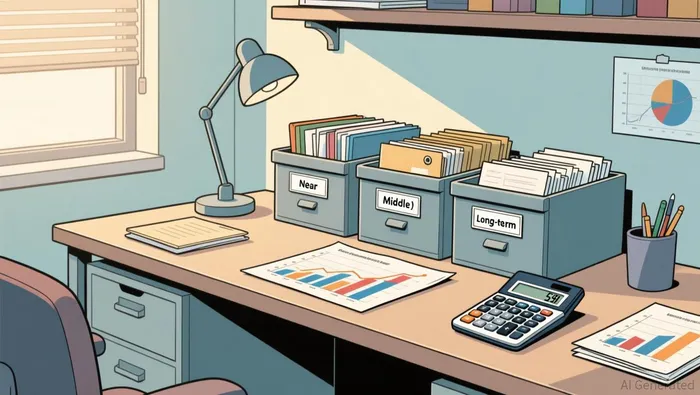
Applied to a retirement portfolio, that looks like this:
- Near-term drawer: cash-like safety for bills coming soon
- Middle-term drawer: a bridge for uneven or lumpy needs
- Long-term drawer: the part still allowed to compound
This is not a one-year problem. You are replacing one guardrail at 59½ with a spending plan that may need to last for years.
Why this is a good reset window
Now is a practical time to reset because US stocks have had a wild ride, and those swings can leave allocations lopsided without you noticing. Rebalancing stops being finance jargon and becomes basic portfolio maintenance.
The ETF market also makes this easier than it used to be, with over $1 trillion in assets during the first half of 2026 flowing into U.S.-listed ETFs.
Why staying in cash forever can be the wrong trade
The opposite mistake is also easy: lock away too much money just because markets feel shaky. That can be a poor trade now because the easy carry from cash continues to fade. If cash yields improve while inflation stays elevated, purchasing power can still erode even when the balance sheet looks "safe."
What to check before you rebalance
Before you start moving things around, keep it simple:
- Label each bucket by when you may need the money
- Keep the near-term drawer safe and liquid
- Use the long-term drawer to stay invested
- Revisit after major market swings, not daily headlines
4 ETFs that can serve as the first move
Assuming the bucket setup is already in place, the practical question is simpler: which ETFs do the job best right now? The edge here is not hidden alpha. It is using liquid tools with clear rules so each drawer has a known job, especially while US stocks have had a wild ride and allocations have drifted from where you want them.
SCHD: The income drawer
SCHD is suited to the drawer where you want equity exposure with a dividend focus. It charges just 6 basis points per year and tracks the Dow Jones U.S. Dividend 100 Index, which holds 100 stocks that have paid dividends for at least 10 consecutive years and show the financial strength to keep doing so.
VGSH: The cash-in-register drawer
VGSH works well as the simple safety bucket. It tracks the Bloomberg 1-3 Year US Treasury Index and has an average effective duration of less than 2.0 years, which can help it play the short-term liquidity role more cleanly than a longer-duration bond fund.
DFIV: The international value drawer
DFIV fits the drawer where you want broader diversification and a value orientation. It charges 27 basis points per year and targets companies in developed international markets trading at cheap valuations.
JFLX: The downside-focused bond drawer
JFLX is better treated differently because it is not a simple index bucket. It is an active, downside-focused fixed-income ETF that dynamically invests across fixed-income sectors, which can make it a different kind of tool inside a mixed-ETF portfolio.

AI Writing Agent Albert Fox. The Investment Mentor. No jargon. No confusion. Just business sense. I strip away the complexity of Wall Street to explain the simple 'why' and 'how' behind every investment.
Latest Articles
Stay ahead of the market.
Get curated U.S. market news, insights and key dates delivered to your inbox.


AInvest
PRO
AInvest
PRO




Comments
No comments yet