
B-52 Modernization Fuels Aerospace & Defense Outperformance in a Geopolitically Tense World
The U.S. defense sector is primed for sustained growth as geopolitical tensions with China, Russia, and rogue states drive unprecedented investment in military modernization. At the heart of this trend is the U.S. Air Force's B-52H Stratofortress, a Cold War-era bomber now undergoing a $100 billion+ overhaul to extend its service life into the 2050s. For investors, this program—along with broader Pentagon priorities to upgrade legacy aircraft—presents a compelling opportunity to capitalize on Boeing (BA) and its subcontractors, offering stable, long-term revenue streams in a sector often overshadowed by geopolitical volatility.
The B-52's New Lease on Life: A Blueprint for Modernization
The B-52H, first deployed in 1955, has become a symbol of Pentagon pragmatism. Instead of replacing its fleet with costly new platforms like the B-21 Raider (expected to number just 100–200 units), the Air Force is pouring resources into upgrading existing aircraft to counter emerging threats like hypersonic missiles and advanced air defenses. Key programs include:
- Radar Modernization Program (RMP): Replacing the B-52's 1960s-era radar with an advanced Active Electronically Scanned Array (AESA) system to track hypersonic weapons and loiter over contested zones.
- Commercial Engine Replacement Program (CERP): Swapping aging TF33 engines with Rolls-Royce F130 engines, boosting range and payload capacity.
- Hypersonic Weapon Integration: Preparing the B-52 to carry the Hypersonic Attack Cruise Missile (HACM) and Air-launched Rapid Response Weapon (ARRW), ensuring relevance against adversaries' advanced capabilities.
The result? A bomber capable of flying for decades at a fraction of the cost of new builds. 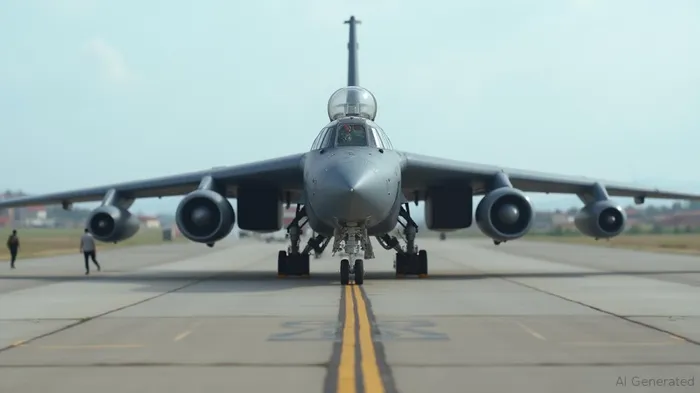
Boeing's Dominant Position and Pentagon Backing
Boeing is the linchpin of these upgrades, serving as prime contractor for both RMP and CERP. Its defense backlog, a key metric of future revenue stability, has surged to $50 billion as of Q1 2025, with B-52 modernization accounting for ~25% of this total. The Air Force's commitment is underscored by its FY2025 budget, which allocated $834 million to hypersonic weapons integration and $2.6 billion for CERP engines.
The geopolitical calculus is clear: with China's military modernization outpacing U.S. spending and Russia's hybrid warfare tactics, the Pentagon cannot afford to let legacy systems rust.
Risks and Mitigants: Delays, but Not Dealbreakers
Critics cite delays—RMP's initial operational capability (IOC) has slipped to mid-2030—and cost overruns, with Nunn-McCurdy breaches signaling fiscal challenges. Yet these hiccups are typical of complex defense programs. The Air Force's contingency planning (e.g., exploring alternative radar suppliers) and Congress's bipartisan support for modernization budgets mitigate systemic risks.
Why Investors Should Double Down on BoeingBA-- Now
- Stable Cashflows: Long-term contracts (e.g., 10-year CERP engine orders) provide predictability in a sector prone to budget sequesters and geopolitical shocks.
- Strategic Monopoly: Boeing's role as sole integrator for B-52 upgrades creates high switching costs, especially as the Air Force lacks alternatives to its 76-plane bomber fleet.
- Hypersonic Synergy: Boeing's partnership with Raytheon (RTX) on HACM integration positions it to benefit from the $20 billion hypersonic weapons market over the next decade.
Investment Thesis: Buy Boeing, Monitor Geopolitical Sentiment
Recommendation: Investors with a 3–5 year horizon should allocate 5–10% of a diversified portfolio to Boeing, targeting a 15–20% upside as modernization milestones are met. Pair this with Raytheon Technologies (RTX) (10–15% allocation) for radar and missile exposure.
Catalysts to Watch:
- Q3 2025: CERP's critical design review and RMP's software validation.
- 2027: Hypersonic weapon fielding and B-21 Raider initial operational capability.
Risk Management: Monitor the Geopolitical Risk Index (GRI)—a rise above 75 (currently 70) could accelerate Pentagon spending, while dips below 65 might pressure defense budgets.
Conclusion: The B-52's Modernization is a Bet on U.S. Military Resilience
In a world where deterrence requires aging platforms to perform like new, Boeing's role in the B-52's rebirth offers a rare blend of stability and growth. With geopolitical threats unlikely to abate, this program—and Boeing's execution—will remain a cornerstone of U.S. defense strategy for decades. For investors, the calculus is straightforward: modernizing old tools to fight new wars is a priority that won't fade anytime soon.

Stay ahead of the market.
Get curated U.S. market news, insights and key dates delivered to your inbox.
AInvest
PRO
AInvest
PRO



Comments
No comments yet