
S&P 500 Today: Why AI Slowdown Calls And 5% Yields Are Shaking Markets
 Aime Summary
- AI leaders calling for a development slowdown triggered a global tech sell-off as investors question the sustainability of massive capital expenditures.
- The 10-year Treasury yield breached the critical 5% threshold for the first time since 2007, signaling a structural shift in borrowing costs and equity valuations.
- Rising oil prices and geopolitical tensions are fueling inflation fears, increasing the likelihood of a Federal Reserve rate hike that could further pressure growth stocks.
- Market concentration in just five tech giants leaves the S&P 500 vulnerable to sector-specific volatility and potential bubble risks.
U.S. stocks faced a turbulent start to the week as the S&P 500 and Nasdaq Composite retreated under the weight of conflicting macroeconomic signals and sector-specific headwinds. The tech-heavy indices, which have driven market gains for much of the year, saw sharp declines as investors digested warnings from artificial intelligence industry leaders about the pace of development. Simultaneously, the bond market signaled a new era of higher borrowing costs, with the 10-year Treasury yield surging past 5%, a level not sustained since the mid-2000s. This convergence of AI skepticism and rising yields has created a complex environment for retail investors, forcing a re-evaluation of growth valuations in a market that has become increasingly concentrated in a handful of mega-cap technology firms.
Why Is The S&P 500 Falling Amid AI Slowdown Calls?
The primary catalyst for the recent market volatility stems from a surprising pivot by leaders in the artificial intelligence sector. CEOs from major AI labs, including Anthropic and OpenAI, have publicly called for a slowdown in the pace of technological development, citing safety risks and the potential for misuse. This rhetoric has sparked a global sell-off in technology stocks, as investors worry that the massive capital expenditures fueling the AI boom may not yield proportional profits in the near term. The market reaction was immediate, with shares of chipmakers like NvidiaNVDA-- and Micron TechnologyMU-- dropping significantly as "pick and shovel" stocks supplying AI infrastructure were hit hardest.
This sell-off highlights a growing concern about the sustainability of the current AI investment cycle. For years, the stock market has been propelled higher by the promise of AI-driven efficiency and growth. However, the call for a slowdown suggests that the industry may be approaching a phase where spending could outpace actual corporate utility or profitability. OpenAI’s decision to delay its initial public offering further complicates the landscape, removing a anticipated source of liquidity and growth from the public markets. Analysts note that this dynamic could act as a "ladder pull," potentially raising barriers to entry for smaller competitors while allowing dominant firms to maintain their lead through rigorous safety investments.
The implications for the S&P 500 are profound. Bank of America Global Research recently highlighted that just five stocks—Alphabet, Apple, MicronMU--, Microsoft, and Nvidia—are projected to account for 27% of the index's growth over the next 12 months . This extreme concentration means that any negative sentiment directed at the AI sector or these specific giants can disproportionately drag down the broader market. While some strategists argue that the long-term AI opportunity remains intact, the short-term risk of a valuation correction is rising. Capital Economics has even forecasted a potential bubble burst next year, which could lead to a more than 20% drop in the S&P 500 by the end of 2027 .
How Do Rising Yields And Oil Prices Impact The S&P 500 Today?
Compounding the pressure from the technology sector is a significant shift in the macroeconomic environment, driven by rising bond yields and energy prices. The 10-year Treasury yield has breached the critical 5% threshold, a milestone not firmly sustained since 2007. This move reflects a broad sell-off in the global bond market, fueled by soaring oil prices, persistent inflation, and uncertainty surrounding U.S. government debt. The rise in yields directly increases borrowing costs for consumers and businesses, with average 30-year mortgage rates climbing to 6.76%.
The surge in yields is largely attributable to geopolitical tensions and energy market disruptions. Escalating conflict in the Middle East, particularly involving Iran and disruptions to key oil pipelines, has pushed Brent crude above $90 per barrel and U.S. crude prices above $100. This energy price surge threatens to increase headline inflation and pressure consumer spending, complicating the Federal Reserve’s policy path. Persistent inflation, combined with fiscal concerns over government spending, has led investors to anticipate that ultra-low rates is permanently over.
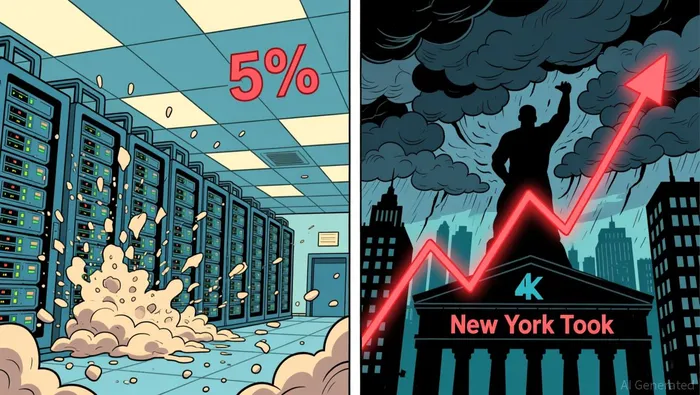
For the S&P 500, higher yields pose a direct threat to equity valuations. As the risk-free rate rises, the present value of future corporate earnings decreases, particularly impacting growth and technology stocks that rely on long-term cash flow projections. Treasury Secretary Scott Bessent’s efforts to contain rising yields through expanded buybacks of long-term debt have had mixed results, leaving traders to question whether 5% will act as a ceiling or a gateway to a borrowing environment reminiscent of the 1990s . The market is now closely monitoring upcoming inflation data and Federal Reserve decisions, with some strategists warning that a miss in inflation expectations could trigger a more protracted equity downturn than the bond yield level itself.
What Should Investors Watch For In The S&P 500 Today?
As the market navigates these dual headwinds, investors are turning their attention to key economic data and corporate earnings to gauge the resilience of the S&P 500. The upcoming Federal Reserve meeting is a critical juncture, with markets increasingly betting on a rate hike due to sticky inflation and rising energy costs. Fed Chair Kevin Warsh’s hawkish remarks have further fueled expectations that the central bank may raise rates to a range between 3.75% and 4% . A decision to hike would signal that the Fed is prioritizing inflation control over market stability, potentially adding more pressure to growth stocks.
Corporate earnings remain a bright spot, with Q2 data showing that 86% of S&P 500 companies beat estimates. However, this growth has been driven by a small number of firms, raising sustainability concerns. Investors are advised to focus on quality equities with strong balance sheets and pricing power, as these companies are better positioned to withstand higher borrowing costs and inflationary pressures. The committee at MRA Investment recommends maintaining diversification beyond large-cap technology and favoring short- and intermediate-duration investment-grade bonds for income and diversification .
Geopolitical risks remain a primary driver of market volatility. Renewed conflict in the Middle East has disrupted oil supplies, while Europe faces heightened energy-price sensitivity. In the U.S., private-sector demand remains resilient, with real final sales to private domestic purchasers growing 4.2% annualized in Q2 . This suggests that the economy is more robust than headline GDP figures imply, providing a floor for corporate earnings. However, the combination of high oil prices, rising yields, and AI sector uncertainty creates a fragile environment. Investors are advised to maintain liquidity and avoid overreacting to short-term volatility, focusing instead on disciplined allocation and long-term objectives .
The S&P 500 is at a crossroads, balancing strong underlying corporate earnings against a backdrop of rising macroeconomic risks. The call for an AI slowdown and the breach of the 5% yield threshold mark significant shifts in market dynamics, forcing investors to reassess their exposure to growth and technology. As the Federal Reserve prepares for its next move and geopolitical tensions persist, the market’s ability to sustain its recent gains will depend on how well companies can navigate this new era of higher rates and uncertain growth.

Stay ahead of the market.
Get curated U.S. market news, insights and key dates delivered to your inbox.


AInvest
PRO
AInvest
PRO




Comments
No comments yet