
The S&P 500's All-Time Highs: A Bull Run or a False Dawn?
The S&P 500 has reached record highs in July 2025, fueled by accommodative Federal Reserve policies, sector-specific optimism in tech and artificial intelligence (AI), and a relentless appetite for risk among investors. Yet beneath this bullish surface, critical cracks are emerging. Elevated valuations, slowing earnings momentum, and mounting macroeconomic risks threaten to unravel the rally. As one Wall Street giant recently warned, “The market's euphoria is masking structural vulnerabilities. Investors are mistaking liquidity for value.” This article argues that the current highs may prove fleeting unless underlying risks are addressed—and that investors must prioritize quality over quantity.
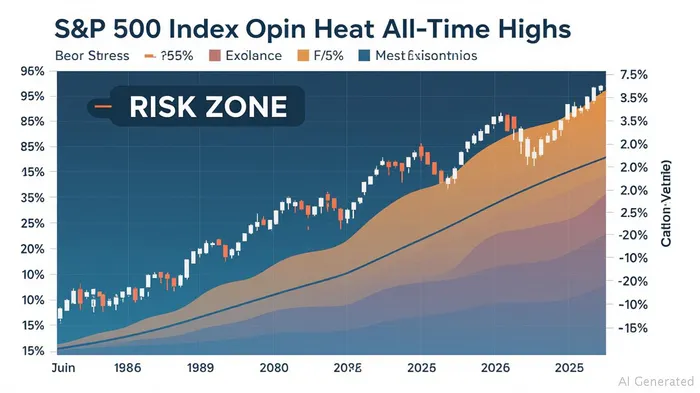
Valuation Concerns: Overextended or Overlooked?
The S&P 500's trailing P/E ratio has surged to 27.55 as of June 2025, well above its five-year average of 21.99 and its 20-year average of 16.5. Even forward P/E estimates, which typically temper optimism, now stand at 20.55 for December 2025—a 12.98% decline from 2024 levels, but still elevated relative to historical norms. .
The overvaluation is most pronounced in growth sectors. Tech and AI stocks trade at an 18% premium to fair value, with giants like NVIDIANVDA-- and MicrosoftMSFT-- Azure commanding valuations that assume flawless execution of their AI strategies. Meanwhile, value stocks—such as industrials and energy—trade at a 12% discount, offering better risk-adjusted returns. This divergence suggests a market split between speculative exuberance and prudent valuation discipline.
Macroeconomic Risks: The Clouds on the Horizon
- Fed Policy Uncertainty: While the Fed is expected to cut rates twice in 2025, the timing and impact remain uncertain. A misstep could trigger a sharp correction. .
- Slowing Earnings Growth: Forward earnings estimates for 2025 have been revised downward, with growth expected to slow to 6% from 2024's 12%. Sectors like industrials and consumer discretionary face margin pressures from rising input costs.
- Geopolitical Tensions: Tariff deadlines in July and August loom large, with companies passing 55% of tariff costs to consumers—a unsustainable strategy as inflation data worsens. Meanwhile, conflicts in the Middle East and Asia could disrupt energy and supply chains.
Sector Analysis: Where to Look—and Where to Flee
- Overvalued Sectors: Growth stocks (e.g., tech, cloud computing) and consumer defensive giants (Walmart, Procter & Gamble) are trading at premiums that exceed their growth trajectories. .
- Undervalued Opportunities:
- Healthcare: Firms like Thermo Fisher ScientificTMO-- (TMO) and MedtronicMDT-- (MDT) offer 4- to 5-star ratings despite policy uncertainties.
- Energy: ExxonXOM-- (XOM) and ChevronCVX-- (CVX) remain undervalued even with oil prices at $65/barrel, providing a hedge against inflation.
- Small-Caps: The Russell 2000 trades at a 17% discount to fair value, offering long-term upside if Fed rate cuts spur a 2026 rebound.
Investment Strategy: Quality First, Hedging Second
Investors should adopt a two-pronged approach:
- Focus on Quality:
- Prioritize firms with robust balance sheets (low debt, strong cash flows) and secular growth drivers. For instance, cloud-software companies like ServiceNowNOW-- (NOW) or AI-integrated healthcare tools may outperform.
Avoid overhyped sectors: The tech-heavy Nasdaq 100's forward P/E of 32 (vs. the S&P 500's 20.55) underscores its vulnerability to disappointment.
Hedge Against Risks:
- Defensive Assets: Allocate to utilities (e.g., NextEra Energy) or dividend-paying REITs (e.g., Healthpeak) to buffer against volatility.
- Rate-Sensitive Plays: Short-term Treasuries or inverse rate ETFs (e.g., TLT) could mitigate Fed policy risks.
Conclusion: Proceed with Caution
The S&P 500's record highs reflect a market caught between hope and hubris. While accommodative policies and sector-specific optimism have driven gains, overvaluation in key areas and macroeconomic headwinds suggest caution. Investors should avoid chasing momentum and instead focus on firms with sustainable growth, prudent financials, and defensive characteristics. As the old Wall Street adage goes: “Bulls make money, bears make money—but pigs get slaughtered.” In this environment, prudence, not greed, will be rewarded.
.
Data sources: MorningstarMORN--, Standard & Poor's, Federal Reserve Economic Data (FRED).

Stay ahead of the market.
Get curated U.S. market news, insights and key dates delivered to your inbox.




Comments
No comments yet