
The S&P 500's Surge to Record Highs: A Bullish Shift or a Short-Lived Rally?
The S&P 500's journey from the edge of a bear market to near-record highs in just six months has sparked a fierce debate among investors: Is this a durable shift in sentiment, or merely a fleeting rebound? To answer this, we must dissect the catalysts fueling the rally, weigh the risks lurking beneath the surface, and evaluate whether current momentum is worth chasing—or if caution remains warranted.
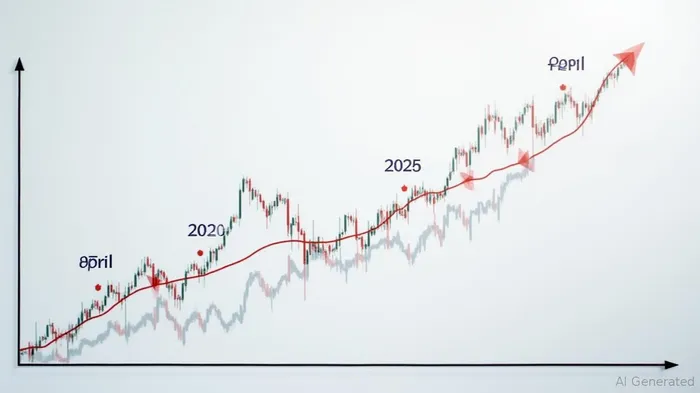
The Catalysts: Fed Policy, Tech Resilience, and Sentiment Shifts
The rebound began with a critical pivot in Federal Reserve policy. After hiking rates to 5.5% in 2024, the Fed paused hikes in early 2025, signaling flexibility amid slowing growth. This shift alleviated fears of overtightening, with markets pricing in a 50% chance of a rate cut by year-end by June. The clearly shows how easing expectations coincided with equity gains.
Equally pivotal was the resilience of corporate earnings, particularly in tech. The Nasdaq 100's record high in June—driven by AI-driven firms like NVIDIANVDA-- and Amazon—highlighted the sector's dominance. Tech stocks, which account for over 30% of the S&P 500, surged 10.8% in May alone (May 2025 data), masking weaker performance in sectors like healthcare and energy.
Technical indicators also signaled a shift. The S&P 500 broke above its 200-day moving average in May, a bullish sign, while the RSI (Relative Strength Index) moved from oversold territory to neutral. Analysts like Mohit Kumar (Jefferies) noted this as a “grind higher” phase, though skeptics argue it lacks broad participation.
The Risks: Inflation, Tariffs, and Geopolitical Headwinds
Despite the optimism, risks loom large. Inflation remains stubbornly elevated at 3.8% (June 2025), driven by tariffs on Chinese imports and supply chain bottlenecks. The OECD warns that U.S. GDP growth could slow to 1.6% in 2025, with stagflation risks rising if prices spike further.
Geopolitical tensions, particularly the Iran-Israel conflict, added volatility. A 90-day ceasefire in June eased oil prices, but lingering instability could reignite fear. Meanwhile, the U.S. government's “One Big Beautiful Bill” fiscal package—extending tax cuts and delaying debt ceiling crises—buys time but fails to address long-term fiscal sustainability.
Valuation concerns also persist. The S&P 500's forward P/E ratio hit 20.5x in June, near its 2023 peak, despite single-digit earnings growth forecasts. Historically, such valuations have preceded pullbacks unless earnings accelerate—a tall order given current macro headwinds.
Data-Backed Analysis: Momentum vs. Caution
The case for optimism hinges on two pillars: tech's leadership and Fed flexibility. Tech stocks, fueled by AI adoption and resilient margins, could continue to buoy the index. Additionally, a rate cut by late 2025—now priced at 30%—would provide further tailwinds.
However, the risks are asymmetric. A missed earnings beat in Q2 2025, a sudden inflation spike, or a relapse in trade tensions could trigger a sharp correction. The Oakmark Fund's historical data underscores this: while corrections typically see 11% gains within a year, the current rally lacks the breadth (only 10 of 11 sectors rose in May) to justify complacency.
Investment Strategy: Balance Momentum with Caution
Investors should adopt a two-tiered approach:
Capitalize on Tech Leadership: Allocate to AI-driven firms (e.g., NVIDIA, Microsoft) and the Nasdaq 100, which have outperformed the broader market. The reveals this sector's alpha potential.
Hedge Against Macro Risks: Use dividend stocks (e.g., consumer staples) and inflation-linked bonds to buffer against economic volatility. Avoid overexposure to rate-sensitive sectors like housing, which face headwinds from lingering high mortgage rates.
Monitor Key Thresholds: A breach of the June 2025 high (5,911) would signal a true breakout, while a close below the 200-day moving average (5,650) would confirm a bearish reversal.
Conclusion
The S&P 500's rebound is neither purely bullish nor a fleeting rally—it's a conditional recovery. Investors who focus on tech's structural tailwinds and Fed flexibility may find opportunities, but they must remain vigilant to inflation, geopolitical risks, and valuation extremes. As the adage goes: “Bulls make money, bears make money, pigs get slaughtered.” Balance conviction with caution, and let the data—not sentiment—guide your decisions.
The path to new records is narrow. Proceed with eyes wide open.

Stay ahead of the market.
Get curated U.S. market news, insights and key dates delivered to your inbox.




Comments
No comments yet