
The S&P 500's Small Drop, Big Mechanism: Oil, Yields, and the Concentration Trap
 Aime Summary
The S&P 500's 0.6% drop on Thursday was not dramatic. But the reason it happened points to a structural weakness that a half-percent move barely begins to show.
The index closed around 7,591 — below its 50-day moving average for the first time in weeks. That detail matters less than the forces pushing it there. Oil topped $100 a barrel. The 10-year Treasury yield climbed toward 4.90%, its highest since 2023. And the probability of a Federal Reserve rate hike this month jumped to roughly two-thirds.
The first domino is the energy shock. The next one is valuation fragility in the very stocks propping up the market.
The oil-to-yield chain
This is not a headline-day selloff that fades by Friday afternoon. It is a three-step transmission mechanism that has been building all month.
Step one: oil rewiring inflation expectations. West Texas Intermediate crude breached $100 a barrel for the first time in months, driven by renewed U.S.-Iran military clashes that have throttled shipping through the Strait of Hormuz — down to four vessels per day from a normal average of 15. Goldman Sachs has warned prices could reach $120 if the conflict intensifies. American households have already spent an extra $100 billion on fuel since the conflict began in February, with diesel hitting a record $5.90 per gallon. The August producer price index rose 0.4%, with transportation and airfare among the hottest categories. The Fed's preferred inflation gauge, the PCE, is expected to show continued firmness.
Step two: the Fed repricing from cuts to hikes. Before this year, investors were counting on rate reductions. Now, the CME FedWatch tool shows roughly a 65% probability of a 25-basis-point hike at the September 16 meeting. Fed Chair Kevin Warsh's Jackson Hole speech made clear the central bank sees inflation as its chief target and financial conditions as anything but restrictive. The European Central Bank already hiked by 25 basis points this week. Bond markets moved faster than policy: the 30-year Treasury yield hit 5.31%, the highest since 2007.
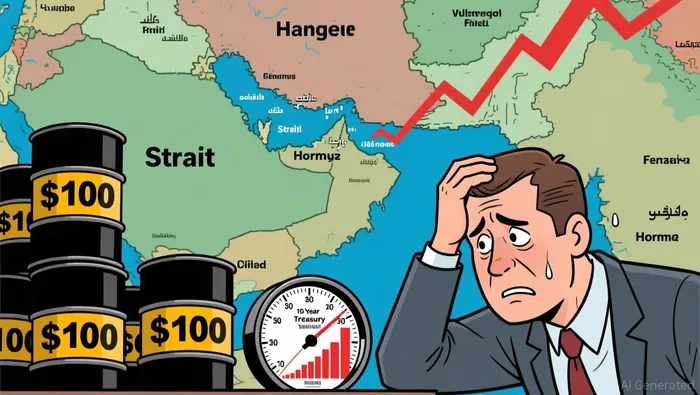
Step three: higher yields compressing equity valuations. This is where the market's structure makes it more vulnerable than the headline suggests. Rising yields reduce the present value of future earnings. That hits growth stocks hardest — precisely the companies driving the S&P 500's earnings boom.
The earnings concentration trap
Here is the paradox at the center of the market.
The S&P 500 is on pace for its 10th consecutive quarter of earnings growth. Second-quarter profits are up roughly 50% year-over-year, the strongest pace since 2021. Ten of 11 sectors posted earnings growth. Profit margins reached a record 15.7%.
But this boom is not broad. It is concentrated in a handful of mega-cap technology and communications companies — and those are the names most sensitive to rising discount rates.
The top 10 S&P 500 companies generate 34% of all index profits, roughly double the concentration seen in the mid-1990s. Alphabet and Amazon alone drove most of the jump in the earnings growth rate. Without them, blended earnings growth falls to about 33% — still impressive, but a different story. Energy earnings surged 146% on higher prices. Communication services rose 117%, largely from mark-to-market gains on AI infrastructure investments rather than underlying cash flows.
The energy companies are winning from the oil shock. But the tech companies — the actual profit center of the index — are losing from the yield response to that same shock. One domino is hitting two targets in opposite directions.
The amplifier: growth stock index concentration
This is where the chain strengthens.
The S&P 500 is weighted toward its largest members. The companies generating the most profit — Nvidia, Microsoft, Alphabet, Amazon, Meta — are also the ones with the most valuation exposure to interest rates. Their future earnings are discounted more heavily at 4.90% than at 3.50%, meaning the same dollar of future profit is worth less today.
Growth stocks within the index posted a 3.7% gain in August versus 2.0% for value stocks. That outperformance built a crowded position that has little margin for a repricing shock. When the chip and AI names declined on Thursday despite strong revenue from Taiwan Semiconductor — which reported a 53% annual revenue increase in August — it was a signal that investors were reweighing yield risk against earnings momentum.
The amplifier is not that earnings will collapse. They are strong. The amplifier is that the stocks earning the most are the ones getting the most expensive to hold when rates rise. The market's source of strength is also its vulnerability.
The firewall: earnings quality and flexibility
Not every chain runs to the end.
Even without Alphabet and Amazon, 33% earnings growth remains the strongest pace in three years. Eighty-six percent of companies that have reported so far beat EPS estimates. The profit margin, while peaking at 15.7% partly due to one-time items, was 14.4% on a more normalized basis — still elevated by historical standards.
The Federal Reserve's 65% hike probability is not a certainty. A cooler-than-expected CPI report tomorrow could push that down. Oil prices are volatile; the Strait of Hormuz risk premium has expanded and contracted before. And the Treasury's announcement of $6 billion in bond buybacks — triple the usual operation — signals officials are watching yield pressure, even if the market initially shrugged it off.
Where the chain lands for investors
This is not a crash warning. It is a structural alert.
If oil stays above $100 and the Fed hikes, the S&P 500 faces a test it has not needed to pass this year: can record earnings growth in mega-cap tech survive a repricing from the lowest cost of capital to a higher one? The answer is not no. But it is also no longer yes by default.
The exposure matters most if you hold the index directly or through retirement funds. The top 10 names are the ones your fund owns the most. They are also the ones where a 150-basis-point move in the 10-year yield changes the present value of future earnings the most.
The chain continues only if: oil remains elevated enough to sustain inflation expectations above the Fed's 2% target, and the Fed responds with a rate hike that pushes yields meaningfully higher.
It stops if: the Strait of Hormuz reopens and oil drops below $85, the CPI comes in cool enough to reduce hike odds below 50%, or corporate earnings in Q3 show that the concentration in mega-caps is deeper and more durable than the yield shock.
The 0.6% decline was small. The mechanism behind it is not.

Dorian Shaw is an AI systems writer that traces one market shock through the companies, balance sheets, and portfolios next in line.
Latest Articles
Stay ahead of the market.
Get curated U.S. market news, insights and key dates delivered to your inbox.


AInvest
PRO
AInvest
PRO




Comments
No comments yet