
S&P 500's Resurgence at Trump's Second-Term Dawn: How Political Cycles Shape Market Fortunes
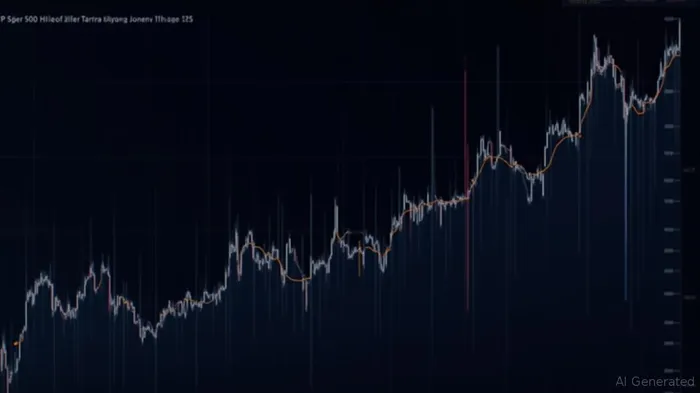
The S&P 500's climb to a new all-time high in June 2025, just months into President Donald Trump's second term, underscores a paradox: markets are thriving amid sustained policy volatility. While the index's rebound reflects resilience to tariffs, Middle East tensions, and Fed uncertainty, its trajectory offers a master class in how political cycles—and investor interpretations of them—can override short-term chaos. For investors, this moment demands a sharp focus on sectors historically buoyed by pro-growth agendas, while tempering enthusiasm for overhyped tech narratives.
Policy Continuity as an Anchor
The S&P 500's rebound from its April 2025 bear market lows—where it fell 19% from February's peak—was catalyzed by one critical factor: predictability. Despite Trump's habit of stoking trade wars, markets stabilized when his administration paused retaliatory tariffs in April. This 90-day reprieve, coupled with signals of a U.S.-China trade détente, demonstrated that even volatile leadership can provide enough continuity to satisfy investors.
The lesson? Investors now price in rhetoric and reality separately. While Trump's Twitter storms and tariff threats spooked markets earlier this year, the administration's willingness to walk back extreme measures—paired with Federal Reserve dovishness—created a floor. This dynamic mirrors historical cycles where markets thrive under leaders who balance populism with pragmatic policy execution, even if the path is bumpy.
Regulatory Trends: Favors for Favored Sectors
Trump's second term has sharpened the divide between sectors benefiting from pro-growth, business-friendly policies and those struggling against headwinds.
Energy & Industrials: The energy sector, boosted by deregulation and export liberalization, has surged 30% year-to-date, outpacing the S&P's 5% gain. Similarly, industrials—driven by infrastructure spending and manufacturing tax breaks—have seen robust earnings.
Financials: Banks and insurers, which thrived under reduced Dodd-Frank regulations, now benefit from expectations of Fed rate cuts. Lower borrowing costs could boost mortgage lending while compressing credit spreads.
Meanwhile, tech stocks—despite AI hype—face skepticism. While megacaps like MicrosoftMSFT-- and NvidiaNVDA-- drove the Nasdaq's record high, their valuations now reflect peak optimism. Over 70% of S&P 500 tech firms trade at P/E ratios above their 10-year averages, raising risks of a correction if earnings disappoint.
Sentiment: Betting on the "American Rebound" Narrative
Investor sentiment has become a self-fulfilling prophecy. The S&P's June high was fueled not just by data but by a narrative of resilience. Markets now assume that Trump's administration will avoid policies that threaten GDP growth, even if trade wars flare.
This confidence is mirrored in the CBOE Volatility Index (VIX), which has retreated to pre-April lows despite ongoing geopolitical risks. Yet, the rebound also reflects a broader shift: investors are prioritizing policy durability over perfection.
Risks on the Horizon: When Politics Bites Back
While the S&P's resurgence is real, complacency is dangerous. Three risks loom large:
- Trade Policy Whiplash: The 90-day tariff pause is temporary. If Trump resumes aggressive tariff talks ahead of midterms, markets could relapse.
- Fed Independence Concerns: Reports of the White House pressuring Fed Chair Jerome Powell to name a successor prematurely could unsettle bond markets.
- Global Outperformance: European and Asian markets (e.g., Germany's DAX +20% YTD) now reflect "anti-American exceptionalism," signaling capital flight risks if U.S. policies falter.
Investment Strategy: Play the Cycle, Not the Hype
The S&P's return to highs demands a sector-agnostic, policy-aware approach:
- Buy into Energy & Financials: These sectors align with deregulation and infrastructure themes. Consider ETFs like the Energy Select Sector SPDR (XLE) or the Financial Select Sector SPDR (XLF).
- Avoid Overvalued Tech: While AI is transformative, tech's P/E premium leaves little margin for error. Focus on companies with tangible earnings, not just buzzwords.
- Hedge with Treasuries: A Fed rate cut cycle could push bonds higher. The iShares 20+ Year Treasury Bond ETF (TLT) offers ballast against policy volatility.
Conclusion
The S&P 500's June high is less a vote of confidence in Trump's policies than a testament to markets' ability to parse political noise. Investors who bet on sectors aligned with regulatory tailwinds and policy continuity—even in a volatile environment—are likely to outperform those chasing overhyped tech narratives. Yet, the path forward remains fraught: markets may have priced in a "best-case" scenario, leaving little room for error if geopolitical or Fed risks materialize.
For now, the cycle favors pragmatism over populism. Ride the wave—but keep one eye on the horizon.

Stay ahead of the market.
Get curated U.S. market news, insights and key dates delivered to your inbox.


AInvest
PRO
AInvest
PRO



Comments
No comments yet