
The S&P 500's Near-Miss of a Record High and What It Reveals About Market Momentum and Fed Policy


 Aime Summary
AI Euphoria and the Fragility of Momentum
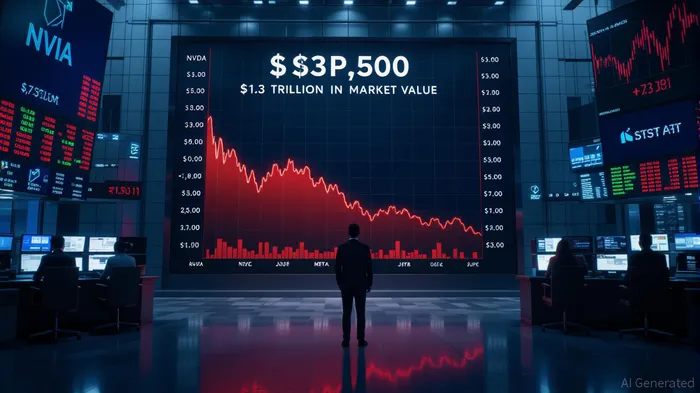
The S&P 500's surge toward a record high in late November 2025 was fueled by a singular force: artificial intelligence (AI). Tech leaders like NvidiaNVDA-- and MetaMETA-- drove the index higher, buoyed by optimism over AI's transformative potential. However, this momentum proved unsustainable. As investors began to question whether the valuation multiples of AI-related stocks could justify their capital-intensive growth trajectories, profit-taking and profit-booking triggered a reversal. The correction, which erased over $1.3 trillion in market value within two weeks, highlights the risks of overreliance on narrow drivers.
 Compounding this fragility was the delayed release of key economic data due to a government shutdown, leaving investors in limbo about the U.S. economic outlook. This uncertainty created a vacuum where speculative bets on AI dominance could not withstand scrutiny, exposing the market's vulnerability to macroeconomic headwinds.
Fed Rate Expectations and Positioning Ahead of Powell's Speech
The Federal Reserve's policy trajectory remains the linchpin of market psychology. Futures markets currently price in an 87.6% probability of a 25-basis-point rate cut in December 2025, reflecting growing confidence in monetary easing. However, this optimism is tempered by the Fed's cautious stance. Powell's characterization of the market as "fairly highly valued" signals a recognition of overvaluation risks, even as policymakers balance the need to support growth.
Morgan Stanley's Mike Wilson, a leading voice in U.S. equity strategy, has emphasized that the Fed's next moves will be critical for both near-term stability and medium-term recovery. He notes that while the S&P 500 has shown resilience (down only ~5% from its peak), smaller and lower-quality stocks have fared far worse, with two-thirds of the largest 1,000 stocks posting declines exceeding 10%. This divergence suggests that market positioning is increasingly defensive, with investors favoring large-cap, high-quality names over riskier segments.
The underperformance of small-cap stocks contrasts sharply with their earlier dominance in 2025. Despite initial optimism around deregulation and strong earnings, small caps have lagged, reflecting broader concerns about liquidity and economic resilience. This trend aligns with Wilson's assertion that the current correction offers an opportunity to reposition toward sectors likely to benefit from aggressive Fed action as highlighted in Morgan Stanley's analysis.
However, the Fed's ability to catalyze a small-cap rebound hinges on its willingness to cut rates meaningfully. Currency markets, for instance, show signs of unwinding long positions built during the Fed's hawkish phase, while commodities like gold and crude oil are seen as potential beneficiaries of dovish signals and dollar weakness according to market analysis. These dynamics suggest that investors are hedging against a range of outcomes, from a soft landing to a more pronounced slowdown.
The Path Forward: Powell's Speech as a Policy Crossroads
With Powell's November 2025 speech looming, market participants are acutely aware that his remarks could redefine the trajectory of both equity and fixed-income markets. The speech is expected to clarify whether the Fed will adopt a more aggressive easing stance or maintain a measured approach. Given the current positioning-characterized by heightened volatility, cautious equity allocations, and dollar consolidation-the Fed's messaging will likely dictate whether the S&P 500 can regain its upward momentum or face further consolidation as market participants observe.
In this context, the S&P 500's near-miss of a record high serves as a microcosm of broader market tensions. It reveals how AI-driven euphoria, macroeconomic uncertainty, and Fed policy expectations can collide to create both opportunities and risks. For investors, the key takeaway is clear: positioning must remain flexible, with a focus on quality and liquidity as central banks navigate an increasingly complex economic landscape.

Delivering real-time insights and analysis on emerging financial trends and market movements.
Latest Articles
Stay ahead of the market.
Get curated U.S. market news, insights and key dates delivered to your inbox.
AInvest
PRO
AInvest
PRO



Comments
No comments yet