
S&P 500 Rebounds Amid De-Escalation Hopes in Middle East
 Aime Summary
The S&P 500 surged in early March 2026 following signs of potential de-escalation in the Middle East.
Trump's remarks on ending the Iran conflict eased investor fears and led to a $900 billion market cap recovery.
Oil prices remain volatile, complicating economic outlooks and central bank decisions.
Investors are advised to remain disciplined and avoid emotional decisions when considering market dips.
Political messaging and geopolitical risk remain key drivers of market sentiment.
The S&P 500 has swung wildly in recent weeks as investors grapple with the fallout of the U.S.-Iran war and the resulting oil price surges. Yet with recent signals of potential diplomatic progress, the index is showing signs of stabilization. Still, the path to clarity remains uncertain, and oil prices continue to cloud the economic outlook.
Should You 'Buy the Dip' During Market Downturns?
Market corrections can create opportunities, but the timing is rarely straightforward. When the S&P 500 fell into correction territory amid the escalating war with Iran, many investors faced a critical decision: hold cash or try to 'buy the dip.'
Buying the dip—purchasing assets at lower prices during market downturns—can lead to higher returns when the market rebounds. But experts warn that timing the market is difficult, and emotional decisions often lead to poor outcomes. A disciplined approach, such as dollar-cost averaging and maintaining a diversified portfolio, is recommended for investors with long-term goals.
For example, during the current downturn, some investors maintained 'dry powder,' or cash ready for deployment, at pre-determined prices for specific assets. These strategies help investors avoid reacting impulsively to market volatility.
How Geopolitical Tensions Affect the S&P 500 Index
The recent geopolitical tensions between the U.S. and Iran have directly impacted the S&P 500 index. As the conflict escalated, energy prices surged, and global markets became increasingly jittery.
Oil prices traded above $100 per barrel for the first time since 2022 as the Strait of Hormuz remained effectively closed. This situation raised concerns about energy inflation and clouded the outlook for central banks, complicating the path to rate cuts.
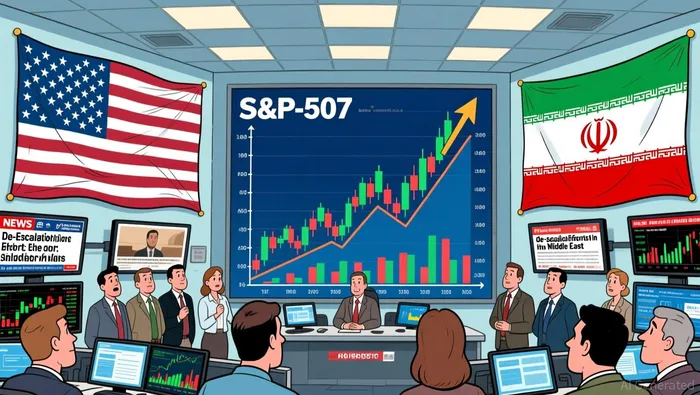
Meanwhile, the S&P 500 saw a surprising recovery after Iran's parliament speaker encouraged U.S. investors to 'go long.' The message coincided with a $900 billion rally in the S&P 500 market cap. This was driven by geopolitical messaging and the potential for de-escalation in U.S.-Iran tensions.
Why the S&P 500 Matters Now
The S&P 500 is a barometer for the U.S. economy. Its performance reflects the health of major industries and investor sentiment. In a volatile environment, understanding how the index responds to global events is crucial for both retail and institutional investors.
The current situation in the Middle East has led to conflicting signals. On one hand, oil prices are surging, while on the other, U.S. stock futures are rising. Investors are waiting for more clarity on the situation in Iran and how it might affect economic growth.
Moreover, U.S. President Trump's controversial proposal to rename the Strait of Hormuz after himself has drawn attention for all the wrong reasons, raising concerns about vanity projects amid a global crisis.
In light of these developments, the S&P 500 continues to be a key focus for investors who want to balance risk and reward in a rapidly changing market.

Stay ahead of the market.
Get curated U.S. market news, insights and key dates delivered to your inbox.


AInvest
PRO
AInvest
PRO



Comments
No comments yet