
The S&P 500's Overvaluation: A Historical Warning Sign for Investors
 Aime Summary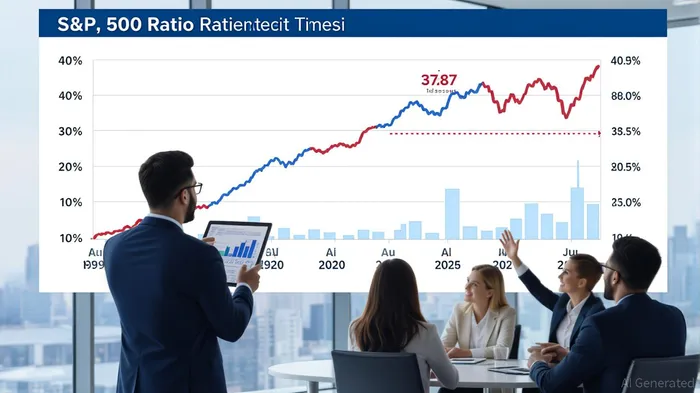
The S&P 500 has long been a barometer of investor sentiment, but its current valuation metrics are raising red flags. As of August 2025, the index trades at a CAPE ratio of 37.87, a level last seen during the Dot-Com Bubble's peak in 1999. While the market's enthusiasm for artificial intelligence and other transformative technologies is understandable, the parallels to 2000 are hard to ignore. This article examines how ecosystem-driven factors—monetary policy, sector concentration, and speculative behavior—are creating a fragile equilibrium, and what investors can do to navigate the risks.
Historical Parallels: The Dot-Com Bubble and Its Aftermath
The Dot-Com Bubble (1995–2000) was fueled by a combination of speculative fervor and overvaluation. By 1999, the S&P 500's CAPE ratio hit 44.2, while the NASDAQ's P/E ratio soared to 60x. Investors poured money into internet startups with little to no earnings, betting on a future where digital innovation would redefine the economy. When reality failed to meet expectations, the market collapsed, wiping out $5 trillion in wealth.
The key takeaway from 2000 is that overvaluation isn't just about high P/E ratios—it's about misaligned ecosystem factors. In 1999, the Federal Reserve's low-interest-rate environment, combined with a lack of regulatory oversight, created a perfect storm for speculation. Today, similar dynamics are at play, albeit with new variables.
Current Fundamentals: A Market Built on Thin Ice
The S&P 500's current valuation metrics are alarming. The trailing P/E ratio stands at 29.85, the P/B ratio at 5.34, and the dividend yield at 1.25%. These figures are well above historical averages and suggest that investors are paying a premium for future growth. The CAPE ratio of 37.87, while lower than 1999's peak, is still in the top 5% of historical values and historically correlates with subpar returns over the next decade.
The Magnificent Seven—Apple, MicrosoftMSFT--, AmazonAMZN--, Alphabet, MetaMETA--, TeslaTSLA--, and NVIDIA—now account for 34% of the index. These companies, many of which are AI-driven, trade at valuations that assume decades of unbroken growth. For example, Tesla's forward P/E ratio is 25x, despite its recent struggles with production bottlenecks and regulatory scrutiny.
Ecosystem-Driven Risks: The New Dot-Com Equation
The current overvaluation isn't just a function of fundamentals—it's a product of ecosystem misalignments:
Monetary Policy: The Federal Reserve's dovish stance, with a 87% probability of a rate cut in September 2025, is propping up asset prices. Low borrowing costs encourage speculative investing, while quantitative easing (if resumed) could further inflate valuations.
Sector Concentration: The S&P 500's reliance on the Magnificent Seven mirrors the tech-heavy NASDAQ of 1999. If any of these companies underperform—whether due to earnings misses, regulatory actions, or AI adoption slowdowns—the index could face a sharp correction.
Investor Behavior: Optimism around AI and pro-business policies (e.g., Trump's return to the White House) has created a “risk-on” environment. Investors are prioritizing growth over value, with the S&P 500's earnings yield (3.3%) lagging behind the 10-year Treasury yield (4.3%). This inversion suggests a flight from income-generating assets to speculative growth stories.
Global Rebalancing: Unlike 2000, today's overvaluation is compounded by geopolitical shifts. A weaker U.S. dollar and trade tensions are creating headwinds for multinational corporations, while emerging markets face capital outflows.
Actionable Strategies: Hedging Against a Potential Downturn
Given these risks, investors should adopt a multi-layered approach to protect portfolios:
Diversify Beyond the Magnificent Seven: Reduce exposure to overvalued tech stocks and rebalance toward sectors like industrials, energy, and utilities. These sectors are better positioned to benefit from infrastructure spending and energy transition trends.
Embrace Fixed Income: With bonds offering a 4.3% yield, now is the time to allocate to high-quality corporate bonds and Treasuries. This provides a buffer against equity volatility and preserves capital during a potential correction.
Macro Hedges: Invest in commodities like copper (a key input for AI infrastructure) and gold to hedge against inflation and currency devaluation. Copper's recent surge reflects its role in green energy and AI, making it a strategic asset.
Active Management: Passive strategies are ill-suited for a market driven by speculation. Consider long/short equity funds or global macro strategies that can capitalize on volatility.
Defensive Equities: Prioritize dividend-paying stocks in sectors like healthcare and consumer staples. These companies offer stability and income, even in a downturn.
Scenario Planning: Maintain liquidity to adjust to market shifts. A 40% probability of a U.S. recession in H2 2025 means investors must prepare for multiple outcomes, including a sharp contraction in the S&P 500's P/E ratio.
Conclusion: Valuation as a Leading Indicator
The S&P 500's current valuation is a warning sign, not a prediction. History shows that overvaluation, when combined with ecosystem misalignments, often leads to corrections. While AI and other innovations may justify some premium, the market's current pricing assumes a future where growth is unimpeded. Investors who recognize this disconnect and act accordingly will be better positioned to weather whatever comes next.
In the end, the lesson from 2000 remains relevant: markets can stay irrational longer than you can stay solvent. Prudence, diversification, and a focus on fundamentals are the best defenses against the next bubble.

Stay ahead of the market.
Get curated U.S. market news, insights and key dates delivered to your inbox.


AInvest
PRO
AInvest
PRO



Comments
No comments yet