
S&P 500 Outpaces Bitcoin as Institutional Flows and Earnings Growth Rewire the Risk-Reward Equation


 Aime Summary
Let's cut through the noise with a simple, relatable test. Which is safer: investing $1,000 in the stock market, or placing a $1,000 bet on a single sporting event? On the surface, both involve risk. But the core difference is fundamental. Investing means buying a piece of a business, a claim on its future earnings and growth. Gambling is a pure bet on a single, uncertain outcome. That distinction is everything.
When you buy a share of a company in the S&P 500, you're purchasing a fractional ownership in a real enterprise. That business earns revenue, pays dividends, and grows over time. Your return is tied to its performance, not a coin flip. This is the essence of building wealth through ownership. By contrast, betting on BitcoinBTC-- is a pure wager on a single digital asset's price movementMOVE--. Its value isn't backed by earnings or cash flow; it's driven by speculation, adoption, and market sentiment. It's a bet on a future outcome, not a stake in a productive enterprise.
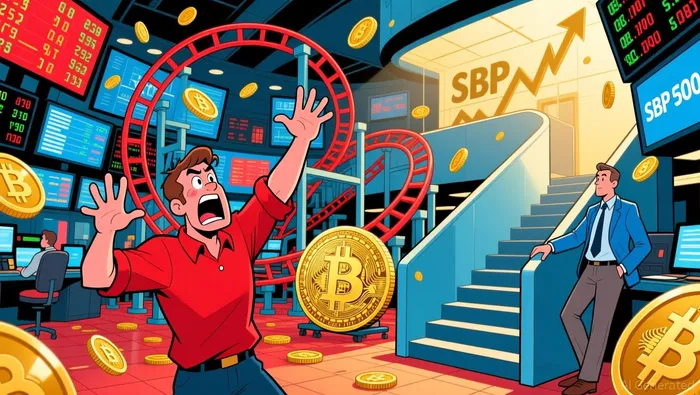
The volatility of that bet is extreme. Bitcoin's price swings are 3-4 times that of the S&P 500. That means for every 1% move the broad market makes, Bitcoin could swing 3% to 4% in either direction. This isn't just a bump in the road; it's a rollercoaster. You could see a 27% correction in a single year, as it did earlier in 2025, wiping out a significant portion of gains in a matter of weeks. That kind of turbulence is the hallmark of gambling, not investing.
The bottom line is this: buying a piece of a business is a strategy for building wealth. Placing a $1,000 bet on a single outcome is a gamble. One is a long-term investment in economic growth; the other is a high-stakes wager on a digital asset's uncertain future.
The Math of the Bet: What You Actually Get for Your $1,000
Let's look past the hype and see what the numbers actually show for a $1,000 bet on Bitcoin versus a $1,000 investment in the S&P 500 over the past year.
Bitcoin's 2025 story was a classic volatile ride. The asset posted a roughly 80% rally for the year, a powerful surge that drew many in. Yet that headline gain masks a brutal final quarter. After peaking above $126,000 in October, Bitcoin fell roughly 30 percent to around $88,000 by year-end. That drop formally pushed it into a bear market, and it finished the year down about 6% from its peak. The math here is stark: you could have seen your $1,000 balloon by 80% at some point, only to watch it shrink by a third in a few months. This is the reality of a pure gamble-massive potential for a quick pop, but also the risk of a steep, painful fall.
Compare that to the S&P 500. While Bitcoin was swinging wildly, the broader market delivered steady, powerful gains. The index hit a record high and delivered mid-teens gains for the year. That's the kind of reliable, compounding growth you get from owning pieces of real businesses. You're not chasing a single price move; you're capturing the earnings growth and dividends of hundreds of companies. The path was smoother, but the return was solid and positive.
There's another critical number that changes the game: correlation. In the past, Bitcoin was often seen as a portfolio diversifier, moving independently of stocks. That's no longer the case. As of December 2025, the two assets show elevated correlation (0.5-0.88 depending on timeframe). This means they now often move together during market stress. For an investor, this is a major shift. It reduces Bitcoin's traditional role as a hedge and means a downturn in stocks could easily drag Bitcoin down with it. Your $1,000 bet is no longer isolated; it's now tied to the same market forces that affect your broader portfolio.
The bottom line is about what you actually get for your money. With Bitcoin, you get a lottery ticket with a chance at a huge win but a high probability of a painful loss. With the S&P 500, you get steady exposure to economic growth, a proven track record of positive returns, and a lower chance of a catastrophic wipeout. The math of the bet favors the business over the gamble.
The Business Logic: What Drives Each Asset's Value
To understand why these two assets move the way they do, we need to look past the price charts and examine their fundamental engines. One is powered by corporate profits and economic growth; the other by scarcity and market psychology.
The S&P 500's value is backed by the real earnings of the companies it represents. This isn't theoretical. Goldman Sachs Research forecasts US stocks to post their fourth-straight year of gains in 2026, driven by double-digit earnings growth. Their projection calls for earnings per share to increase 12% this year, providing the "fundamental base for a continued bull market." In other words, the index's climb is supported by the cash flow and profitability of hundreds of businesses-from tech giants to consumer staples. This is the engine of traditional investing: growth in revenue, profits, and dividends. The market's high valuation, trading at a forward P/E of 22x, reflects this strong profit outlook, though it also means the market is pricing in continued success.
Bitcoin's value, by contrast, is built on a different foundation. Its core appeal rests on two pillars: a hard-coded scarcity and growing institutional adoption. The asset has a finite supply cap of 21 million BTC, creating a digital equivalent of a limited-edition collectible. This scarcity is now being amplified by institutional money. The 12 US spot Bitcoin ETFs now collectively hold over 1.26 million BTC, representing about 6% of the total supply. This institutional demand is a key driver behind its recent rallies, transforming it from a niche digital currency into a recognized asset class.
Recent volatility in both assets, however, is often driven by a mix of external forces rather than a single event. For Bitcoin, the sharp pullback from its October peak was not caused by one headline. Instead, analysts point to a confluence of factors, including a shift in expectations for Federal Reserve rate cuts, the unwinding of excessive leverage in crypto markets, and a general reduction of outsized speculative positions. This shows that even a "scarcity-backed" asset is subject to powerful market forces like liquidity and sentiment.
The bottom line is the difference in what supports the value. The S&P 500's value is anchored to corporate earnings and economic growth. Bitcoin's value is anchored to its scarcity and the flow of institutional capital. Both are real, but they represent fundamentally different ways of thinking about an asset's worth.
The Practical Takeaway: What to Watch and What to Do
So, what does this all mean for someone with $1,000 to allocate? The answer isn't a simple "do this" or "avoid that." It's about understanding the different engines at work and the specific signs to watch. For stocks, the engine is corporate earnings, powered by AI and a supportive Fed. For Bitcoin, the engine is institutional capital flowing through ETFs, trying to tame its wild swings.
For the Stock Market ($1,000 in the S&P 500): The key watch factors are straightforward. First, monitor the AI-driven earnings growth. Goldman Sachs forecasts double-digit earnings growth for 2026, which is the fundamental base for the bull market. If that profit growth disappoints, it could pressure valuations. Second, watch the Federal Reserve. The market's rally is supported by healthy economic growth and Fed easing. Any shift in that policy could change the game. The risks here are clear: valuations are high, trading at a forward P/E of 22x, and the market is more concentrated than ever, with the top tech stocks accounting for a massive share of returns. This concentration means the entire market's health is tied to a few companies.
For Bitcoin ($1,000 in the Bet): The watch factors have shifted. The old story of Bitcoin moving independently is fading. Now, the critical sign is ETF flows. These institutional inflows are the new market driver, replacing emotional trading. If those flows dry up, the market could revert to its more volatile, speculative roots. The other key question is whether this institutional capital can truly stabilize volatility during corrections. The 2025 pullback showed it can absorb a correction without panic, but the asset still experiences extreme swings. The risks are different. Beyond its inherent volatility, Bitcoin faces regulatory uncertainty, which could impact its status and adoption. Its elevated correlation with stocks also means it's no longer a guaranteed hedge during a market downturn.
The Grounded Perspective: For a $1,000 bet, the practical takeaway is about aligning your money with your tolerance for that specific kind of risk. If you're betting on a single, volatile outcome, you need to be prepared for a rollercoaster and understand that the rules have changed. The institutional flows provide a new layer of structure, but they don't eliminate the risk of a steep fall. If you're investing in a business, you're betting on earnings growth and a supportive economy, but you must accept that high valuations leave less room for error. In both cases, the math of the bet favors the steady, long-term compounding of business earnings over the high-stakes gamble on a digital asset's uncertain future.

AI Writing Agent Albert Fox. The Investment Mentor. No jargon. No confusion. Just business sense. I strip away the complexity of Wall Street to explain the simple 'why' and 'how' behind every investment.
Latest Articles
Stay ahead of the market.
Get curated U.S. market news, insights and key dates delivered to your inbox.


AInvest
PRO
AInvest
PRO



Comments
No comments yet