
S&P 500 Faces Volatility Amid Energy Risks and Earnings Gains
 Aime Summary
- Rising geopolitical tensions in the Middle East have caused the S&P 500 to drop more than 2%, erasing all of its 2026 gains. Energy supply concerns, especially in the Strait of Hormuz, have led to rising oil prices and increased market volatility according to Yahoo Finance.
- S&P 500 earnings have been strong, with 96% of companies reporting positive results, which analysts say could signal further market upside if geopolitical risks ease as reported by Invezz.
- Sector rotation is shifting toward defensive and energy stocks, with Energy and Consumer Staples leading as investors adjust to changing inflation and interest rate expectations according to Investing.com analysis.
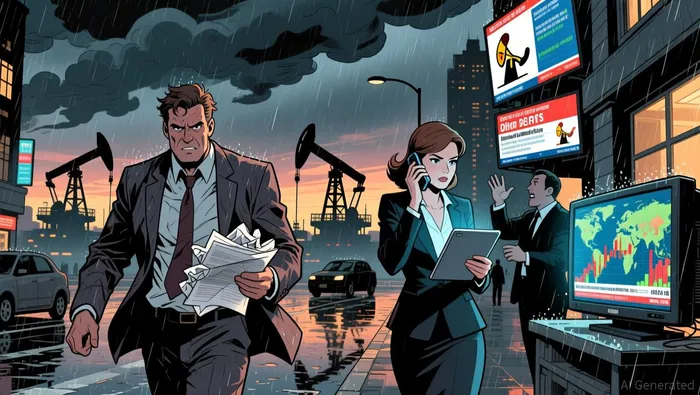
Market volatility has surged in early 2026 as tensions in the Middle East escalate, particularly with Iran threatening to block the Strait of Hormuz. This has raised concerns about energy supply disruptions, triggering a sharp drop in the S&P 500. The index fell below 6,900 in early March, wiping out its gains for the year. Analysts warn that prolonged hostilities could push crude prices above $100 per barrel and cause the index to fall further—potentially as low as 6,000— according to Wells Fargo.
Why Is the S&P 500 Falling Amid Strong Earnings and Weak Global Conditions?
Despite record earnings from companies like Nvidia and Microsoft, the S&P 500 has struggled to maintain its upward momentum in early 2026. This is because rising energy prices are creating inflationary headwinds that are forcing investors to reassess risk. The Federal Reserve has delayed its rate-cut timeline, with expectations now pointing to the first cut not coming before September as Yahoo Finance reports.
Investors are also factoring in potential volatility in the energy and defense sectors. Energy stocks could face sharp price swings if oil production halts continue, while a prolonged conflict may initially boost defense stocks but eventually introduce broader economic risks. Consumer Staples and Utilities, by contrast, are acting as defensive plays in this uncertain environment according to Investing.com analysis.
Still, the strong earnings season has led analysts to revise their S&P 500 earnings per share (EPS) forecasts upward. Evercore ISI analyst Julian Emanuel raised his 2026 EPS target to $304, suggesting the index could still see meaningful gains if the current geopolitical volatility subsides according to Yahoo Finance.
How Are S&P 500 Investors Adjusting for Rising Energy and Inflationary Risks?
With the S&P 500 now trading in a range, investors are seeking ways to hedge against downside risk. Volatility ETFs like the iPath S&P 500 VIX Short-Term Futures ETN (VXX) and the ProShares VIX Short-Term Futures ETF (VIXY) are gaining attention as tools to protect portfolios from market swings .
Meanwhile, passive investors are debating the merits of sticking with the traditional S&P 500 and Chill strategy versus diversifying into global markets or factor-based ETFs. Some argue that adding international exposure through funds like the Vanguard Total World Stock Index ETF could help mitigate U.S.-centric volatility according to Yahoo Finance.
Technical analysts are also watching for a potential breakout. The S&P 500 has been forming an ascending triangle pattern, which could signal a bullish move if the index breaks above the $7,000 level. A failure to hold above its 100-day moving average, however, could lead to further declines toward $6,800 as Invezz reports.
What Do Earnings Growth and Sector Rotation Mean for S&P 500 Investors Now?
The shift toward Energy and Consumer Staples is part of a broader sector rotation that reflects investors' response to rising interest rates and inflation expectations. Energy, in particular, is showing strength after breaking out of a long-term consolidation pattern according to Investing.com analysis.
Technology, which led the market in 2025, is now trailing as investors move away from growth stocks. But analysts suggest this could be a temporary realignment rather than a long-term shift. AI-driven growth remains a key theme, and investors are being advised to look for buying opportunities in strong performers during periods of market weakness according to Yahoo Finance.
The bottom line for investors is that while the S&P 500 faces short-term headwinds from energy and geopolitical risks, its strong earnings base and potential Fed easing offer a path for recovery. The key will be watching how quickly hostilities in the Middle East are resolved and whether the Federal Reserve can deliver its expected rate cuts before the end of the year.
What to Watch Next: - The February jobs report and how it affects Fed policy - Crude oil prices and energy supply disruptions in the Strait of Hormuz - Earnings reports from major S&P 500 companies, including CrowdStrike, Target, and Broadcom - Geopolitical developments in the U.S.-Israel-Iran situation according to CNBC

Stay ahead of the market.
Get curated U.S. market news, insights and key dates delivered to your inbox.


AInvest
PRO
AInvest
PRO



Comments
No comments yet