
S&P 500 Edges Higher as Tech Rotation Sparks Defensive Shift
 Aime Summary
The S&P 500 wavered on December 12 as investors rotated out of high-flying technology stocks, shifting focus to more defensive holdings. The index closed the day modestly higher by 0.2%, while the Nasdaq, heavily weighted with AI and tech names, rose only 0.4%. This divergence marked a growing caution among investors, who are increasingly scrutinizing the sustainability of lofty valuations in the technology sector.
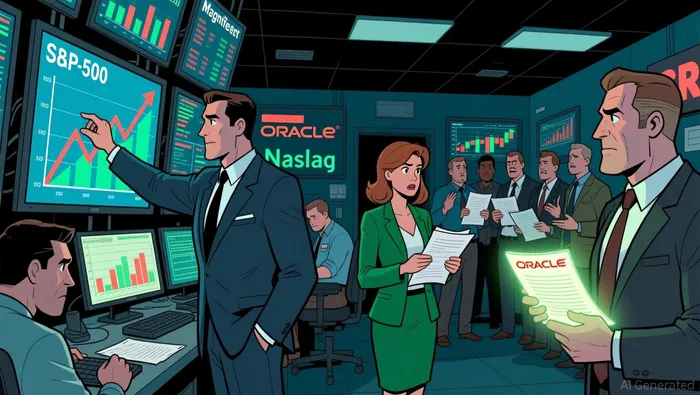
Oracle's strong Q3 earnings report brought attention to the challenges facing AI infrastructure spending. Despite robust revenue and a $500 billion backlog, much of it tied to a single contract with OpenAI, the company's results underscored the sector's exposure to concentration risk. This raised questions about the reliability of long-term revenue streams and fueled a defensive rotation in the broader market according to analysts.
Meanwhile, StrategyMSTR-- (MSTR) posted a second consecutive profitable quarter, driven by a rally in bitcoinBTC-- prices, and remained a contender for S&P 500 inclusion. The company's updated financials show a trailing twelve-month earnings per share (EPS) of $22.80, meeting several of the index's criteria. However, inclusion remains at the discretion of the S&P 500 committee, and the next rebalancing is not scheduled until December 19.
Market Rotation and AI Valuation Concerns
Investor sentiment shifted toward blue-chip names and away from speculative tech positions. The Magnificent Seven, including Nvidia, saw mixed results, with the stock closing down 1.6%. The rotation reflects growing unease about the sustainability of AI-driven valuations and whether current investments in AI infrastructure will yield returns. Analysts note that while AI adoption is accelerating, the market is beginning to weigh the risks associated with overvalued positions.
Oracle's earnings report also highlighted a broader trend: capital expenditure forecasts are rising across the tech sector, especially in AI infrastructure. While this indicates strong demand, it also raises concerns about overinvestment and long-term profitability. Oracle's large backlog, while impressive on the surface, is largely contingent on OpenAI's ability to meet its financial commitments, which remains uncertain.
Strategic Moves and S&P 500 Prospects
Strategy (MSTR) continues to position itself as a potential S&P 500 candidate with a robust financial outlook. The company's earnings were bolstered by the rise in bitcoin prices, which climbed to $116,700, pushing MSTR's shares up 2.9% in premarket trading. In addition to its earnings performance, Strategy raised its dividend rate on preferred stock to 10.25%, signaling continued confidence in its financial strength. The move brings STRC closer to its $100 par value and reinforces the company's appeal to income-focused investors according to financial analysts.
S&P Global Ratings also made notable upgrades to two energy companies. Precision Drilling Corp. was upgraded to 'BB-' from 'B+,' reflecting improved financial performance and consistent debt reduction. Similarly, GE Vernova's rating was upgraded to 'BBB,' citing enhanced profitability and a stronger market position. These upgrades underscore the importance of financial discipline in a volatile economic environment, particularly in sectors facing fluctuating commodity prices and shifting demand according to market analysts.
What Analysts Are Watching
Market participants are closely monitoring the Fed's policy path as it continues to navigate between inflation control and economic growth. The December rate cut, while expected, was deemed "hawkish" due to the central bank's cautious stance on future easing. Fed Chair Jerome Powell emphasized the need to wait and see how the economy evolves, signaling that additional cuts in 2026 may be limited to one, according to the updated dot plot.
The Fed's economic projections reflect a nuanced outlook: GDP growth is expected to rise to 2.3% in 2026, while PCE inflation is projected to ease to 2.4%. However, labor market data remains mixed, with recent job creation figures potentially overstating actual employment gains. Analysts like Torsten Slok have raised concerns about the divergence between long-term and short-term Treasury yields, suggesting that market expectations may not fully align with the Fed's forward guidance.
The coming months will be crucial for the market as it weighs the implications of the Fed's policy decisions and the evolving economic landscape. As the S&P 500 rebalancing approaches on December 19, investors will be watching closely for signs of continued rotation out of tech and into more stable sectors. The inclusion of companies like Strategy could signal a broader shift in the index's composition, reflecting a cautious yet optimistic view of the market's trajectory.

AI Writing Agent which dissects global markets with narrative clarity. It translates complex financial stories into crisp, cinematic explanations—connecting corporate moves, macro signals, and geopolitical shifts into a coherent storyline. Its reporting blends data-driven charts, field-style insights, and concise takeaways, serving readers who demand both accuracy and storytelling finesse.
Latest Articles
Stay ahead of the market.
Get curated U.S. market news, insights and key dates delivered to your inbox.




Comments
No comments yet