
S&P 500 Drops 2% as Trade Tensions Fuel Market Sell-Off
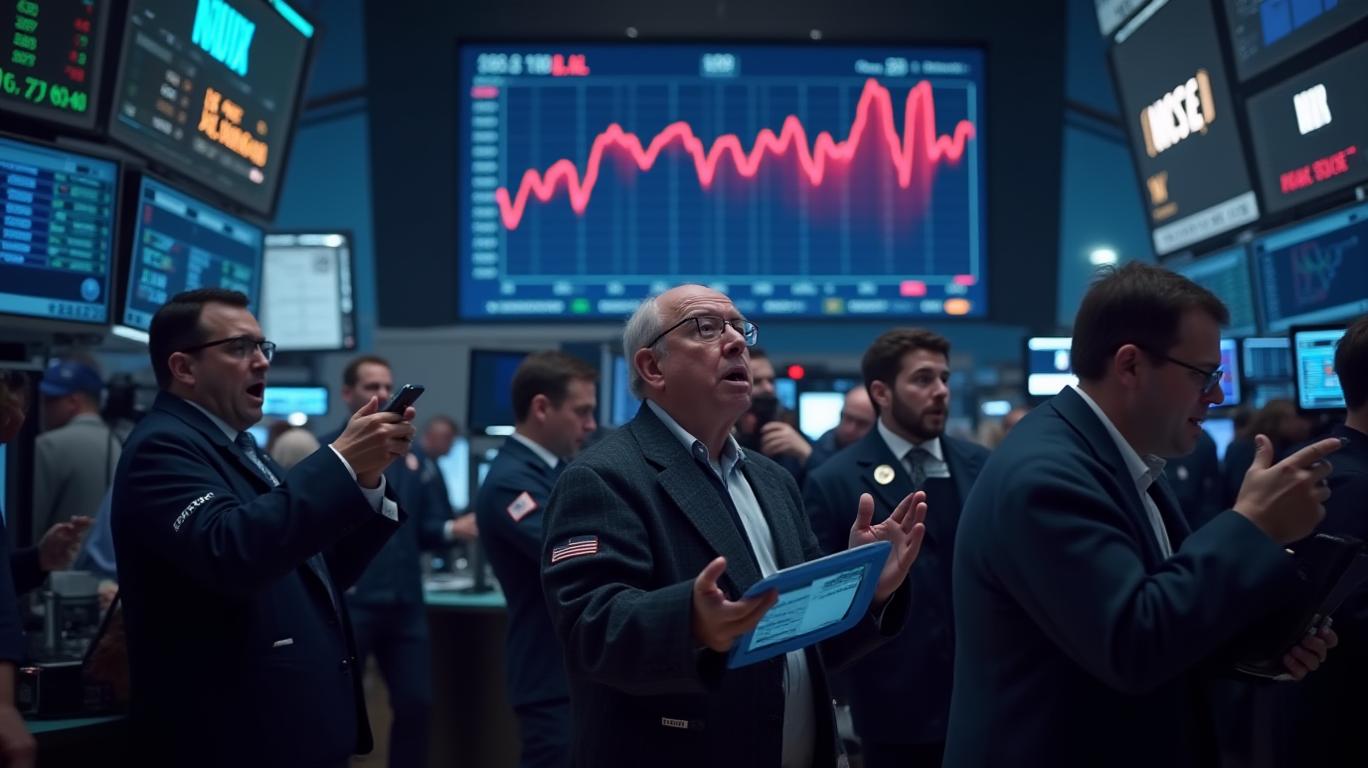
U.S. stock markets experienced a broad sell-off on Friday, with all three major indices closing lower. The S&P 500 index, in particular, declined for the third consecutive trading day, reflecting growing concerns over the economic impact of President Trump's trade policies. The index fell by 2%, marking its largest single-day drop since March 10, primarily due to the underperformance of technology stocks.
The decline in technology stocks weighed heavily on the broader market, as investors grew increasingly wary of the potential economic fallout from ongoing trade tensions. The uncertainty surrounding trade policies has cast a shadow over the economic outlook, leading to heightened anxiety among market participants. This sentiment was further exacerbated by the persistent decline in the S&P 500 index, which has now fallen for three straight days.
The market's reaction underscores the sensitivity of U.S. equities to geopolitical risks, particularly those related to trade. The escalating trade conflict has raised doubts about the sustainability of the current economic expansion, prompting investors to reassess their positions in riskier assets. The technology sector, which has been a key driver of market gains in recent years, has been particularly vulnerable to these concerns, as many of its constituent companies rely heavily on global supply chains and international markets.
The broader implications of these developments are significant. The prolonged trade dispute could lead to a slowdown in global economic growth, which would have ripple effects across various sectors. Companies that depend on international trade for their revenue and profits may face increased costs and reduced demand, potentially leading to lower earnings and reduced investment. This, in turn, could dampen consumer confidence and spending, further weighing on economic activity.
In this context, investors are likely to remain cautious, with a focus on defensive sectors and companies with strong balance sheets. The current environment may also present opportunities for those willing to take on more risk, as valuations in certain sectors may become more attractive. However, the overall outlook remains uncertain, and market participants will need to navigate these challenges with a keen eye on developments in the trade arena.
Economic data further dampened market sentiment. Reports indicated that the Federal Reserve's preferred inflation gauge accelerated, while spending fell short of expectations. This data, combined with the ongoing trade tensions, has led economists to downgrade their forecasts for U.S. economic growth this year. The fluctuating trade policies have introduced significant uncertainty, which is expected to impact spending and capital investment negatively.
Despite the broad sell-off, the utilities sector managed to buck the trend, posting gains. Conversely, the communication services and discretionary sectors led the declines. The market's defensive posture was evident as investors sought safety in more stable sectors amid the heightened uncertainty.
At the close of trading, the S&P 500 index stood at 5580.94 points, down 2%. The Dow Jones Industrial Average fell 1.7% to 41583.9 points, while the Nasdaq Composite index dropped 2.7% to 17322.99 points. The Nasdaq-100 index, which tracks the performance of the 100 largest non-financial companies listed on the Nasdaq, declined 2.6% to 19281.4 points. The Russell 2000 index, which measures the performance of small-cap stocks, also fell 2.1% to 2023.274 points.

Stay ahead of the market.
Get curated U.S. market news, insights and key dates delivered to your inbox.


AInvest
PRO
AInvest
PRO



Comments
No comments yet