
S&P 500 and Dow Fall: Why Iran Tensions and Bond Yields Weigh on Market
 Aime Summary
U.S. equities closed the week in negative territory, with the S&P 500 falling 1.4% and the Nasdaq declining 2.1% despite a late-week rally. The Dow Jones Industrial Average also posted a weekly loss of 0.9%, marking its second consecutive week of declines. Rising Treasury yields and surging crude oil prices, fueled by Middle East geopolitical risks, were the primary drivers of the market sell-off. Treasury Secretary Scott Bessent's debt buyback announcements failed to lower bond yields, underscoring investor skepticism regarding government debt management strategies. Market participants are now looking ahead to upcoming retail earnings reports and Federal Reserve policy signals for further clues on the economic outlook.
U.S. stocks experienced a divergent week, concluding with a Friday rally that failed to offset earlier losses. The Dow Jones Industrial Average rose 0.98% to close at 53,277, while the S&P 500 and Nasdaq Composite gained modestly. However, the weekly performance was negative across the board: the S&P 500 declined over 1%, the Nasdaq fell 2%, and the Dow dropped nearly 1%.
The primary headwinds were rising Treasury yields and increasing crude oil prices, which pressured equities earlier in the week. Notably, the Friday recovery occurred even as bond yields and oil prices continued to climb. This upward pressure on yields persisted despite comments from Treasury Secretary Scott Bessent, who indicated plans to double U.S. government bond repurchases to $4 billion or more in the coming months .
Why Are Rising Treasury Yields Pressuring the S&P 500?
Treasury yields have been a persistent source of volatility, with the 30-year yield closing at 5.31%, its highest level in nearly two decades. Higher energy costs have raised concerns that renewed inflation could complicate the Federal Reserve's policy outlook . The rise in yields increases borrowing costs, which challenges elevated equity valuations and makes bonds more attractive relative to stocks.
Despite Treasury Secretary Scott Bessent's efforts to stabilize the market through increased debt buybacks, investors remained unconvinced. Bessent indicated that the Treasury Department plans to double the size of its long-term debt buybacks from $2 billion to at least $4 billion per operation, with potential for further increases depending on market conditions. However, the disconnect between Treasury actions and market reactions underscores ongoing concerns about liquidity and the effectiveness of current debt management tools in the current macroeconomic environment .
The situation presents a delicate test for Federal Reserve independence, as Treasury interventions in debt markets risk encroaching on the central bank's traditional purview. This tension between fiscal and monetary authorities is adding to market volatility and investor uncertainty regarding future policy directions .
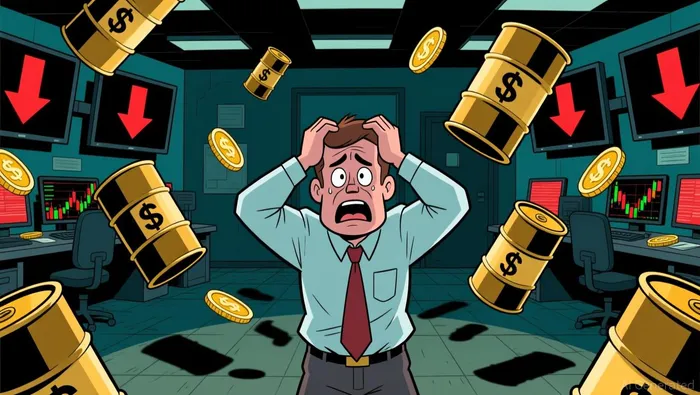
How Do Middle East Geopolitical Risks Impact Oil Prices and the Dow?
Renewed uncertainty over a U.S.-Iran ceasefire has pushed oil prices above $91 a barrel, heightening inflation concerns and causing most Asian stocks to trade lower . U.S. President Donald Trump ruled out extending a 60-day agreement with Iran and threatened military action against Oman, while negotiations between Washington and Tehran remain stalled . This geopolitical friction has also pushed longer-dated U.S. Treasury yields higher .
Oil remained the key market driver as investors assessed the risk of a further escalation in the U.S.-Iran conflict. Brent crude rose 2.7% to about $90.87 a barrel on Monday . President Trump threatened military action against Oman if it interfered with U.S. efforts to reach a deal with Iran, adding to uncertainty around the Strait of Hormuz, a crucial route for global oil shipments .
Energy stocks were the only major S&P 500 sector to gain, rising 0.9%, as crude prices climbed more than $2 a barrel . Most other sectors fell, with communications services and consumer staples among the biggest decliners . The rise in crude prices also pushed U.S. Treasury yields higher, with the 30-year yield closing at 5.31%, its highest level in nearly two decades .
What Should Investors Watch in Upcoming Retail Earnings and Fed Minutes?
Investors will turn to the Fed meeting minutes on Wednesday for clues on the debate over interest rates . The central bank left its benchmark rate unchanged at 3.50%-3.75% at its July 28-29 meeting, but the decision was divided, with three policymakers dissenting in favor of a rate hike . Investors will also focus on a busy week of retail earnings, with Walmart, Home Depot, and Target reporting results to provide fresh clues on the health of the U.S. consumer after July retail sales and employment data came in weaker than expected .
In individual equities, major retailers like Walmart and Home Depot, along with technology firm Analog Devices, saw increased attention following their second-quarter earnings reports . Ross Stores boosted its full-year earnings outlook to $8.61-$8.77 per share, citing higher traffic and sales gains in its off-price retail segment.
In other corporate news, Nvidia is reportedly in discussions to invest in Cloverleaf, a data-center power developer, signaling continued expansion in infrastructure support for AI and computing demands . Meanwhile, JPMorgan Chase has filed layoff notices impacting nearly 800 employees across Texas, New Jersey, and California, marking the highest level of job cuts at the bank since 2015 .
UBS Global Wealth Management raised its year-end S&P 500 target to 8,100, citing robust corporate profit growth and a stronger earnings outlook. However, inflationary pressures persisted, with oil futures rising for a sixth consecutive day after President Trump threatened economic sanctions on Iran’s trading partners, raising expectations of tighter global supply . Brent crude gained 6.4% for the week, while US crude rose 5.7% .
Investors are now looking ahead to quarterly earnings from major technology firms, including Nvidia, Intuit, and Salesforce, as well as the upcoming Personal Consumption Expenditures price index and remarks from Fed Chair Kevin Warsh at the Jackson Hole symposium .

Stay ahead of the market.
Get curated U.S. market news, insights and key dates delivered to your inbox.


AInvest
PRO
AInvest
PRO




Comments
No comments yet