
The S&P 500's Balancing Act: Can Profit Growth or Fed Easing Sustain Current Valuations?
The S&P 500 stands at a crossroads, its valuation metrics stretched to levels that demand scrutiny. With the Federal Reserve's monetary policy in a holding pattern and corporate earnings growth under pressure, investors face a critical question: Can the market's current lofty valuations be sustained, or are we nearing an inflection point? Let's dissect the data to find clarity.
Valuation Metrics Signal Overheating
The S&P 500's traditional P/E ratio of 27.56 as of June 2025 places it near the upper end of its historical range, but the more telling metric is the Shiller P/E, which has surged to 35.77—a staggering 67.5% above its modern-era average. This long-term valuation gauge, which smooths out cyclical fluctuations, highlights a market that is not just overvalued but at levels that have historically preceded periods of mean reversion.
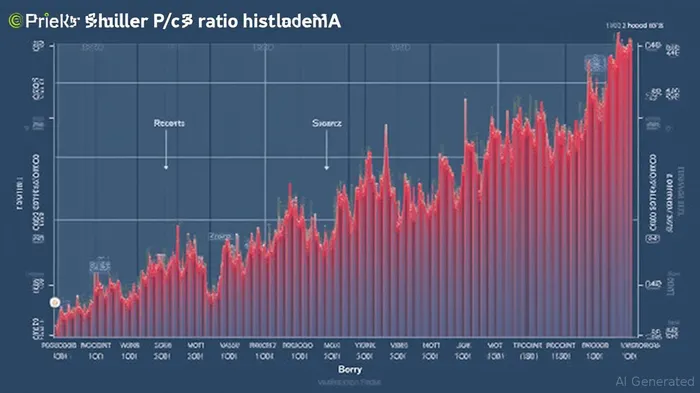
Meanwhile, the dividend yield of 1.475% lags behind its long-term average of 1.74%, underscoring that investors are paying a premium for earnings that are not being returned to shareholders at historical rates. These metrics suggest the market's current heights depend heavily on future growth optimism—a precarious foundation.
Fed Policy: A Tightrope Walk
The Federal Reserve's decision to hold the federal funds rate at 4.25%-4.5% since December 2024 reflects its balancing act between curbing inflation and avoiding a growth slowdown. While the Fed's “dot plot” hints at two rate cuts by year-end, geopolitical risks (notably the Israel-Iran conflict) and trade policy uncertainties have clouded its path.
Critically, the market's valuation is acutely sensitive to the Fed's next move. A delay in cuts could erode investor confidence, while aggressive easing might provide a temporary reprieve. However, the Fed's caution is justified: GDP growth forecasts have been trimmed to 1.4% for 2025, with inflation still elevated at 3%. The central bank's hands are tied, leaving investors to navigate this uncertainty alone.
Earnings Growth: The Lifeline or the Weak Link?
Analysts project 9.3% year-over-year earnings growth for 2025, down from earlier optimistic estimates. The Q2 2025 results, expected to grow by just 4.9%, reveal the strain of macroeconomic headwinds. Tech and Finance—combined responsible for **51% of S&P 500 earnings—have seen downward revisions, though stabilization in the tech sector has slowed further declines.
The bright spots—Aerospace (+15.1%) and Consumer Discretionary (+105.6%)—are offset by stark laggards like Energy (-24.9%) and Autos (-30.2%). With buybacks contributing significantly to EPS growth (Q1's record $293.5 billion in buybacks), the question remains: Can organic profit growth alone justify the current valuation? At a forward P/E of 20.5, even a modest miss on earnings could trigger a reassessment.
Risks and Investment Implications
The market's vulnerability hinges on two catalysts:
1. Fed Action: If the Fed delays cuts due to inflationary pressures, the high valuation multiple could compress.
2. Earnings Delivery: If profit growth falters, valuations may adjust downward, particularly in overvalued sectors like Tech (forward P/E of 30.3 vs. a 20.9 average).
Investors should proceed with caution. Consider:
- Diversification: Overweight sectors with resilient cash flows (e.g., Utilities) or those benefiting from structural trends (e.g., AI-driven tech with proven earnings growth).
- Defensive Posture: Allocate to dividend-paying stocks with sustainable payouts, even if yields are low.
- Stay Liquidity-Aware: Use options or inverse ETFs to hedge against volatility.
Conclusion
The S&P 500's current levels are a high-wire act, reliant on the Fed's accommodative stance and corporate earnings resilience. While profit growth remains positive, it is insufficient to fully justify the market's stretched valuations. Investors must remain vigilant: a misstep on either front could trigger a correction. For now, the path forward is narrow—one misread of the Fed's next move or a miss on earnings could redefine this market's trajectory. Stay disciplined, and prioritize quality over quantity.

Delivering real-time insights and analysis on emerging financial trends and market movements.
Latest Articles
Stay ahead of the market.
Get curated U.S. market news, insights and key dates delivered to your inbox.






Comments
No comments yet