
S&P 500 at 7,000? Valuation and Fed Policy Fuel Year-End Rally Hopes, But Risks Linger
The S&P 500 has been on a tear in 2025, climbing to fresh all-time highs as investors bet on resilient earnings and accommodative monetary policy. With the index at 5,911.69 as of May 31, 2025, whispers of a 7,000 target by year-end have grown louder. Analysts like BMO Capital's Brian Bartels have even hinted at a 12% upside, suggesting the index could hit 6,600 by year-end—a number that still leaves room for skeptics to argue for more ambitious targets. But is 7,000 realistic? Let's dissect the case through the lens of valuation metrics, macroeconomic drivers, and the risks clouding the horizon.
Valuation: Expensive, but Not Yet Extreme
The S&P 500's forward P/E ratio of 22x as of July 2025 sits well above its 30-year average of 17x, a gap that has widened to 1.5 standard deviations above historical norms. Critics argue this signals overvaluation, but bulls counter that earnings growth could justify the multiple.
Consider this: If the S&P 500's EPS estimate for 2025 holds at roughly $318 (implied by the May index level), reaching 7,000 would require a forward P/E of 21.98x—lower than today's 22x. In other words, the market isn't pricing in a further expansion of valuation to hit 7,000. Instead, it assumes earnings growth will bridge the gapGAP--.
Yet the Shiller CAPE ratio, a cyclically adjusted metric, stands at 36.06, near levels seen during the dot-com bubble. This dichotomy matters: while forward P/E focuses on near-term earnings, CAPE reflects long-term valuation. Bulls may dismiss CAPE as backward-looking, but its historical correlation with subsequent returns suggests complacency is risky.
Macroeconomic Drivers: Fed Policy and Earnings Momentum
The Federal Reserve's pivot to a dovish stance has been a tailwind. After pausing rate hikes in late 2024, the Fed's emphasis on “data dependency” has kept borrowing costs stable. A lower-for-longer rate environment reduces discount rates on future earnings, boosting equity valuations.
Meanwhile, earnings revisions have been positive. Analysts have upgraded Q2 2025 EPS estimates by 2.1% since April, driven by strength in tech and consumer discretionary sectors. If this trend continues, the S&P 500's 2025 EPS could exceed $330, easing pressure on valuation multiples.
Risks: Geopolitics and Inflation's Stealth Threat
The path to 7,000 isn't without potholes. Geopolitical tensions—most notably the Israel-Iran conflict and US-China trade frictions—could roil markets. A flare-up in Middle East hostilities or a breakdown in trade talks could trigger a rotation out of equities.
Inflation, too, remains a wildcard. While headline inflation has cooled, core inflation (excluding energy and food) remains stubbornly above the Fed's 2% target. A surprise uptick could reignite rate hike fears, reversing the valuation tailwind.
Positioning for Q4: A Balanced Play
Investors eyeing the 7,000 target must navigate these crosscurrents. Here's how to position:
- Focus on sectors with earnings clarity:
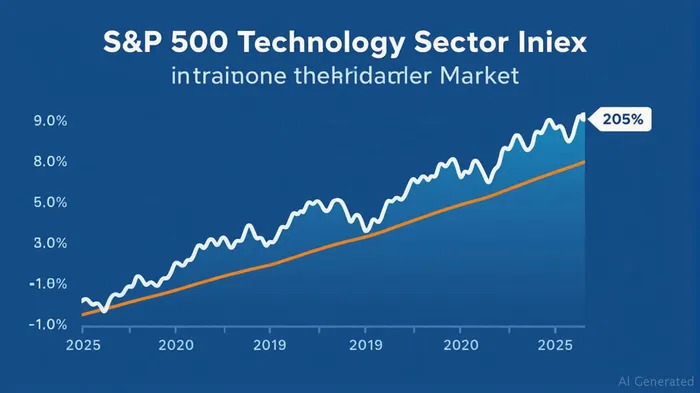
- Technology (e.g., AAPL, MSFT) and consumer discretionary (e.g., AMZN, TSLA) have shown resilience. Their growth profiles align with the Fed's low-rate environment.
Hedge against geopolitical risk:
Allocate to defensive sectors like utilities (DUK, NEE) or gold miners (GOLD, NEM) to offset potential volatility.
Monitor Fed signals closely:
- A Fed surprise—either a rate hike or a hawkish shift—could derail the rally. Track the 10-year Treasury yield and Fed Funds Futures for clues.
- Avoid overpaying for momentum:
- High-flying stocks trading at P/E premiums (e.g., DDOG, ZM) may face profit-taking if earnings disappoint.
Conclusion: 7,000 is Possible, but Fragile
The math suggests 7,000 is achievable if earnings meet expectations and valuations hold. But investors should temper optimism with caution. A 12% upside from May's close would require flawless execution on earnings and no major shocks—a high bar in a world of geopolitical flux.
For now, the S&P 500's ascent remains a story of valuation resilience and Fed support, but the road to 7,000 will be littered with potholes. Stay nimble, focus on quality, and keep a weather eye on inflation and trade headlines. The prize is there—but so are the pitfalls.

Stay ahead of the market.
Get curated U.S. market news, insights and key dates delivered to your inbox.






Comments
No comments yet